Hamilton stuns Silverstone with Sprint pole as Ferrari gamble pays off
Hamilton took Sprint pole at Silverstone on Friday, but a single qualifying lap at a circuit where weather and tyre degradation routinely reorder the field is a timing-screen result, not yet a verdict on Ferrari's underlying race pace.
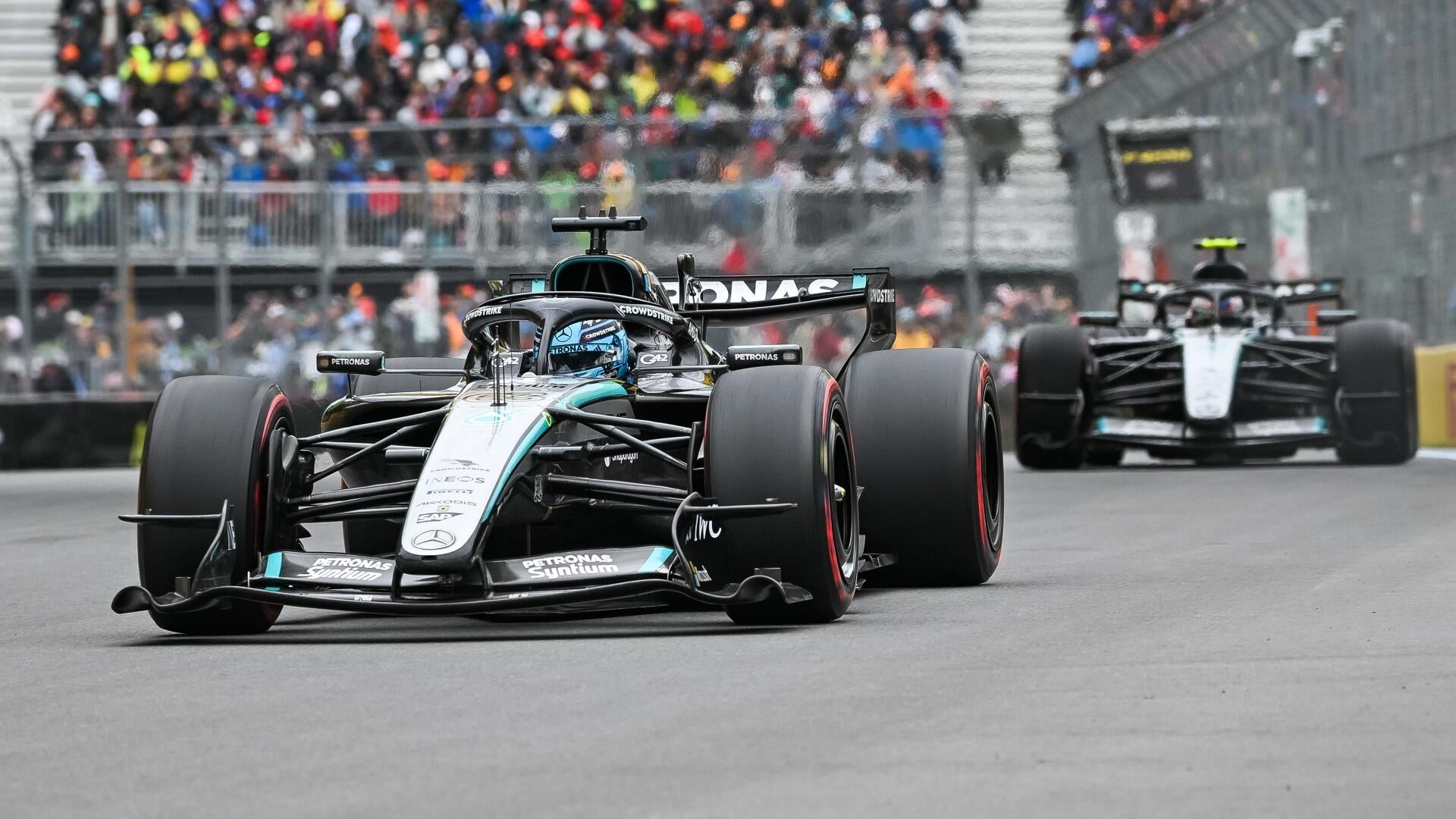
Lewis Hamilton will line up at the front of the grid for Saturday's Sprint at Silverstone after a Friday qualifying session that rewarded Ferrari's instinct and left Mercedes scrambling to understand what hit them. The seven-time champion, in his second Ferrari season, lapped the Northamptonshire circuit fast enough to claim Sprint pole, a one-lap surprise that resets the conversation about who has actually brought working parts to round twelve of the 2026 calendar.
The headline number is simple: Hamilton on pole, George Russell second for Mercedes, with the rest of the order still settling behind them. But Sprint qualifying is a peculiar artefact. It samples one flying lap on a fresh set of softs, in conditions that may bear no resemblance to what the grand prix itself asks of the cars twenty-four hours later. The result is real, the inference is not. Treat it as a timing-screen event first and a performance verdict second.
The lap, and the gamble underneath it
Ferrari arrived at Silverstone with a car that had been working better in race trim than in single-lap trim for much of the early season. The Maranello crew's bet was that qualifying aggression on Saturday morning would carry through, but the real swing on Friday was strategic. Reports from the paddock credited the Scuderia with a setup choice that prioritised a single peak lap over consistent running, a calculated sacrifice of long-run pace for the chance at pole.
It worked. Hamilton's lap came together at the right moment, on the right tyre, in the right sector sequence. Behind him, Russell extracted everything Mercedes had on a day when the Silver Arrows looked, by their own internal accounting, a step short of optimum. The gap between the two men is small enough that race-day conditions could reorder the picture entirely, which is precisely the point.
A counter-narrative from the Mercedes garage
The temptation, after a result like this, is to read backwards from the timing sheet and pronounce on the championship. Russell's post-session tone was pointedly cautious. "We didn't pit," he noted on team radio during the subsequent Sprint race simulation referenced in the wire, when he was asked about a strategic call that left him out on worn rubber while Hamilton cycled through a fresh set. The implication was clean: the team had information he did not, and the team had made a call.
Inside the Mercedes garage, the working theory on Friday evening was that the W17's rear-end behaviour on low-fuel, low-deg runs was masking its true race-pace window. The data they trusted most was the long-run simulations their two drivers had completed in practice, runs that suggested both Russell and the second Mercedes were genuinely closer to the front than a one-lap gap of a few hundredths would suggest. Read the sprint result; trust the long-run data.
What the timing screen cannot tell you
Sprint poles are won by tenths and lost to traffic. They tell you which driver and which team executed one specific job at one specific moment, with a fuel load calibrated for a six-lap dash rather than a fifty-seven-lap war. They do not tell you about tyre degradation profiles, pit-stop delta, or how a chassis behaves when the wind swings at Silverstone's high-speed complexes and the cloud cover breaks.
For that, the Saturday Sprint race and Sunday's main event remain the only admissible evidence. The British summer weather is famously indifferent to Formula 1's preferences. A forecast that drifts from dry to mixed between now and Sunday's lights-out would render Friday's headline almost ornamental. The cars that look brilliant on a green track in cool air often look ordinary six laps into a stint on a hot, marbles-strewn surface.
Hamilton's long view, stated plainly
Hamilton has been talking all season about a project that is, by his own description, in progress. The wire from the paddock captured the line that has done the most work this year to manage expectation: he is not pretending Ferrari has arrived, and he is not pretending he has arrived at Ferrari. The phrase making the rounds on Friday, attributed to him, was characteristically blunt: short of physically walking into the Mercedes garage to undo the bolts himself, the gains have to come the slow way.
That framing matters because it tells you how to read the pole. It is not a declaration that the championship has turned. It is not a verdict on Mercedes. It is a single qualifying lap, on a soft tyre, in a format that exists precisely to throw Friday-night headlines at a sport that runs on Sunday afternoons.
The case for caution, and the case for attention
Two readings of Friday are available, and both are defensible. The sceptical one: Sprint qualifying is a noisy signal, Ferrari's underlying race pace has been the soft underbelly of their 2026 campaign, and one lap at Silverstone does not fix a development gap that has been visible since March. The optimistic one: Ferrari found something in the setup that unlocked a genuine chunk of performance, Hamilton is a four-time winner at this circuit, and the championship fight is closer than the constructors' standings suggest.
The honest answer is that nobody knows yet, and the people telling you they do are selling you something. Saturday's Sprint race will produce the first admissible evidence about race trim. Sunday will produce the verdict. Until then, file Friday under timing screen, not under trend.
What to watch between now and lights-out
Three things will tighten the picture. First, Ferrari's choice between an aggressive and a conservative Sprint-race strategy, which will reveal how much of Friday's pace they actually trust. Second, Mercedes' setup adjustments overnight, which will signal how seriously they read the gap. Third, the weather on Saturday morning. A wet Sprint reshuffles everything; a dry one merely confirms what Friday already implied.
The pole belongs to Hamilton. The verdict belongs to Sunday.
Sources:
- Guardian Sport (2026-07-05): British Grand Prix: Formula One – live updates. https://www.theguardian.com/sport/live/2026/jul/05/formula-one-british-grand-prix-live
- Formula 1 Telegram channel (2026-07-05): Hamilton on his title chances. https://t.me/formula1
- Formula 1 Telegram channel (2026-07-05): Russell stint and strategy note. https://t.me/formula1
Desk note: Monexus is treating Sprint pole as a one-lap result, not a performance verdict; this piece separates Friday's timing-screen surprise from the harder race-pace evidence that Saturday and Sunday will produce.