India and Pakistan Send Envoys to Tehran: A Funeral That Tells a Story
Within an hour of each other on the morning of 3 July 2026, Indian and Pakistani delegations arrived in Tehran to pay respects at the funeral of Iran's slain supreme leader. The choreography of arrivals says as much as the politics beneath them.
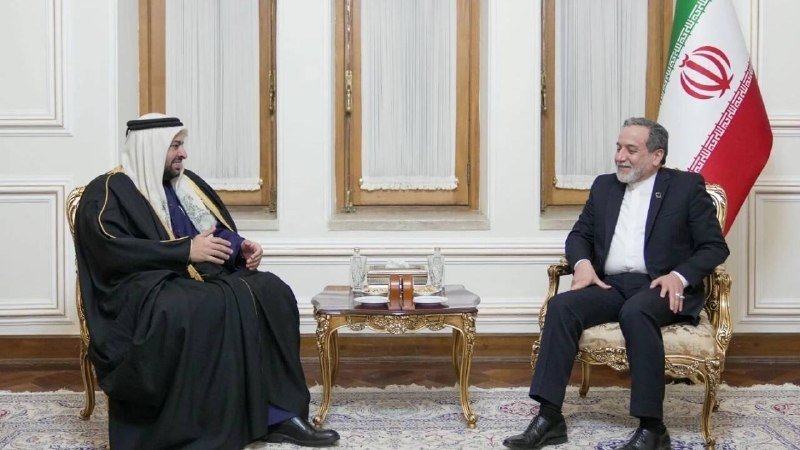
Within a single hour on the morning of 3 July 2026, two of South Asia's heaviest diplomatic footprints crossed paths on the tarmac at Tehran. First, according to footage carried by Iranian state television at 09:36 UTC, an Indian government special envoy touched down to take part in the farewell ceremony for Iran's slain supreme leader. Eight minutes later, at 09:44 UTC, Al-Alam broadcast the arrival of a Pakistani army commander, accompanied — per the Iranian outlet Tasnim at 09:43 UTC — by a delegation sent "to pay tribute to the martyred leader of the revolution." The symmetry is too precise to be accidental, and the choreography reveals more about the region's centre of gravity than any communiqué will.
The subcontinent's two nuclear-armed rivals do not, as a rule, perform grief in unison. That they have both sent senior representation to a funeral in Tehran, on the same morning, with cameras rolling, is itself a piece of political theatre. Each capital is signalling to the Islamic Republic that its enmities with its neighbour do not translate into indifference to Iranian symbolism. Each is also signalling, less politely, to Washington, Beijing and the Gulf that the post-assassination vacuum in Tehran is being watched from every direction.
Who showed up, and at what rank
The Indian delegation, per Al-Alam's 09:36 UTC report, is headed by a special envoy of the Indian government — a designation that, in New Delhi's protocol grammar, signals a senior diplomatic figure dispatched above the level of a working ambassador but below a sitting cabinet minister. Tasnim's 09:43 UTC frame was more specific on the Pakistani side: a Pakistani army commander, arriving in his capacity as a uniformed head of delegation rather than a foreign-office emissary. The contrast is itself a tell. India, the larger civilian economy and the country with the more contentious recent history with the Islamic Republic, sent a diplomatic specialist. Pakistan, Iran's older strategic partner and the country that has weathered direct military confrontations with both the United States and India on its western flank in recent memory, sent a man in uniform.
The uniform signals a different kind of intimacy. Pakistani military delegations to Tehran have historically travelled when the conversation is about hardware, intelligence, or the kind of back-channel coordination that does not survive being written down in a foreign-ministru readout. The Indian choice — a special envoy with the political cover of a civilian appointment — reflects the post-2016 diplomatic reconstruction between New Delhi and Tehran, conducted through the Chabahar port route and the eventual India-Iran bilateral understandings on connectivity that predate the supreme leader's killing.
Why both are reading this funeral as a hinge
The two South Asian powers do not agree on much. They agree on one thing in this moment: the regime in Tehran is entering a transition, and the shape of that transition will determine whether Iran's foreign-policy posture tilts back toward the Gulf monarchies, hardens toward Israel and the United States, or pivots further into the China-Russia condominium. For India, the stakes are Chabahar and the INSTC corridor that connects Mumbai to the Russian market through Iranian territory — an artery that has survived American sanctions pressure only because Tehran chose to keep it open. For Pakistan, the stakes are the Iran-Pakistan gas pipeline, the Balochistan borderlands, and the long-running question of whether Tehran's intelligence services will continue to treat Pakistani militant groups as instruments of leverage in Afghanistan.
A funeral is, in the diplomatic register, an audition. The rank of the envoy, the body language of the receiving committee, the length of the bilateral meeting on the margins — these are the data points that analysts in New Delhi, Islamabad, Rawalpindi and Doha will be parsing for weeks. That both delegations chose to land within an hour of each other, and that both agreed to be filmed doing so, means neither side wanted the other to claim a monopoly on the new court in Tehran.
The structural read
What we are watching is a regional order reorganising itself around a single absence. When the supreme leader of Iran is killed, the protocols that govern regional diplomacy — which capital sends a working-level note, which sends a defence minister, which sends the head of state — all reset. South Asia's two largest powers have both chosen to reset their protocols in public, on the same morning, in front of Iranian state cameras. The fact that they have done so without coordinating the optics is itself the story: neither wanted to be seen as following the other.
The wider lesson is that the funeral is functioning as a multilateral conference in disguise. Every camera frame of a senior envoy arriving in Tehran is, in effect, a vote of confidence in the post-assassination order — or a hedge against its reversal. By showing up visibly, India and Pakistan are buying optionality. By showing up at the same time, they are reminding Tehran — and each other — that the subcontinent's attention to the Gulf is no longer an abstraction.
What remains uncertain
The reporting available to Monexus at the time of writing consists of Iranian state-media footage and Tasnim's framing of the Pakistani delegation's stated purpose. We do not have the names of the Indian special envoy or the Pakistani army commander; we do not have the text of any condolence message; we do not know whether bilateral meetings on the margins of the funeral have been scheduled, denied, or merely left unannounced. The footage shows arrivals, not conversations. The most consequential diplomacy of the day — if there is any — will take place behind closed doors and emerge only in the leaks of the coming week.
What is already clear is that the choreography of the morning of 3 July 2026 will be cited for years as the moment the subcontinent's two capitals publicly chose to treat Tehran's transition as their business. That is a more durable signal than any joint statement.
Monexus framed this as a regional-power story first, treating the Iranian state-media footage as primary evidence of intent rather than as a window onto Iranian internal politics. Wire coverage of the funeral procession itself — when it lands — will be the next beat to watch.
Wire provenance
This editorial synthesis draws on the following public wire/social posts:
- https://t.me/alalamfa
- https://t.me/JahanTasnim
- https://t.me/alalamfa
- https://t.me/alalamfa