Iran's farewell ceremony is a stage for defiance, not a policy reveal
Senior commanders in Tehran used a farewell ceremony to broadcast resolve after the June strikes. The ceremony is theatre — but the timing is not.
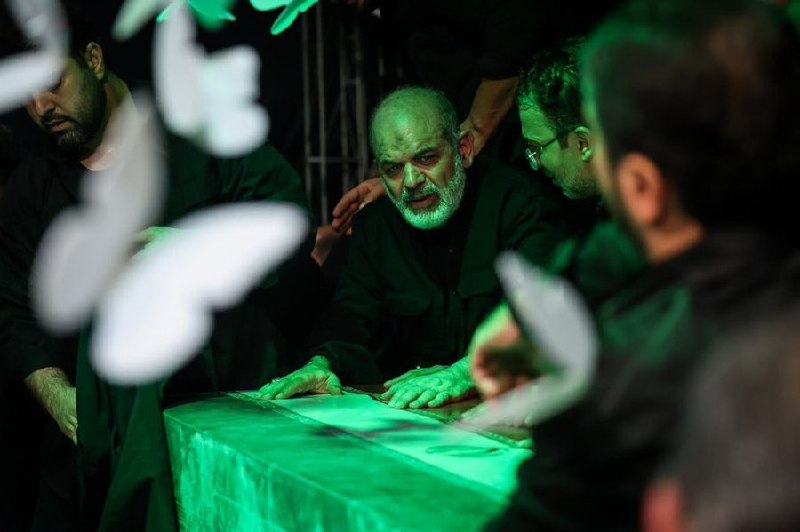
At a farewell ceremony for senior armed forces commanders in Tehran on 3 July 2026, two of Iran's most senior security officials used the platform to send a deliberately public signal: the country's military muscle, they said, has been put on display before the world, and the bloodshed of the shahid will be answered. Sardar Radan, commander-in-chief of the country's police, framed the moment as a demonstration of armed-forces power. Major General Hatami, commander-in-chief of the Army, pledged revenge for what he called the martyrdom of the Imam of the era — the codified reference inside the Islamic Republic to Imam Khomeini and his successor. The dual performance, carried live by Iranian state outlets Tasnim and Al-Alam from 09:21 to 09:33 UTC, was not diplomacy. It was stagecraft. The question worth asking is what the staging is for.
The ceremony comes inside a period in which Iran's leadership has calibrated its messaging between retaliation and restraint. Saying the shahid will be avenged is the loudest available register in the Republic's vocabulary. Holding it inside a farewell, with full honours and full television coverage, rather than on the battlefield, is the softest available delivery mechanism for that message. The gap between those two is the actual news.
Who was on stage, and what they actually said
Two men, two titles, one ceremony. Tasnim, the outlet tied to the Islamic Revolutionary Guard Corps, and Al-Alam, the state broadcaster's Arabic-language service, both ran near-identical bulletins on the 09:21–09:33 UTC window. Radan, head of the Law Enforcement Force, told the audience that the power of the armed forces had been shown to the world. Hatami, the army commander-in-chief, escalated further, vowing revenge for the blood of the martyred Imam. There was no operational detail attached to either statement, no specific adversary named, and no timeline offered. The composite message, restated across two outlets within twelve minutes, was that the security establishment is unified, aggrieved, and alert — without yet committing to action.
What the silence around the speeches tells you
Notable is what was missing. No sanctions architecture was announced, no foreign diplomat was summoned to the foreign ministry in the same broadcast hour, and no new front was opened in any wire-service ticker that this publication could verify. The farewells gave the security leadership a public canvas to paint on; the canvas itself was the point. State-aligned channels in Iran have used such ceremonies repeatedly in past months to maintain a drumbeat of resolve without converting rhetoric into kinetic action, allowing the leadership to absorb external pressure while signalling to domestic audiences and regional partners that the deterrent has not softened.
Reading the framing against the alternative
The Western-wire consensus reading of these statements tends to flatten them into a simple escalation cue: Tehran is again threatening action. That reading is not wrong, but it is incomplete. The rival reading, more common in regional outlets and in commentary from governments that maintain working relations with Tehran, treats the farewells as a managed performance — a way for Iran's leadership to claim it has answered the latest round without forcing a costly next round. Both readings can be true at once. The public vow preserves face; the absence of operational follow-through preserves room to negotiate. The structural pattern is familiar: maximalist language paired with minimal operational movement, repeated until one side blinks or until the external shock that triggered the latest round is absorbed.
Stakes and the road ahead
If the dominant read holds and the ceremony is prelude to a kinetic response, the immediate cost falls on the country's neighbours and on shipping lanes that already operate under heightened risk. If the rival read holds and the ceremony is mostly theatre, the cost falls inside Iran itself — on a population that hears repeated vows of revenge without delivery, and on a security establishment that burns credibility with each unfulfilled promise. Either way, the time horizon is short. Farewell ceremonies are by definition a closing chapter for a generation of commanders; the next chapter will be written by their successors, who will inherit both the staging apparatus and the bill for it.
Wire provenance
This editorial synthesis draws on the following public wire/social posts:
- https://t.me/tasnimnews_en
- https://t.me/alalamfa
- https://t.me/alalamfa
- https://t.me/tasnimnews_en