Power at the table: a Khamenei in-law's snub reveals Iran's factional fault line
A handshake withheld from Foreign Minister Araqchi by Khamenei's father-in-law has become a public signal of an internal struggle over Iran's diplomatic line.
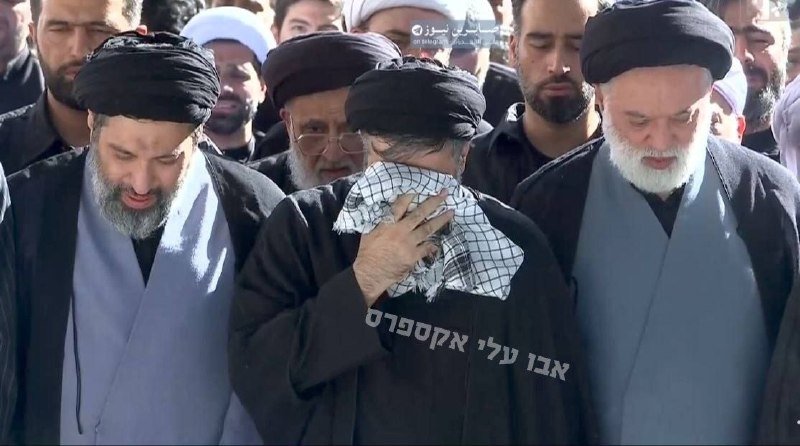
At a public reception in Tehran on 3 July 2026, Gholamali Haddad Adel — the father of Supreme Leader Ali Khamenei's wife and one of the clerical establishment's most recognisable power-brokers — worked the room methodically, shaking hands with well-wishers, clerics and officials. Foreign Minister Abbas Araghchi was conspicuously absent from that circuit. The clip, distributed by the Middle East Spectator Telegram channel at 10:50 UTC, captures the omission in real time. Hours earlier, at 10:28 UTC, the Fars news agency had published a separate video of Haddad Adel paying tribute to Khamenei's late predecessor as Supreme Leader. The juxtaposition is what carries the story: a senior figure visibly performing loyalty to the revolutionary line while pointedly refusing the courtesy of a handshake to the country's top diplomat.
The reading is unflattering to Araghchi and to the diplomatic posture he represents. In Iran's factional grammar, who touches whose hand, and on camera, is not trivial. A public freeze-out by a member of the ruling family is the kind of signal insiders parse for shifts in the balance of power.
What the gesture actually tells us
Haddad Adel is not a marginal figure. He is a long-serving Islamic Republic politician, former parliament speaker and a fixture of the conservative clerical networks that have staffed the state since 1979. His daughter married Khamenei; that relationship alone makes him a node in the dynasty's informal architecture. When he publicly embraces mourners for Khamenei's predecessor and pointedly skips Araghchi, the gesture is doing two things at once: reinforcing his own brand of revolutionary legitimacy, and rebuking the foreign-policy line Araghchi carries. The implication is that, for at least one faction inside the establishment, the negotiating track — whatever shape it has taken in recent months — has crossed a line. The Middle East Spectator clip does not specify the trigger. Fars's separate tribute video does not mention Araghchi at all. Both channels leave motive to inference, but the choreography is the message.
Why Araghchi is the target
Araghchi, a career diplomat who served in the nuclear negotiating team before the 2018 US withdrawal from the joint plan of action, is the public face of any opening to Washington or to the Gulf. He is also the official most exposed to criticism from figures who view diplomacy as a concession. A handshake withheld from him is the smallest unit of factional punishment available: visible enough to be circulated, deniable enough that neither man has to comment. The episode follows a pattern familiar from earlier rounds of internal Iranian contestation: when the diplomatic file becomes politically radioactive, hardline constituencies signal displeasure through choreographed public acts rather than communiqués.
The fact that the gesture was filmed and that the clip surfaced on Middle East Spectator — a channel focused on Iranian political signals and frequently read by opposition-leaning Iranian diasporas — suggests the broadcast was the point. Whatever the intended audience inside Iran, the international audience gets a clean visual: a Khamenei in-law, at a Khamenei-adjacent gathering, visibly snubbing the foreign minister.
What the sources do — and do not — establish
Both source items come from outlets aligned with different poles of Iranian politics. Fars is the news agency affiliated with the Islamic Revolutionary Guard Corps and is broadly read as a hardline outlet; its video frames Haddad Adel within the martyred-leader tribute genre that anchors the system's founding mythology. Middle East Spectator, by contrast, is a Telegram channel that aggregates and interprets Iranian political dynamics for an audience that includes the diaspora and Western analysts; its framing of the handshake is interpretive rather than reportorial. Neither outlet names the trigger for the snub. Neither cites any official statement. The sources establish the fact of the gesture and the publication of the footage. They do not establish cause, nor do they specify what policy question is at stake.
Stakes and what to watch next
If the diplomatic track collapses, the cost lands first on Iran's currency, on the willingness of foreign investors to engage, and on the small business class that benefits from any external opening. If the gesture is purely theatrical — a factional slap rather than a substantive intervention — the cost is to Araghchi's domestic standing and to the negotiating team's room for manoeuvre. The next signal to watch is whether other senior clerics or officials repeat the freeze-out, and whether any state-aligned outlet editorialises on the episode. For now, a handshake withheld in Tehran is doing what communiqués usually do in more orderly systems: telling the diplomatic corps that its authority, at home, is not what it appears abroad.
Wire provenance
This editorial synthesis draws on the following public wire/social posts:
- https://t.me/Middle_East_Spectator
- https://t.me/farsna
- https://en.wikipedia.org/wiki/Gholamali_Haddad_Adel