Foreign ministers of Congo, Burkina Faso and Nicaragua pay tribute in Tehran as Iran consecrates a 'martyred leader'
Three foreign ministers from Africa and Central America filed past the body of Iran's slain Supreme Leader in central Tehran on 3 July 2026, the visible choreography of a coalition Iran has spent two decades assembling.
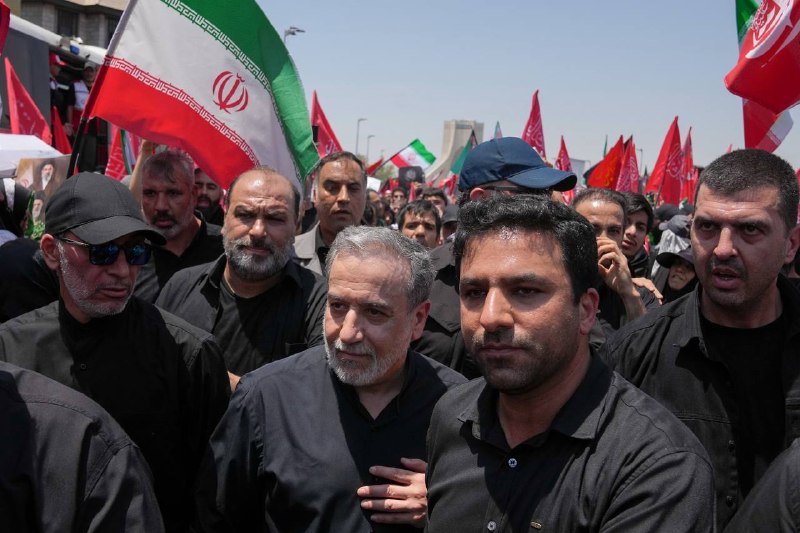
Between roughly 12:08 and 12:50 UTC on 3 July 2026, three foreign ministers filed past a single coffin in central Tehran. First the Nicaraguan delegation, then the Burkinabè, then the Congolese, each recorded by state media as they paid tribute to the body of the man Iranian outlets now style Imam Martyr Badarqa Aghai Shaheed — the assassinated Supreme Leader whose portrait, after the IDF's confirmed June strike on the secluded compound in northern Tehran, has receded from official buildings and reappeared, at much larger scale, on mourning billboards across the capital.
The choreography is the story. Each visit was logged almost in real time by Tasnim News and Al-Alam — the Islamic Republic's main Persian- and Arabic-language outlets — and each was framed in the same vocabulary: tribute, the martyred leader of the Islamic Revolution, must rise. Three governments from three continents, none of them major trade partners of Iran, none of them regional powers, stood in line inside the same mosque on the same day. Read individually, the visits are minor. Read together, they are a roll call of a coalition Iran has spent two decades building, and they offer the cleanest available window onto how the Islamic Republic intends to consecrate the post-succession moment.
The order of the queue
The publicly broadcast sequence began with Managua. Tasnim's English wire carried the Nicaraguan foreign minister's tribute at 12:08 UTC, more than half an hour before the first African delegation crossed the threshold. Nicaragua's appearance was not new — the Ortega-Murillo government signed on to a joint letter of support for the Iranian position during the May escalation, and it was the only Latin American government represented at last year's Axis of Resistance conference in Caracas. What was new was the venue. Paying tribute at a coffin is a posture most Latin American governments decline to offer even close partners.
The Burkinabè minister followed shortly after, around 12:27 UTC according to the same Tasnim feed, with Al-Alam Arabic-language coverage an hour later. Burkina Faso's appearance carries more weight than its size suggests. Captain Ibrahim Traoré's junta in Ouagadougou has, since its 2022 coup, tilted rapidly eastward — expelling French troops, pivoting to Russian security cooperation, and opening channels to both Tehran and the Sahrawi Polisario front. The Burkinabè government is one of the few West African states with whom the Islamic Republic maintains a resident diplomatic presence north of the Gulf of Guinea.
The Congolese minister arrived last, around 12:42 UTC per Al-Alam and 12:50 UTC per Tasnim. The Republic of the Congo — not the larger, eastern DRC — has historically maintained cordial relations with Tehran under presidents Sassou Nguesso and his predecessor, driven by Angolan-mediated oil-sector diplomacy and a shared vote pattern at the UN General Assembly. The choice to send the foreign minister rather than the president is a clear elevation.
Reading the line
The temptation is to read the queue as a demographic statement: three Global South governments, one coffin, one shared script. That reading is half right. The other half is harder to ignore. All three governments stand in places where the United States has imposed, or is currently considering, sanctions or diplomatic downgrades. Nicaragua remains under the post-2018 Nicaraguan Investment Conditionality regime and corresponding US Treasury measures; Burkina Faso is under AU regional sanctions and at the centre of an ongoing ECOWAS monitoring file; the Republic of the Congo is a regular subject of State Department trafficking-in-persons determinations. None of that makes the governments illegitimate; it does make their choice of condolence partner legible.
The frame the Islamic Republic intends is simpler, and it works in both directions. By broadcasting the visits through its state outlets, Tehran demonstrates that its diplomatic gravity survives a decapitation strike. By participating, the three governments convert their own defiance of Washington into a kind of soft currency they can subsequently deploy at the UN Human Rights Council, the African Union, and the Group of 77. This is the same logic that produces joint statements with Caracas, Damascus and Pyongyang — a parallel referral network outside the dollar-cleared financial system, where Iran's foreign reserves remain partly frozen.
That structural feature matters more than the optics. The Islamic Republic's most acute pressure point since the strike has not been its formal alliances — those were always thin — but its isolation from the SWIFT network and the residual difficulty of repatriating oil revenues. Governments willing to be visibly photographed in mourning are governments whose domestic political economies have already adjusted to operating partly outside Western-led financial architecture.
What the mourning is being used to settle
Iran's post-succession politics is the second-order story the coffin is being used to settle. The Islamic Republic has, since the assassination, accelerated the constitutional succession framework rather than allowing it to drift. The Council of Experts convened an emergency session within seventy-two hours, and the acting Supreme Leader — reportedly the senior jurist of the Guardian Council's theological secretariat — has used mourning ceremonies as the visible substrate of authority without yet formally claiming the title. Each foreign visitor therefore performs two functions at once: paying respect to the dead, and conferring de facto recognition on whoever stands next in the chain.
That is why the order matters. Nicaragua first anchors Latin America. Burkina Faso anchors the Sahel. Congo-Brazzaville anchors Central Africa. Al-Alam has run daily bulletins on visits from Iraqi, Syrian, Yemeni, Hezbollah and Houthi delegations; the Sudanese and Algerian foreign ministries issued statements within hours of the assassination; the Iranian outlets have been careful to ensure that the African and Latin American ministers appear in the same visual frame as the regional allies, reinforcing the impression of a global rather than purely Middle Eastern coalition.
The risk for Tehran is that the same choreography reads, from outside, as a sealing-off. Western capitals are watching whether the visitors queue also includes governments with whom Iran has open operational disagreements, such as the UAE or Saudi Arabia. As of 3 July 2026, neither Gulf monarchy has sent a senior figure. Tehran's most plausible path back to partial regional reintegration — the China-brokered 2023 détente remains the precedent — depends on a Saudi or Emirati minister eventually appearing.
The unanswered questions
Three things remain genuinely unsettled. First, the identity of the successor. Iranian state media refers to the dead figure as Badarqa Aghai Shaheed — a religious epithet rather than a personal name — and has not yet confirmed whether the Council of Experts has, as of 3 July, formally voted a successor or is still in deliberation. Second, the operational posture of the security services in the immediate aftermath. State outlets have been silent on the relationship between the IRGC, the Ministry of Intelligence and the acting leadership, and the absence of leaks is itself a politically controlled signal. Third, the financial architecture. None of the three African ministers brought documented trade or investment commitments to Tehran; the press coverage is purely ceremonial, and the structural question of how Iran monetises oil without correspondent-banking access remains unresolved.
What is not uncertain is the diplomatic intent. By accepting visits from Managua, Ouagadougou and Brazzaville on the same day, and by having those visits broadcast simultaneously in Persian, Arabic, English and Spanish on Tasnim and Al-Alam, the Islamic Republic is signalling that it intends to make the funeral itself a foreign-policy document. The coalition on display is small, ideologically coherent, and increasingly accustomed to operating in the seams of the Western-led order. It is, in the most literal sense, what two decades of patient diplomatic work in the Global South now looks like at a single moment.
— Monexus is tracking the post-succession sequence in Tehran through Iranian state outlets and third-party wire reporting; this article reflects only what Tasnim News and Al-Alam have published as of 15:00 UTC on 3 July 2026.
Wire provenance
This editorial synthesis draws on the following public wire/social posts:
- https://t.me/JahanTasnim
- https://t.me/alalamfa
- https://t.me/tasnimnews_en
- https://t.me/tasnimnews_en
- https://t.me/tasnimnews_en