Iran's state funeral apparatus tests legitimacy in real time
Tehran stages a multi-day farewell for Ayatollah Khamenei. The choreography is global; the question of who inherits power is domestic — and unfinished.
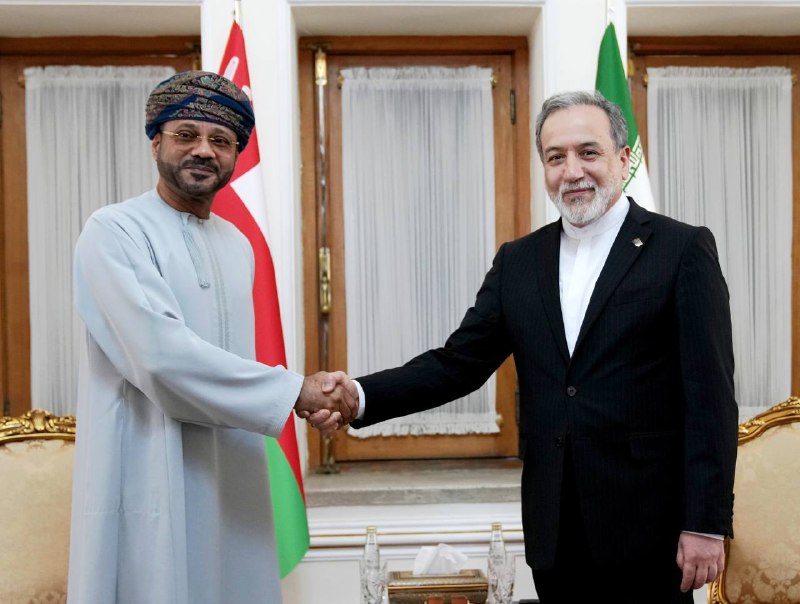
Tehran began funeral ceremonies for Ayatollah Seyyed Ali Khamenei on 3 July 2026, with a first stage of rites held in the capital and a separate programme for foreign dignitaries to pay their respects, according to IRNA, the official state news agency. The framing in the agency's dispatches — "martyred Leader," "the Islamic Revolution" — is itself part of the story. The Islamic Republic is, in real time, deploying the full choreography of a state funeral for a man who, in the framing of those dispatches, did not die of natural causes but fell in a cause.
The question the next 72 hours will answer is not who mourns, but who decides. Iran's constitution gives the Assembly of Experts the authority to select a new Supreme Leader, but the selection has never been a clerical ballot alone. The Islamic Revolutionary Guard Corps, the office of the president, and the networks of clerics, merchants and bazaar financiers who actually hold provincial Iran together all have a stake. A funeral that projects unity is, in that sense, also a test of whether the succession has already been negotiated — or whether it is genuinely open.
The choreography of a sacred departure
IRNA's first dispatch of the day, filed at 06:39 UTC, describes the "first stage of funeral ceremonies" for the Leader of the Islamic Revolution. A second dispatch, at 07:31 UTC, sets out a dedicated programme for foreign dignitaries to pay tribute in Tehran. The sequencing matters: the domestic ritual comes first, the international audience second. In a system where the Supreme Leader's authority derives from a claimed divine mandate, the order of who is permitted to grieve, and when, is a form of statecraft.
The state has not, in the materials available to this publication, disclosed the medical or operational circumstances of the Leader's death. The repeated use of the word "martyred" in IRNA's English wire suggests the official framing has been settled before the mourning has. That is the Iranian system working as designed: a vocabulary imposed early, repeated by aligned outlets, and absorbed by the domestic press before independent journalism can test it.
The succession that has not happened on camera
The 88-member Assembly of Experts is, in theory, the body that chooses a successor. In practice, every Supreme Leader since 1989 has been selected in a process that combined clerical consultation with informal vetting by security and political elites. No public session of the Assembly has been announced in the IRNA reporting reviewed here. The office of the president has not, in those same dispatches, been named as a convener.
That silence is the story. A leadership transition in a system this centralised cannot be orderly and unresolved at the same time. Either the senior clerics and the IRGC command have already settled on a figure — in which case the funeral is also a launch — or they have not, in which case the funeral is being staged to project a settled outcome that does not yet exist.
What the foreign-dignitary tier is really doing
The second IRNA dispatch of the morning is the more revealing of the two. A dedicated ceremony for foreign envoys implies that Tehran expects — or is courting — official representation from a defined list of states. The list is not in the public material, but the structure of the announcement is: foreign dignitaries as a separate ritual, distinct from the domestic ceremony, signals that the Islamic Republic wants the world to witness continuity at the same moment it is performing grief.
For the region's monarchies, who balance Iranian pressure with American security guarantees, attendance is a calculation. For Russia and China, whose partnerships with Tehran have deepened under sanctions, attendance is cheaper. For the Iraqi, Syrian and Lebanese political formations historically aligned with the Islamic Republic, attendance is close to compulsory. The composition of the dignitary tier — who sends a head of state, who sends a foreign minister, who sends a working-level envoy — will be the first hard data point on how much regional diplomatic capital the post-Khamenei order actually commands.
Stakes, and the counter-narrative
The dominant Western wire framing, where it has appeared, has tended toward "instability" — the assumption that a clerical succession of this kind risks a power struggle, a security crack-down, or a foreign-policy rupture. The Iranian state's own framing, as carried by IRNA, is the opposite: continuity, martyrdom, the revolution vindicated. The structural reality is probably between the two, and the funeral is the moment in which the gap between those framings is meant to close.
There is a third read, less comfortable for both sides. Iran is a country of 88 million people, more than half of them under 35, who have lived their entire adult lives under sanctions, inflation and intermittent mass protest. The succession is not only a clerical question. It is a question about whether the institutions built around the Supreme Leader — the IRGC's economic empire, the bonyads, the supervisory council, the assembly itself — can reproduce themselves without the man whose name they carried. The funeral choreography is impressive. The harder question is what it is rehearsing for.
What remains uncertain
The source material reviewed here consists of two IRNA dispatches carried on the English-language Telegram channel of the agency. They establish that ceremonies have begun, that a foreign-dignitary programme is in motion, and that the official vocabulary of "martyrdom" is in use. They do not establish: the medical or operational cause of the Leader's death; the identity of any acting authority; the composition of the foreign-dignitary list; the schedule for the Assembly of Experts; or the position of the IRGC command beyond its public rituals. Independent verification on each of those points will take days, not hours. This publication will update as wire reporting from Reuters, the BBC, the Guardian and the regional desks becomes available.
Desk note: Monexus is treating the IRNA English wire as the primary source for the ceremonial schedule, with the explicit caveat that the agency's framing — "martyred," "Leader of the Islamic Revolution" — is editorial, not descriptive. Where independent reporting contradicts or qualifies that framing, this publication will say so and cite the contradiction.
Wire provenance
This editorial synthesis draws on the following public wire/social posts:
- https://t.me/Irna_en
- https://t.me/Irna_en
- https://en.wikipedia.org/wiki/Supreme_Leader_of_Iran
- https://en.wikipedia.org/wiki/Assembly_of_Experts