Iraqi delegations cross into Iran for the farewell of a martyred commander, and a regional alignment takes shape
Iraqi paramilitary and political delegations crossed into Tehran on July 5, 2026, for the farewell of Ayatollah Khamenei, turning a funeral into a public display of regional alignment reshaped by a war fought on Iranian soil.
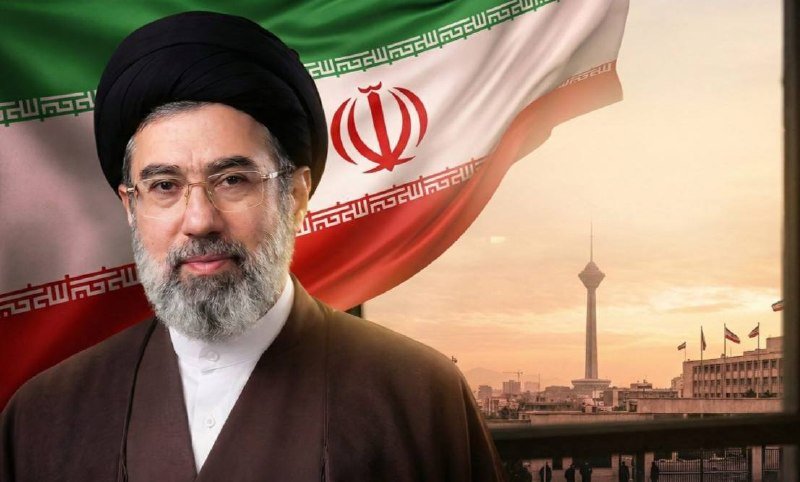
Delegations from across the Iraqi political and paramilitary spectrum crossed into Iran on July 5, 2026, to attend the farewell ceremony in Tehran for Ayatollah Khamenei, joined by figures from the Popular Mobilization Forces and the Iraqi Martyrs' Brigades. Their presence at a funeral that doubled as a regional political signal.
The farewell ceremony, held at the Imam Khomeini Mosque in Tehran, drew Iraqi delegations representing the country's armed factions and political movements at a moment when Tehran's relationship with Baghdad has been recast by a war fought on Iranian soil. According to wire dispatches from Iranian state outlets, Major General Ali Al-Hamdani, commander of the Middle Euphrates operation in the Iraqi Popular Mobilization Forces (PMF), had his funeral security preparations coordinated by the PMF, while the Secretary General of the Iraqi Martyrs' Brigades issued a public call for Iraqis to participate. The result was a procession that read less as a routine condolence visit and more as choreography: the choreography of an alliance reasserting itself in public.
Baghdad comes to Tehran
Muhammad Al-Nuaimi, speaking to Al-Alam on the day of the ceremony, framed the war that preceded the mourning as a teaching moment: "What happened in Iran during the last war turned into a school for all the resistance front, and Iran's political actions were also worth learning about." That framing matters. The Iraqi delegations were not simply paying respects to a deceased leader. They were appearing in the frame that Iran wanted to project: a coordinated regional front that emerged from a shared combat experience.
Tehran's domestic coverage amplified the choreography from the other direction. Tasnim News reported processions in Bojnord and pilgrims arriving from Khuzestan, with recitations at the Hussainiya of Baqershahr marking the influx. The official Khamenei Telegram channel framed the moment in messianic language: "Martyrdom is not the end of one's story; rather it is the beginning of a new chapter." The point was less theological than political. Iran was signalling continuity, not rupture, at exactly the moment when regional partners needed to hear it.
What the western counter-read sees
The western diplomatic counter-read, distilled in Middle East Eye's coverage, treated the verse selection at the funeral as a deliberate signal: "The verse selection appeared to reach out to visiting delegations symbolically, underscoring what Iran believed it had been fighting for while making clear where each government stood in Tehran's eyes." That is the quiet core of the story. The funeral pageantry was a setting in which Tehran took the measure of its friends, and its friends allowed themselves to be measured.
The presence of Iraqi paramilitary figures at the centre of the mourning is the most legible data point. Iraqi factions that have spent two decades oscillating between Baghdad politics and Tehran-aligned rhetoric travelled to the Iranian capital at a moment when both capitals face a similar problem: how to convert wartime solidarity into a durable post-war architecture. Al-Hamdani's role as Middle Euphrates commander places him at the junction of Iraqi sovereignty and Iranian strategic depth, and his funeral preparations by the PMF were a public assertion that the junction holds.
A region reorganising around grief
The choreography carries structural weight. Iran spent recent years cultivating relationships with Iraqi political and military actors that cut across the formal state-to-state channel. The funeral procession made that network visible in a way that routine diplomacy does not. Iranian state media's careful documentation of which delegations attended, and which Iraqi figures spoke on camera, functioned as a public directory of the relationship at a moment when its shape is being renegotiated.
The decision by Iran's Road Police chief to confirm that all fourteen entrances to Tehran remained open to visitors, issued via Al-Alam Arabic hours before the main ceremonies, was a logistical fact with a political valence. The capital was deliberately accessible, the welcome deliberately broad. That is not how states behave when they want mourning to be private.
What to watch next
The serious question is whether the alliance choreography survives the funeral. Iraqi politics is a constant referendum on the relationship with Tehran, and the delegations that crossed into Iran on July 5 represent only one slice of the Iraqi spectrum. The next test will come when Baghdad has to choose between the architecture implied by this procession and the architecture implied by its other external relationships. The funeral made the choice visible. It did not make it inevitable.
The calendar offers a near-term indicator: the formal commemorations that follow the farewell, and the diplomatic traffic they generate. Iranian state media will continue to document delegations. The list of attendees, and the order in which they are received, will tell observers how Tehran reads its own coalition in the weeks ahead.