Israel sets a new tempo on the Iran file, and the world is being asked to catch up
Tehran closes its airspace for a Supreme Leader's funeral while Israeli ministers pre-position for unilateral action on Iran's nuclear file. The diplomatic calendar is no longer setting the pace.
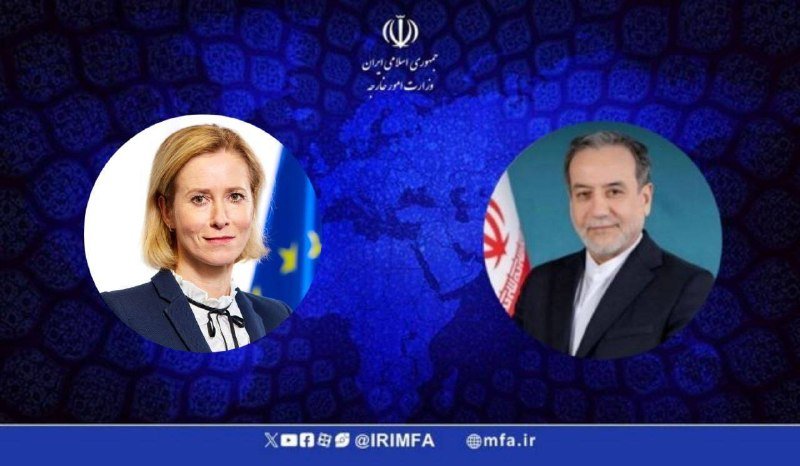
Iran's airspace closes on Monday for the funeral of a Supreme Leader killed in February, and the world is being asked to read the moment through the choreography of its aftermath. Crowds packed Tehran's Mosalla on Sunday to honour Ali Khamenei, whose death in a US-Israeli airstrike on 28 February ended a four-decade personal rule and set off the succession crisis Iran is still navigating. According to the Iranian Students' News Agency, cited by Middle East Eye, the capital's airspace will fully close on Monday as the week of mass funeral processions continues. Three of Khamenei's sons appeared at the funeral; there has been no public sighting of Mojtaba Khamenei, widely reported to have been injured in the same strike that killed his father.
Whatever the public theology of the ceremonies, the operational tempo in the region has long since detached from the diplomatic language about it. In an interview with Fox News on Sunday, Israeli Prime Minister Benjamin Netanyahu said some Christian villages in southern Lebanon had "asked to be annexed to Israel," a claim the mayor of Rmeish, a majority Christian town in Bint Jbeil district, rejected the same day. Israel's Chief of Staff, cited by Israeli outlets, framed the Boufurea area as a "vital strategic zone filled with Hezbollah infrastructure, financed and controlled by the Iranians." And Israeli government minister Miki Zohar told reporters that "the main problem with Iran is that it should not have nuclear weapons," adding that "Israel" will not allow it "at any cost, and if America fails, 'Israel' will do it instead of them." These are three separate Israeli voices in a single 24-hour window, and none of them is reading from the diplomatic script.
The question is what the new tempo actually is. On the Iranian side, the public register is ritual, grief and procession. Tasnim's coverage of the funeral quotes the line that the gathering is "a pact to continue, not a farewell," and frames the chants in Revolution Square, including those from visiting American media figure Jackson Hinkle, as evidence of a hardened political mood. On the Israeli side, the register is cartographic: annexation talk about southern Lebanese villages, a strategic frame for Boufurea, and a nuclear ultimatum that explicitly contemplates unilateral action. The two registers are not negotiating with each other. They are running in parallel, on a collision course that no embassy communique is currently addressing.
The maritime layer reinforces the reading. According to Fars news agency, reported via the Sprinterpress feed, the shipping route from Bandar Deyr in Iran to Al Ruwais in Qatar reopened on Sunday after a five-month hiatus. Five months is roughly the arc from the February strike to early July. Whatever is moving through that channel again is moving at the same time that Tehran's airspace is being sealed for a state funeral and Israeli ministers are publicly pre-positioning for a strike on Iranian nuclear facilities. The reopening looks like logistics. The Israeli language looks like escalation. Iran is doing both at once, and the diplomatic choreography is being asked to absorb all of it before the mourning ends.
The Lebanon file sharpens the contrast. Netanyahu's annexation claim is, on its face, an extension of the kind of border-shaping language Israel has used across the Golan and parts of Jerusalem. The Rmeish mayor's denial matters precisely because it comes from a Lebanese Christian official, the demographic Netanyahu was speaking about, and cuts against the framing in real time. A claim of annexation-seeking has a different weight if the named constituency publicly rejects it within hours; that is a counter-record the wire will carry forward.
The structural point underneath the day's noise is that nobody is waiting for a negotiating calendar. The Israeli statements do not condition themselves on American action. The Iranian ceremonies do not condition themselves on a transitional government. The shipping lane has reopened without a signed agreement, and the airspace has closed without a clear succession announcement. Each of these moves is being made by an actor who has concluded, for its own reasons, that the next move belongs to it.
The world is being asked to catch up. The watch items by the end of this week are concrete: whether Mojtaba Khamenei appears publicly before the funeral period closes, whether any Hezbollah response materialises around Boufurea, and whether the Qatari corridor carries the volume that a reopened maritime route implies. Until those resolve, the tempo is the story, and the diplomacy is the lag.
Sources
- Reuters (via X, 2026-07-05): Mourners packed Tehran's Mosalla for Khamenei funeral, https://x.com/reuters/status/... (reut.rs/4giH51h)
- Middle East Eye (live blog, 2026-07-05): Iran to fully close Tehran's airspace Monday, https://www.middleeasteye.net/live/live-us-and...
- Middle East Eye (2026-07-05): Mayor of Rmeish rejects Netanyahu annexation claim, https://x.com/middleeasteye/status/...
- Middle East Eye / Fox News (2026-07-05): Netanyahu interview excerpt on southern Lebanon annexation requests, https://x.com/middleeasteye/status/...
- Sprinterpress (via X, 2026-07-05): Israeli Chief of Staff on Boufurea, Israeli Minister Miki Zohar on Iran nuclear file, Fars on Iran-Qatar maritime reopening, https://x.com/sprinterpress/status/...
- Tasnim News (telegram, 2026-07-05): Funeral coverage, Revolution Square, Jackson Hinkle, https://t.me/s/tasnimnews_en
- Desk note: The Monexus wire desk is treating the Israeli annexation claim about southern Lebanese villages alongside the mayor of Rmeish's same-day rebuttal, rather than carrying the claim alone; Tasnim is sourced as Iranian state media throughout, and the maritime reopening is attributed to Fars via a third-party post, pending direct confirmation.