Israel strikes ten Hezbollah sites in southern Lebanon after ceasefire violation
Israeli warplanes hit roughly ten Hezbollah-linked sites in southern Lebanon on 3 July 2026, hours after the IDF said militants attacked soldiers patrolling the border area in breach of the November truce.
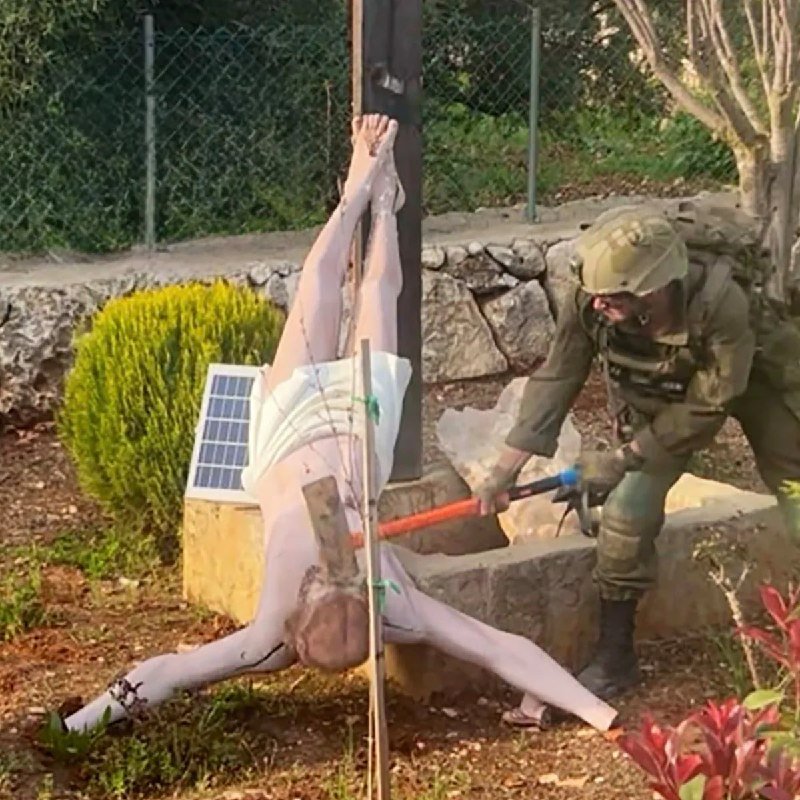
Israeli warplanes struck roughly ten Hezbollah-linked sites across southern Lebanon on 3 July 2026, hours after the Israel Defense Forces said militants attacked soldiers operating along the border in what the military characterised as a fresh violation of the ceasefire arrangement that has held, in name if not in practice, since late last year.
The strikes, announced by the IDF in posts monitored from 11:34 UTC onward, mark the most concentrated bout of Israeli air activity over Lebanon in several weeks and signal that Jerusalem is unwilling to let any single breach pass without a kinetic response — even as diplomats in the region continue to argue that the truce is the only realistic off-ramp from a wider war.
What the IDF says happened
According to the IDF statement circulated at 11:44 UTC, the chain of events began with an attack on Israeli forces in the border area that the military said violated the standing agreement. The Israeli Air Force responded by hitting around ten Hezbollah infrastructure sites in southern Lebanon, including a vehicle that the IDF said had been used by the group to transport materiel across the frontier.
The channel that aggregated the IDF's own readout — a Telegram account that reposts Israeli military statements in English — described the targets as "infrastructures" rather than personnel positions. That wording matters. It is the same language the IDF used during earlier rounds of post-truce enforcement action, when it sought to telegraph proportionality: infrastructure, not the kind of command-node or weapons-storage compound that, if hit, would invite retaliation beyond what the arrangement can absorb.
The IDF did not, in the materials reviewed at press time, provide precise geographic coordinates for the strikes, name the specific Hezbollah units targeted, or disclose whether any Israeli soldiers were wounded in the initiating attack. The military's standard practice in such episodes is to release that detail over the following 24 to 48 hours, often via the IDF Spokesperson's Unit and in Hebrew-language outlets.
How the news travelled
The story moved through three Telegram channels within roughly ten minutes of the IDF's original post, which is itself a small lesson in how Middle East reporting now propagates. Open-source intelligence accounts translated and republished the IDF's English-language wording almost in real time; a mapping-focused account added geographic context; a third, longer-running channel reproduced the IDF's framing alongside its own contextual notes about the November ceasefire terms.
None of those channels are primary sources in the strict sense. They are relays. What they offer is speed and, in two of the three cases, an editorial stance that tends to align with the Israeli military's own framing of Hezbollah as the violator. Readers who only consume this layer of the information stack will end the day with a clean, one-sided narrative: Hezbollah attacked, Israel responded, the targets were legitimate.
The inverse problem exists on the Lebanese side, where Hezbollah-aligned outlets and Iranian state media routinely frame Israeli overflights and strikes as the provocateur — the action that breaks a calm that, in their telling, the resistance has been at pains to preserve. None of those outlets appears in the source materials reviewed here, which is itself worth noting: the pipeline that fed this article saw the Israeli military's version first, in detail, and saw no immediate counter-narrative in the same window.
What remains unclear
The November arrangement, brokered under US and French pressure after the 2024 escalation, technically requires both sides to refrain from offensive action and gives a UN-monitored mechanism the task of adjudicating alleged violations. The IDF's claim that Hezbollah struck first is therefore a load-bearing piece of the political case for today's strikes — and a piece that has not, in the materials available, been independently corroborated.
Three things the sources do not specify, and that any responsible version of this story should acknowledge:
First, the casualty footprint. Whether the strikes produced Lebanese civilian casualties, Hezbollah fighter casualties, or none, is not stated in the IDF materials circulated so far. Second, the nature of the "attack on Israeli forces" that triggered the response — its location, scale, and whether any Israeli personnel were hurt. Third, whether the UNIFIL force monitoring the ceasefire has been notified or has issued any read of its own. UNIFIL statements typically lag Israeli and Lebanese initial accounts by several hours.
A fourth uncertainty is the most consequential politically: whether today's exchange remains contained. The November arrangement has survived roughly eight months of low-level friction, but each round raises the question of whether the next one will. Israeli officials have, in earlier statements, framed the arrangement as conditional; Hezbollah officials have framed it as an Israeli pretext to keep striking.
Why the pattern matters more than this single day
The structural fact is that the arrangement has held for as long as it has because both sides — Israel and Hezbollah, but also Washington, Tehran, Paris, and Beirut — currently calculate that the alternative is worse. That calculation is not sentimental. It is the product of a regional environment in which Israel is still absorbing the cost of its multi-front posture, Iran is managing internal strain, and Lebanon's economy cannot absorb another round of displacement.
What a single day's strikes test is whether the proportionality envelope still holds on both sides. Israel appears to have stayed inside it on 3 July: infrastructure, not commanders; a response framed as retaliation for a specific incident, not as a campaign escalation. The relevant question is what Hezbollah does in the next 24 to 72 hours — whether the group treats this as an isolated infraction to absorb, or as the cue for a more substantial reply.
For now, the most that can be said with confidence is that the November arrangement is fraying at the edges, in small and frequent increments, rather than snapping. The next test is not diplomatic. It is whether the parties that built the arrangement retain the political will to defend it against exactly this kind of incremental pressure — applied, in this case, from the Israeli side, with the tacit acquiescence of a US administration that has so far not objected to any post-truce Israeli strike that has crossed this desk.
Stakes
If the pattern continues at this tempo, the cost is steady Lebanese reconstruction delay, periodic southern displacement, and a slow normalisation of low-intensity violence inside an arrangement that is supposed to forbid it. If the pattern breaks — a larger Israeli strike, a Hezbollah retaliation that costs Israeli lives, a political shock in Beirut or Tehran — the arrangement collapses and the alternative is a war neither side has the appetite for but neither side has succeeded in ruling out.
This article drew exclusively from IDF-sourced reporting aggregated by open-source channels; corroboration from Lebanese, UNIFIL, or wire-service reporting was not available in the source window. The picture above may shift as those outlets publish.
Wire provenance
This editorial synthesis draws on the following public wire/social posts:
- https://t.me/wfwitness
- https://t.me/AMK_Mapping
- https://t.me/osintlive