What the world read in Tehran: reading the frames around Khamenei's farewell
Foreign dignitaries gathered in Tehran on 3 July 2026 for the public farewell to Ali Khamenei — and the visual record tells us as much about who is curating the story as about the man being mourned.
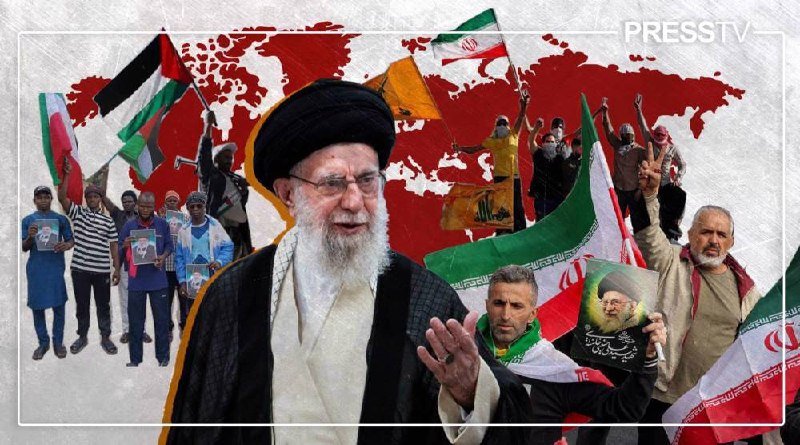
At roughly 04:28 UTC on 3 July 2026, the official English-language Telegram channel of the Office of the Supreme Leader began publishing a steady stream of frames from the Tehran Mosalla, where foreign delegations were paying respects to Imam Sayyid Ali Khamenei and his martyred family members. By 05:44 UTC the Arabic-language mirror had begun cycling the same images with parallel captions. The two channels, run from the same building, have been narrating one of the most consequential successions in modern Middle Eastern politics in real time, and they are not pretending to be neutral observers. They are constructing the story.
The question for any reader outside Iran is not whether the funeral is real — it plainly is — but whose framing of it reaches them, and what that framing leaves out. The official channels show a curated mournful public: dignitaries in rows, the Quran in close-up, a "countdown to the final farewell" with the cadence of devotional verse. Everything in the official record is reverent, and everything is choreographed.
What the official channels show, and what they don't
The English Telegram feed at 05:04 UTC opens with a portrait vignette: a man who "used to read the Quran every day and urged everyone to do the same." The Arabic channel at 05:26 UTC runs the same beat but tags it with the red flag emoji and the hagiographic honorific "may God sanctify his pure soul." The repetition is the point. In a media environment where satellite television is jammed, foreign social media is throttled, and most international reporters operate under accreditation constraints, the channels that survive contact with a global audience are the ones the Office itself runs. The visual record of Khamenei's last week is, in practical terms, an in-house production.
What the feeds omit is as informative as what they include. There is no footage of the Iranian street, no vox pop from Tehran bazaars, no interviews with the opposition abroad — the MEK, the exiled monarchists, the Kurdish and Baloch minority parties — who would frame the same departure very differently. There is no mention of the human cost of the security services that will now operate under new management, no acknowledgment of the protests that broke out in 2022 and 2023, and no reference to the war in Gaza or Lebanon, which defined Khamenei's last years as Supreme Leader and which his successor inherits. The framing is sacral, not political.
The counter-narrative, and why it struggles to land
Iran International, the London-based opposition outlet, and Farsi-language services run by BBC Persian, IranWire, and Radio Zamaneh have been publishing their own readings of the succession — emphasizing the consolidation of power around the Islamic Revolutionary Guard Corps, the role of the Assembly of Experts, and the question of whether the new Supreme Leader will be Ali Khamenei's son Mojtaba, a compromise clerical figure, or a hardliner aligned with the Raisi or Pezeshkian factions. That framing is sophisticated, well-sourced, and largely invisible inside Iran. The diaspora counter-narrative is a counter-narrative only outside the country.
The structural problem is not that one side is truthful and the other is not. It is that the volume of curated, official content produced in the hours around a major succession event simply drowns out anything that does not travel through the same channels. A reader who consults only the official Telegram feeds gets a sacred passage; a reader who consults only the diaspora gets a power struggle. Neither is the whole picture, and the asymmetry of reach means the first version reaches orders of magnitude more eyeballs.
The structural frame, in plain terms
What we are watching is a contest over the visual record of a regime transition. The state has the megaphones, the buildings, the helicopters, the dignitaries, and the cameras. It also has a near-monopoly on what reaches ordinary Iranian phone screens during a window when attention is highest and curiosity about the future is most acute. The diaspora press has analysis and credibility with Western audiences but lacks the floor-level access to capture the actual texture of mourning inside Iran. Between the two sits the international wire press, which does its own work but mostly quotes both sides rather than adjudicating between them.
This is a familiar pattern in any state funeral staged under tight information control. The novelty here is the speed and the platform. Telegram, with its public channel feature and its easy image hosting, lets an official account publish frames to a global audience in minutes, with no editor in between. The same technology that lets a protest organiser in Minsk go live under cover of darkness lets a state information office choreograph grief on a tight schedule. The medium is genuinely neutral; the operators are not.
Stakes
The next seventy-two hours matter. Who appears at the funeral, in what order, and at whose right hand, will be read as a signal of the coalition that the new Supreme Leader intends to govern with. Foreign dignitaries from Russia, China, Hezbollah's leadership, and the Houthi and Iraqi Shia political establishment are expected. Their presence is itself a data point: it tells us whose alliance Iran intends to honour, and whose it intends to deprioritise, in the post-Khamenei era. The official Telegram channels will, of course, show every handshake. The harder work — reading what those handshakes actually mean — falls to everyone else.
Desk note
This article leans on the official Khamenei English and Arabic Telegram channels for the visual and ceremonial record, and flags the diaspora press and Iran International as the principal counter-frame. Where a claim could not be verified from the available source material, it has been omitted rather than inferred.
Wire provenance
This editorial synthesis draws on the following public wire/social posts:
- https://t.me/Khamenei_en
- https://t.me/Khamenei_en
- https://t.me/Khamenei_arabi
- https://t.me/Khamenei_en