Khamenei's funeral rites draw regional delegations to Tehran
Foreign delegations converged on Tehran for the formal farewell to Ayatollah Ali Khamenei, with Palestinian scholars and an Omani mission among those paying respects as official mourning rituals entered their final phase.
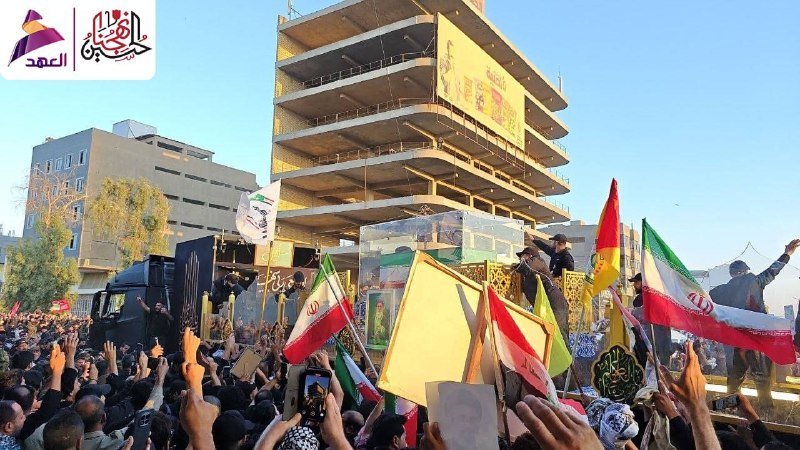
Foreign delegations began arriving in Tehran on 3 July 2026 to take part in the formal farewell to Ayatollah Ali Khamenei, whose death on 2 July ended a 37-year tenure as Iran's Supreme Leader. State-aligned channels documented an Omani mission landing in the capital, and Palestinian scholars offering tributes — early signals of how widely the Islamic Republic intends to stage its leadership transition.
What is unfolding is not merely a funeral. It is a controlled performance of continuity, calibrated to demonstrate that Khamenei's successor inherits an axis still intact, and a regional order in which Tehran sets the tempo of mourning as it once set the tempo of confrontation. The ceremony is therefore also a stress test of how far that order has frayed — and where its seams hold.
The choreography of farewell
Iranian state media have framed the rites around continuity rather than rupture. According to the official Khamenei office channel, the body was draped in the sacred flag of the Imam Hussein mausoleum in Karbala — a deliberate visual link to the martyrdom tradition the Islamic Republic has cultivated since 1979. The reference is not incidental: messaging from the office on 2 July explicitly invoked Imam Hussein, framing Khamenei as one who "refused to bow" before a "corrupt ruler," language designed to place him inside the martyred-imam lineage rather than inside the routine of state succession.
By 3 July, foreign guests were already arriving. IRNA's English-language service reported that an Omani delegation had landed in Tehran for the farewell ceremony. Oman has long positioned itself as a discreet Gulf intermediary, hosting back-channel talks between Washington and Tehran; its presence in the capital is read less as an act of mourning than as an act of diplomatic positioning at a moment when Iran's external orientation is suddenly up for grabs.
Palestinian scholars, IRNA reported separately, sent their own tributes. The choice of "scholars" rather than heads of state is itself a message — the Islamic Republic maintains deep ties to Palestinian religious and academic networks, particularly those linked to the Jerusalem and Al-Aqsa religious establishment, separate from the more fraught political relationship with Hamas and Islamic Jihad.
The regional signalling
The early guest list tells a story about who still treats Iran as a pole of gravity. Oman's dispatch is unsurprising — Muscat has cultivated warm ties with Tehran across ideological lines, and its presence stabilises the optics of a transition. The Palestinian tribute serves a different function: it anchors Iran publicly inside the wider cause of Palestine at precisely the moment when Arab states have been pursuing normalisation tracks with Israel. The funeral's visual economy — flags, scholars, regional delegations — is therefore designed to make the case that Iran remains the indispensable capital of a particular politics, even as the alliances underwriting that politics have shifted underfoot.
What the early guest list does not yet include is more revealing. There is no confirmed Saudi or Emirati presence in the initial reporting. There is no delegation from Egypt. The major Arab states that moved closer to Tehran in recent years — including through the China-brokered rapprochement with Riyadh in 2023 — have not been named in the available state-media dispatches. Whether that silence reflects diplomatic hesitation, sequencing, or simply the early hour of the mourning period is unclear. The sources do not specify.
What the framing reveals
Iranian state media operate as instruments of political theology as much as information channels, and the visual and textual choices in this funeral follow a familiar grammar. The Hussein-flag invocation places Khamenei inside a continuity of righteous suffering. The countdown messaging on the official channel frames the farewell as the culminating act of a life of refusal. The selective guest list — scholars and sympathetic states — keeps the frame inside the parts of the regional order that Tehran can still reliably fill.
The structural argument is therefore implicit rather than stated: succession does not require a rupture with the past, because the past itself has been re-narrated as seamless martyrdom. The flag, the invocation, the foreign tributes — each does rhetorical work that a formal constitutional process cannot.
The stakes and the unknowns
Who wins and who loses from a smooth transition depends on what "smooth" means in practice. Inside Iran, the immediate winner is the office of the Supreme Leader itself, which absorbs a succession shock without losing institutional momentum. The clerics, security chiefs and political operators clustered around the eventual successor inherit a system still capable of projecting influence into Iraq, Lebanon, Syria and Yemen. The losers, as ever, are those Iranians whose grievances — economic, civic, political — are now formally subordinated to the choreography of national mourning.
Outside Iran, the stakes are uneven. Regional states that depend on Iranian cooperation — Iraq above all, where Iranian-aligned factions are embedded in the state — gain predictability if the transition is clean. Gulf states that have built hedges against an unstable Iran lose less from continuity than from visible disorder. The wildcard is the relationship with the United States: a confirmed successor who restates the existing red lines buys time for diplomacy; a successor who seeks to consolidate authority at home through external escalation does not.
The most consequential unknown is also the most obvious one — the identity of the successor. The sources reviewed here do not name a confirmed replacement. Iranian constitutional procedure places the appointment with the Assembly of Experts, and the body has historically moved carefully rather than quickly. Until that body acts, the funeral is doing the political work of signalling: that Iran intends to present a united front, that its axis still travels to Tehran, and that the cause of Palestine remains inscribed on the ceremonial furniture of the state. What comes after the funeral is the harder test, and one the available reporting cannot yet adjudicate.
This publication noted the framing difference between Iranian state-aligned outlets, which frame the transition as continuity, and Western wire reporting, which has so far focused on the policy implications of the succession. Monexus treats the funeral as a diplomatic event in its own right, not merely as backdrop to a future announcement.
Wire provenance
This editorial synthesis draws on the following public wire/social posts:
- https://t.me/Khamenei_it
- https://t.me/Irna_en
- https://t.me/Khamenei_en
- https://t.me/Khamenei_en