Beirut sends its defence minister to Tehran: what Lebanon's Khamenei funeral delegation signals
Lebanese Defence Minister Michel Mansi travelled to Tehran on 3 July 2026 to attend the funeral of Iran's supreme leader, a move that puts a sitting Beirut cabinet member inside an Iranian state ceremony at a sensitive political moment.
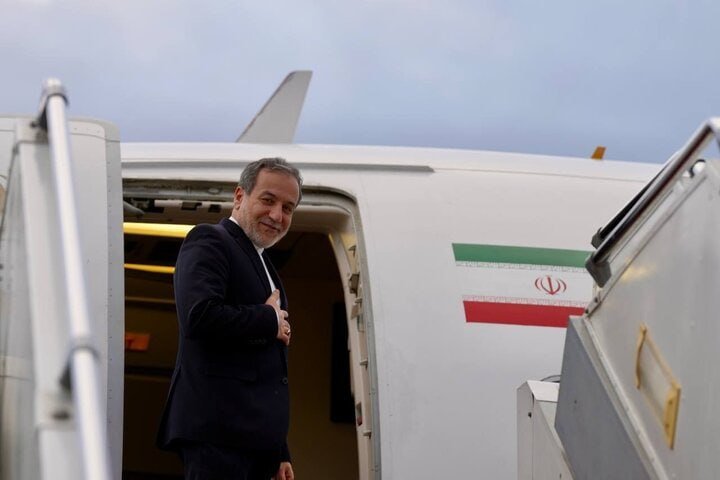
Lebanese Defence Minister Michel Mansi arrived in Tehran on 3 July 2026 to take part in the funeral ceremonies for Iran's supreme leader, according to three separate regional Telegram channels that carried the announcement within the same hour. The Lebanese ministry's presence at the farewell ceremony is a small, deliberate piece of choreography: it places a sitting cabinet member of a country that officially disclaims an alliance with Tehran inside an Iranian state ritual reserved for the closest of foreign partners.
The visit lands at a moment when the Lebanese state is still negotiating, in public and in private, how much of its sovereignty it is willing to perform in front of an Iranian camera. Mansi's presence in Tehran is not a routine condolence call; it is a foreign-policy signal directed simultaneously at Washington, at the Gulf, at Beirut's own street, and at the Iranian establishment that the new leadership is replacing.
What is actually being reported
Three channels carried the news in the same window on the morning of 3 July 2026 (UTC). The Lebanese outlet Englishabuali reported that the "Lebanese Minister of Defense arrived in Tehran to represent Lebanon at the funeral of Ali Khamenei." The pro-Hezbollah channel FotrosResistancee posted that the "Lebanese minister of Defense also traveled to Tehran to pay his respects to the martyred leader of Iran," framing Mansi as one of several foreign dignitaries doing the same. Al Alam Arabic, the Iranian state broadcaster's Arabic-language arm, identified the minister by name — Michel Mansi — and said he "participates in the farewell ceremony for the body of the martyr leader of the revolution, Imam Khamenei, to perform the duty of condolences and sal[utation]."
The three accounts agree on the core fact: a Lebanese defence minister is physically in Tehran for the funeral of the Iranian supreme leader. They disagree, mildly, on framing. Englishabuali treats it as national representation. FotrosResistancee and Al Alam lean into the religious register, calling Khamenei the "martyred leader of the revolution" and "Imam" — a vocabulary that mirrors Iranian state media rather than the formal neutrality Beirut usually prefers in condolence notes. None of the three channels gives a time of arrival, a flight number, a delegation list, or any readout of meetings with Iranian officials. None explains how Mansi's travel was approved — whether by the council of ministers, the prime minister's office, or the presidency.
Why a defence minister, not a foreign minister
The choice of the defence portfolio is itself the story. Lebanon's foreign minister is the conventional emissary for state-to-state condolence; sending the defence minister to a foreign capital elevates the visit from diplomatic courtesy to something closer to a security-political gesture. In Lebanese cabinet arithmetic, the defence ministry is currently held by a political faction that sits closer to the Hezbollah–Amal axis than the prime minister's office does. The substitution does not go unnoticed in Beirut, where the optics of a Christian defence minister crossing into an Iranian ceremony will be read in at least three different ways by three different audiences.
There is a competing reading: that the prime minister's office, or the president, chose to send the defence minister precisely because the foreign ministry is politically exposed at the moment, and a security-focused envoy is a less inflammable choice than a foreign-affairs one. The available source material does not settle which of these is true. It records only that Mansi travelled, that he was named by Iranian state media within an hour of arrival, and that the framing he was given in Tehran was religious-martyrdom rather than state-to-state condolence.
The structural frame
What is unfolding in Tehran this week is bigger than one funeral visit, and the Lebanese delegation is one of several pieces of evidence. When a sitting cabinet member of a state that officially distinguishes between itself and the Iranian security order participates in an Iranian state ceremony under a martyrdom framing, the line between "ally," "partner," and "member of the axis" blurs in plain sight. The pattern is familiar from previous funerals in the region: attendance lists at Iranian state ceremonies have, over the last decade, functioned as informal coalition rosters, with the seating chart reading as a foreign-policy white paper.
Lebanon's official position remains that it is not at war with Israel and is not a party to the wider Iranian-led regional confrontation. Mansi's presence in Tehran does not, on its own, change that legal posture. But legal posture and political signalling are different currencies, and Beirut has spent the second more freely than the first in recent years. The visit tells Tehran that the Beirut cabinet is willing to be photographed inside the Iranian frame. It tells Gulf capitals and Western chancelleries that the Beirut cabinet is willing to be photographed inside the Iranian frame. Both audiences now have to react.
What remains uncertain
The source material does not specify when Mansi left Beirut, who approved the trip, or whether he is carrying a private message from the Lebanese president, prime minister, or speaker of parliament. It does not say who else is in his delegation, whether he will meet Iranian officials beyond the funeral ceremony, or how long he intends to stay. The three Telegram channels that reported his arrival are aligned in tone — two of the three are explicitly sympathetic to the Iranian-aligned political order inside Lebanon — and none of them has, in this reporting cycle, been contradicted by a Lebanese government statement.
What can be said with confidence is narrow and dated: on 3 July 2026, at approximately 13:31–13:32 UTC, Lebanese Defence Minister Michel Mansi was reported by three regional outlets to be present at the Tehran farewell ceremony for Iran's supreme leader. The political weight of that presence will be decided in the days that follow, in statements from Beirut, in the seating of the next Lebanese cabinet meeting, and in the reactions of the foreign ministries that did not send a minister of their own.
Desk note: This article was framed from regional Telegram reporting — two outlets sympathetic to the Hezbollah–Iran political alignment, plus Iranian state media — rather than Western wire copy. Monexus has reported the core attendance fact conservatively and flagged the framing divergence in the body rather than smoothing it over.
Wire provenance
This editorial synthesis draws on the following public wire/social posts:
- https://t.me/englishabuali
- https://t.me/FotrosResistancee
- https://t.me/alalamarabic