Margo Price drops surprise protest mixtape 'Days of Unrest' for July 4 weekend, with Joan Baez in tow
Country singer Margo Price released a surprise July 4 protest mixtape featuring covers and a guest turn from Joan Baez, framing Independence Day around unrest rather than celebration.
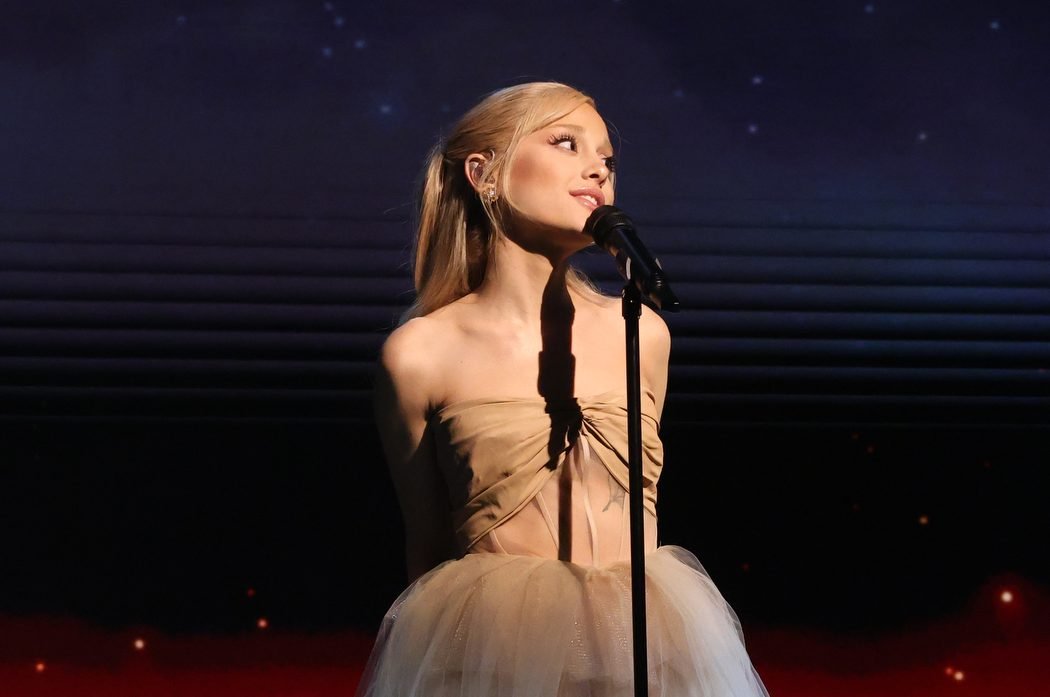
On 3 July 2026, with the United States a day out from its 250th July 4, country singer Margo Price released a surprise protest mixtape titled Days of Unrest — a roughly ten-track collection of covers pitched at a holiday weekend that has, in recent years, become as contested as it is commemorated. The package includes a guest appearance from Joan Baez, according to Pitchfork's 3 July 2026 write-up of the release. The framing is deliberate: Price is treating Independence Day not as a parade but as a checkpoint, and asking listeners to do the same.
Price's pitch is that the American songbook already contains the language for this moment, and that the work of a protest record in 2026 is curation as much as composition. Days of Unrest runs covers rather than originals, with Baez — the genre's most bankable elder — brought in as a validator and a generational bridge. The move borrows the structural logic of the protest-music tradition Price has long inhabited: take a familiar melody, refit the lyric to the present, and let the audience hear the distance between the two.
The release as event
Pitchfork reported the surprise drop on 3 July 2026 at 17:39 UTC, hours after the project appeared on streaming platforms with minimal prior promotion. The package is described by the outlet as a "July 4 weekend mixtape," a label that signals both its scheduling logic — release on the eve of the holiday so listeners arrive at the barbecue already marinating in the message — and its deliberate lower-case register. Mixtape, not album. Curated, not composed. A format that signals urgency and impermanence, the musical equivalent of a flyer rather than a manifesto.
The inclusion of Joan Baez gives the project a credential that Price, despite her own standing in the Americana and outlaw-country worlds, cannot self-generate. Baez's career arc — from the Newport Folk Festival stages of the early 1960s through civil-rights marches and anti-Vietnam organising — supplies the lineage that a contemporary protest record, dropped in 2026, needs to feel rooted rather than reactive. The pairing is also a quiet answer to a recurring critique of present-day country-adjacent protest music: that it borrows the iconography of the tradition without its political muscle. Bringing Baez in is the audible equivalent of citing your sources.
What the project is reacting to
Price has not, in this release, narrowed her target to a single piece of legislation, court ruling, or administration. The title — Days of Unrest — is plural and ambient. It gestures at a national mood rather than a specific policy fight. That is itself a stance: protest music that names a single villain ages badly when the political weather shifts; protest music that names a condition has a longer shelf life.
The choice to release on the July 4 weekend sharpens that ambiguity into something more pointed. Independence Day in the United States has, over the past decade, become a contested stage — a moment when the country's political factions compete to define what, exactly, is being celebrated. Country and Americana artists in particular have used the holiday to push back against what they describe as a hollowing-out of the patriotic register. Price is working inside that contested space, but tilting the frame toward unrest rather than triumph. The implicit argument is that any honest accounting of the country's present has to begin with the unrest, not the fireworks.
Covers as a structural argument
Releasing a record built almost entirely from other people's songs is a particular kind of editorial act. The covers selected — and the choice of which songs to leave out — function as a curated reading list. They tell the listener what the artist thinks the canon sounds like right now, and which of its entries still have work to do. For Price, a singer whose own catalogue already sits at the intersection of country tradition and left-of-centre politics, the move is a way of writing criticism in the most legible form her genre offers: the three-minute song.
It also sidesteps one of the harder problems facing working musicians who want to engage politically: the risk of writing new material that ages into a footnote. A cover of an established protest song carries the original's weight, and updates it without inheriting the full burden of authorship. The trade-off is creative — the artist cedes the claim to originality — but the gain is durability.
Stakes and what to watch
The release will land in a music press cycle dominated by coverage of summer festival lineups and touring announcements, which means the project has roughly a week to convert surprise into sustained attention. The Baez appearance is the obvious hook for feature writers; the question for the release's longer-term impact is whether the curated songbook provokes argument among listeners about which songs got included and which got left off. That conversation, more than any individual track, is the actual product.
For Price, the release extends a pattern of using holiday windows and high-visibility moments to make political statements with commercial risk attached. Country and Americana radio formats have, in recent years, narrowed the space available for artists whose politics diverge from the format's centre of gravity. A surprise mixtape, distributed primarily through streaming and direct-to-fan channels rather than terrestrial radio, is a release strategy designed to bypass that bottleneck.
For Baez, the appearance is a rare 2026 engagement with a younger artist working in adjacent terrain, and a signal that the generational relay she helped define is still live. For the broader protest-music conversation, Days of Unrest arrives as evidence that the tradition is being maintained by artists willing to use the formats they have — streaming surprise drops, mixtape framing, cover-heavy setlists — rather than waiting for a label or a movement to package it for them.
Desk note: Monexus is treating this as a release-and-context story rather than a profile. The wire coverage to date is limited to Pitchfork's same-day write-up; the broader critical reception will sharpen over the next 72 hours as reviewers and listeners work through the tracklist.