Medvedev in Tehran: a Moscow signal at a moment of succession
The Russian Security Council's deputy chairman landed in Tehran as a special envoy for Putin's farewell to Khamenei — a rare senior visit that fuses messaging about succession, sanctions resilience, and the Moscow–Tehran axis.
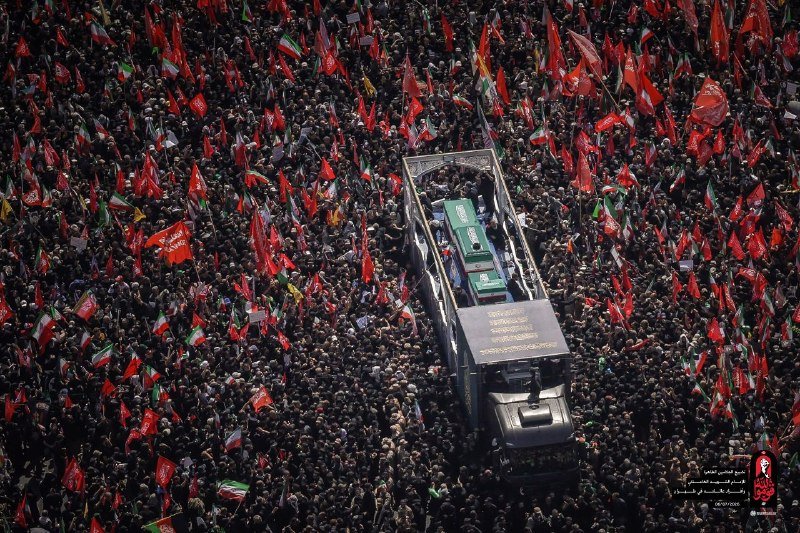
Dmitry Medvedev, the former Russian president who now serves as deputy chairman of Moscow's Security Council, touched down in Tehran on the afternoon of 3 July 2026 as Vladimir Putin's personal envoy for the farewell ceremony of Ayatollah Ali Khamenei, Iran's supreme leader. Iranian state-aligned outlets carried the arrival in near real time: PressTV's English feed posted at 12:10 UTC and again at 13:00 UTC; the Fars news agency published a short clip at 12:05 UTC; the Arabic-language Al Alam channel confirmed at 12:07 UTC that Medvedev was travelling as Putin's special envoy. The Telegram channel @myLordBebo added the visual detail — Medvedev walking the red carpet inside Tehran's Grand Mosalla, the great prayer hall built to host the country's most solemn state commemorations.
The visit is being read two ways at once, and both readings are probably right. It is, on the face of it, a protocol gesture — Moscow paying respects to a leader it has leaned on for drones, drone production know-how, and diplomatic cover at the United Nations. It is also something more pointed: a senior Russian figure on Iranian soil at the precise hour the Islamic Republic is beginning to choreograph a transition it has never had to choreograph before. That second reading is what makes the photograph worth staring at.
A hierarchy on display
Iranian state media has settled on a vocabulary for the day: "martyred Leader of the Islamic Revolution." The phrase has appeared in PressTV's captions and Fars's headlines, and it does work that ordinary obituary language does not. "Martyr" (shahid) is a term with a specific Islamic Republic grammar — it confers a particular moral status on the dead, signals the state's interpretation of the cause of death, and binds the successor to a defined political inheritance. By embedding it in the formal broadcast language around the funeral, the official broadcasters are not merely commemorating. They are framing.
Medvedev's role is to be visibly inside that framing. His presence is meant to read as international validation of the framing — an outside great power treating Khamenei's passing not as a routine leadership change but as a martyrdom that the successor inherits. Russia is the only major power with both the diplomatic standing and the political incentive to play that part visibly. Beijing's condolences have been quieter, expressed through the kind of measured foreign-ministry statement that signals respect without theatricality. Western governments have been largely silent on the substance, in part because they have spent four decades refusing to treat the Islamic Republic as a normal state. Moscow's choice to send a deputy head of its Security Council — not a foreign minister, not a culture minister — is calibrated to land at exactly the volume Iran's state media can replay.
What Moscow gets from the trip
The transactional case is easy to overstate and worth stating anyway. Iran's defence-industrial cooperation with Russia deepened sharply after February 2022, when Western sanctions on Moscow created an incentive to import Iranian-designed one-way attack drones, and then to localise production of them inside Russian territory. The arrangement has been a stress test of sanctions resilience for both sides: Iran proved it could move hardware into a war zone at scale; Russia proved it could integrate a foreign drone line into its own kill chain. None of that survives a leadership transition cleanly if Tehran's new supreme leader treats the relationship as transactional rather than ideological.
Medvedev's visit signals to whomever sits in the office next that the channel is not transactional — that Moscow intends to treat the succession as a continuation. It also positions Russia as a reference point for the new Iranian leadership in a moment when the country's most acute diplomatic problem is not Israel but the United Nations: snapback sanctions, the file on Iran's nuclear programme, and the question of which foreign capitals are willing to keep trading when the dollar plumbing tightens. Russia has been one of those capitals. Saying so publicly at a funeral costs Moscow very little and is read as loyalty by every Iranian faction watching.
What Tehran gets from the trip
For the Islamic Republic's transitional apparatus, Medvedev's presence does three things at once. It telegraphs that the country's axis-of-resistance foreign policy has not collapsed with Khamenei's death — an argument the reformers inside Iran will want to push back on, but one the security establishment will use to argue that continuity of leadership is what bought this show of support. It locks in a Russian audience for whatever message the new supreme leader chooses to send in his first months. And it gives Iranian state broadcasters a high-resolution image of an important visitor walking a red carpet that can be replayed in domestic news cycles for weeks.
That last point is not trivial. Legitimacy contests inside the Islamic Republic are won as much in the editorial choices of IRIB and the framing choices of Fars and PressTV as they are in the formal institutions of the Assembly of Experts. A Medvedev on the carpet is usable material.
Counter-narrative: a visit narrower than it looks
The reading that this visit constitutes some kind of Russian-Iranian entente against the West is the easy one, and probably wrong. The sources available do not specify what Medvedev and Iranian officials discussed beyond the funeral programme, and Russian state media have not, as of the timestamps above, broadcast any readout of bilateral meetings. It is at least as plausible that Moscow is managing exposure: ensuring that whatever successor emerges from the Assembly of Experts understands the cost of cutting the defence relationship, and that the cost is paid in Russian goodwill rather than Russian leverage.
There is also the question of who, exactly, in Tehran is being courted. The Telegram coverage names the Russian side carefully — Medvedev, deputy chairman of the Security Council, special envoy of the President — but the Iranian side is left deliberately vague. PressTV and Fars frame the receiving end as the state rather than any specific figure. That vagueness is itself a message: Moscow is addressing the institution, not the candidates.
Stakes
If the trajectory holds, three things follow over the next twelve to eighteen months. First, the Russia-Iran defence-industrial relationship enters a managed continuity phase rather than a disruption phase, with the new Iranian leadership choosing, at minimum, not to unwind drone and missile co-production. Second, the Russian-Chinese-Iranian diplomatic triangle acquires a public mourning overlay — funeral diplomacy is now part of its operating system — and Moscow cements a permanent seat at the table of Iranian succession politics. Third, the Western default of treating Iranian leadership transitions as windows of opportunity narrows: a great power that visits publicly during the funeral has bought the new office a reason to keep that power close and a cost to opening to Washington.
The sources do not specify the size of any Russian delegation beyond Medvedev, the duration of his stay in Tehran, or whether he will meet the Iranian president or any of the leading candidates to succeed Khamenei. What is clear is that the photograph is the message — and the message has already been received by the Iranian broadcasters who will decide what the country's domestic audience sees of this week's politics.
This publication framed Medvedev's arrival as a managed-continuity signal rather than a strategic realignment, because the source material is consistent with protocol-plus-positioning and inconsistent with a new substantive turn in Moscow-Tehran relations.
Wire provenance
This editorial synthesis draws on the following public wire/social posts:
- https://t.me/presstv/
- https://t.me/farsna/
- https://t.me/alalamfa/
- https://t.me/myLordBebo/
- https://en.wikipedia.org/wiki/Dmitry_Medvedev