After the Parcel Bombing in Monaco: A Sanctioned Ukrainian Millionaire, an International Arrest Warrant, and a Cross-Border Investigation
Monaco prosecutors have identified a suspect and issued an international arrest warrant in a parcel bombing that seriously wounded a sanctioned Ukraine-born millionaire, exposing a transnational investigative thread that now stretches across the Principality and into French jurisdictions.
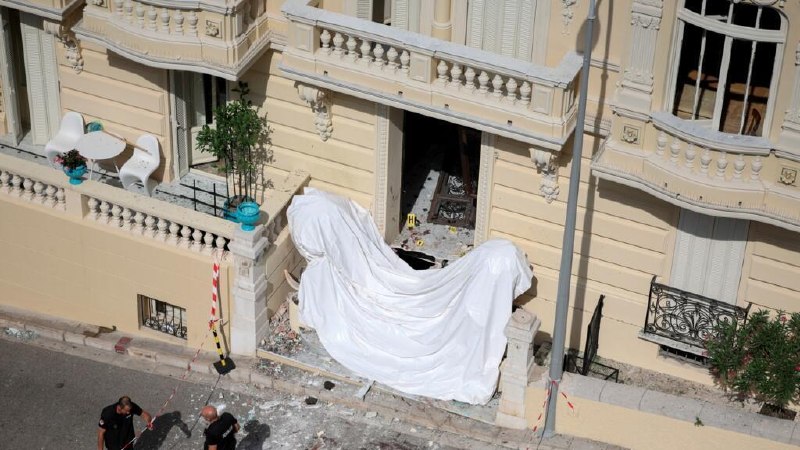
Monaco prosecutors have identified a suspect and issued an international arrest warrant in a parcel bombing that seriously wounded a sanctioned Ukraine-born millionaire and two other people, according to France 24 reporting carried on 3 July 2026 at 01:43 UTC. The disclosure, made via the Principality's prosecution service, marks the first public naming of a person of interest in the case and converts what had been a sealed inquiry into an active cross-border manhunt.
The case is unusual for two reasons. The victim is a Ukrainian-born businessman operating inside one of Europe's smallest and most secretive jurisdictions. And the suspect, once apprehended, is likely to be processed through a French investigating-judge system that runs parallel to Monaco's own — because the principality's courts are conventionally staffed, at the higher levels, by French-magistrate personnel and the territory's investigative record tends to be built up through French police cooperation. What began as a Monaco incident is fast becoming a Franco-Monegasque file.
What Monaco has confirmed
France 24's English wire, summarising the Principality's prosecutors, reports that authorities "have identified a suspect and issued an international arrest warrant" in the parcel-bombing investigation. The victims, the broadcaster adds, include "a sanctioned Ukraine-born millionaire and two" others, who were seriously wounded. The phrasing — "according to initial accounts," as conveyed by the wire — signals that prosecutors are withholding identity disclosures pending formal communication to the suspect's counsel and INTERPOL channels. No motive has been publicly assigned.
Two adjacent items from Ukraine's TSN news desk, carried the same morning on Telegram at 04:14 UTC, sit in the public frame around Ukrainian migration, retirement-insurance rules and the cost of cinema in Germany — useful as window-dressing onto Ukrainian life in Europe, but unconnected to the Monaco file. They appear here only to acknowledge that Ukrainian-linked coverage of 3 July ranges well beyond any single criminal case.
The sanctioned status of the wounded businessman is itself a story. Sanctions designations — whether by the EU, the United States, the United Kingdom, or Ukraine's own National Security and Defence Council — are matters of public record searchable in the relevant registries, and the attribution "sanctioned Ukraine-born millionaire" in the France 24 wire indicates that whoever is named has a documented place on at least one such list. The Principality, for its part, has historical form for accommodating wealth from post-Soviet states; the regulatory pressure on that hospitality has grown with successive EU sanctions packages.
Why a parcel bomb, why Monaco
Parcel bombs are a pressure tactic that conveys both proximity and warning. The sender, or an intermediary, has to get the device past a victim's intake — a concierge desk, a private mailbox, a household member who signs for deliveries. That means access, knowledge of routine, and a willingness to make physical contact with a target's environment. The volume of packages moved in Monaco's private-residential market is small enough that each one is unusually traceable: courier firms serving the principality typically serve the same client repeatedly, and a sustained surveillance of an apartment's intake would not require the apparatus that the same operation would demand in a major city.
The second reason Monaco matters is jurisdiction. The principality's gendarmerie and prosecutor's office cooperate routinely with French counterparts — both through the bilateral security treaties that predate the 1962 Franco-Monegasque treaty framework and through ordinary EU police-cooperation channels where the file involves a French national or French soil. A parcel bomb that injures people inside the principality but is sourced — say — from a French postal depot is, for evidentiary purposes, a Franco-Monegasque investigation from day one.
A third layer sits beneath the criminal procedure: sanctions exposure. A sanctioned individual injured in a security incident is, by virtue of being a sanctions-designated person, already the subject of asset freezes, travel restrictions, and reporting obligations across multiple jurisdictions. An attack on them triggers reporting and review work in those jurisdictions separately from the criminal file. That paperwork tail — what regulators in at least one EU member state, in the United States, and in Ukraine must do once the public designation is visible in a major criminal case — is part of what is now in motion.
Alternate explanations, and why the dominant frame holds
There are at least two readings of the incident that the public wire does not rule out. The first is private: a business dispute, an inheritance contest, or a personal matter entirely internal to the victim's network. Parcels have long been used in exactly such disputes, and the principality's privileged disputes industry has historically produced a steady stream of sealed civil filings.
The second reading is sanctions-related: an effort to silence, or to convey cost, against a Ukrainian-born person who remains on an active designation list. That frame has more explanatory reach than the private-dispute reading because it accounts for the postal modality — a method suited to actors who cannot rely on local criminal infrastructure — and because it draws a public file into a transnational one.
The dominant frame at this stage of reporting is that prosecutors have done enough to name a suspect and seek international arrest, but not enough to publicly assign motive. That posture is conventional. It is the configuration in which the investigative work continues without prejudicing future proceedings, and in which the broadcaster's wire can report the facts on the record without overstepping what the prosecutors have chosen to disclose.
Stakes and what is unresolved
If the international arrest warrant produces a custody event, the next decision points are clear. The suspect will be processed according to whatever bilateral framework governs the transfer, and the principality's prosecutors will determine whether the case proceeds in Monaco, in France, or under a joint investigative structure. The wounded millionaire's access to records held by Monaco's registry — corporate, notarial, banking — is also likely to be relitigated, because sanctions designations already constrain how those records may be consulted and by whom.
The sources do not specify the suspect's nationality, the device's composition, or the courier route by which the parcel reached the victim. The sources do not specify whether any of the wounded parties are in custody, in hospital, or in protective isolation. France 24's wire explicitly carries the framing "according to initial accounts," which is the broadcaster's way of indicating that what is on the record is provisional and will move as the inquiry moves. The next material update is most likely to come from the prosecutor's office itself, via the same channels that produced the 3 July disclosure.
A Monexus desk note: France 24 carried the wire on the suspect's identification within hours of the Principality's disclosure. Ukrainian-domestic Telegram traffic in the same window — covered here only for context on the day's broader Ukrainian news flow — sits outside the criminal file. The investigative thread remains Monaco-led; the analytical thread from this publication now waits for the next prosecutorial update.
Wire provenance
This editorial synthesis draws on the following public wire/social posts:
- https://t.me/s/france24_en
- https://t.me/s/TSN_ua
- https://t.me/s/TSN_ua
- https://t.me/s/TSN_ua
- https://t.me/s/france24_en