Pakistan's top general in Tehran: A signal that travels further than the funeral
General Asim Munir's arrival in Tehran for the homage ceremony for Ayatollah Khamenei puts Pakistan's army chief in the same room as the leaders of a region recalibrating after a contested succession.
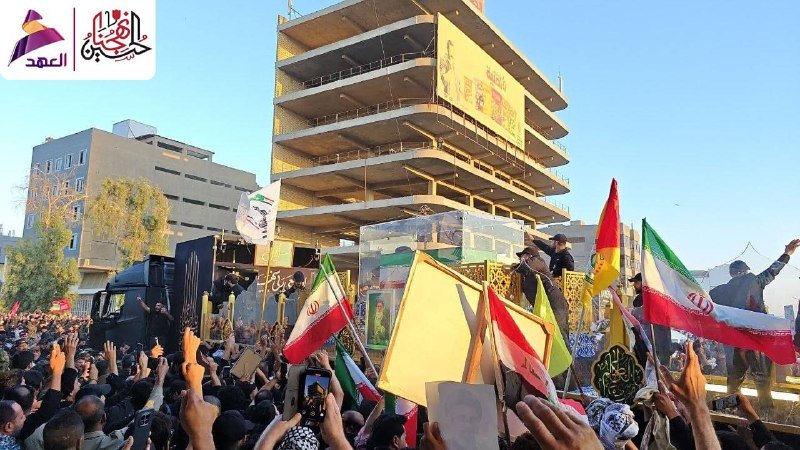
Pakistan's army chief, General Asim Munir, arrived in Tehran on the morning of 3 July 2026 to attend the homage and funeral ceremonies for Ayatollah Ali Khamenei, Iran's supreme leader, who died in late June. The visit, confirmed in near-real-time by Iranian state outlets in English, Arabic and Persian between 09:47 and 10:42 UTC, makes Islamabad the first major non-regional military power to dispatch its uniformed head to the Iranian capital for the rites. Travel of this kind is normally a foreign-ministerial affair; a sitting army chief is the visible expression of the Pakistani state's strategic posture, not its diplomatic niceties.
The trip sits at the hinge of two of the most consequential questions in South Asian and Middle Eastern geopolitics: what Pakistan's army wants from a post-Khamenei Iran, and what a still-grieving Tehran wants from the only nuclear-armed Muslim-majority state on its eastern flank.
The diplomatic choreography
Three Iranian outlets – Tasnim, Mehr News and IRNA, plus Al Alam Arabic – reported Munir's arrival in the 09:47 to 10:42 UTC window. The wording was consistent across the official and semi-official sources: farewell ceremony and funeral of the martyred leader. The use of martyred – not deceased – is itself significant. It is the framing Tehran has chosen for the transition, signalling that the next supreme leader inherits the mantle of a victim, not merely a predecessor. Foreign guests who wish to appear at ease inside that framing use the same vocabulary; Munir's presence, with no recorded Pakistani government demur, suggests Rawalpindi is comfortable doing so.
The choreography of these ceremonies is unusually public for an Iranian succession. Telegram channels aligned with the security services have broadcast arrivals continuously since the mourning period opened, producing a kind of inadvertent attendance list of foreign delegations. That list, once compiled, will itself become a piece of intelligence about who is willing to be photographed standing next to the next leader of the Islamic Republic, and who is not.
What Rawalpindi is buying
Pakistan and Iran share a roughly 900-kilometre border that runs through Balochistan and has been the site of tit-for-tat missile and drone exchanges over the past year. The Pakistan army's preference, institutional consensus in Islamabad holds, is for the relationship to be managed quietly rather than loudly. Munir's trip is not quiet. By sending the chief of army staff rather than the foreign minister or a parliamentary delegation, the military has signalled three things at once: that it sees this transition as strategically decisive; that it wants the next Iranian leadership to see Pakistan's de facto decision-maker in person, not his civilian subordinates; and that it is prepared to invest political capital in the relationship that the foreign office could not easily spend.
The calculus on the Pakistani side is straightforward. Iran is a neighbour, an oil import option in a sea-based energy system that Rawalpindi has long wanted to diversify, and a counter-weight to India in any contingency in which Kabul tilts decisively west. None of that requires an emotional declaration about the supreme leader. It does require the kind of visibility that lets Tehran's new inner circle remember, during later negotiations over trade corridors, sanctions relief and cross-border security, who showed up and who sent a deputy.
What Tehran is buying
From Tehran's perspective, the calculus is more delicate. Khamenei's death has been presented by Iranian state media as a martyrdom, but the underlying problem of succession has not been publicly resolved in real time. Foreign dignitaries at the funeral perform a dual role: they legitimise the transition and they stake a claim, however thin, on the next administration's attention.
A Pakistani army chief is a useful guest. Unlike a Gulf state or Egyptian delegation, Pakistan carries no Shia-Sunni sectarian baggage that the Islamic Republic's messaging would have to navigate carefully. Unlike Russia or China, Pakistan is a neighbour with a real border, a real shared problem set, and a real need for Iranian goodwill on issues ranging from energy pricing to cross-border militancy. In a funeral hall full of guests whose strategic weight varies widely, a working military counterpart from a 900-kilometre border is one of the more useful people to seat near the Iranian chief of staff.
The Al Alam Arabic report's urgent branding and the IRNA English headline's emphasis on the homage ceremony both reveal a regime intent on projecting an image of broad international recognition. Whether that recognition is broad enough to insulate the next leadership from the sanctions, isolation and legitimacy contests that have defined the Islamic Republic's posture for four decades is a separate question – one the funeral attendance list cannot answer.
The quieter structural frame
Pakistan's military-to-military relationship with Iran is older and considerably deeper than the civilian-to-civilian one. Successive Pakistani army chiefs have cultivated their Iranian counterparts through the Islamic Revolution Guards Corps as a hedge against both Indian pressure and American abandonment. The pattern of relationship management is well known: a quiet visit, a public handshake, a joint statement that says nothing strategic in print and a great deal in practice.
What changes with Munir's trip is the publicness. Putting the army chief on camera in Tehran, with the cameras running through Iranian state media, is a deliberate downgrade in the operational security of a relationship that was previously conducted in private. The downgrade reflects two pressures: the post-Khamenei Iranian need for visible international legitimacy, and the Pakistani military's wish to be seen – by Washington, by Beijing, and crucially by New Delhi – as a regional actor with weight in the Middle East, not merely a recipient of Gulf and IMF assistance. The trip is read in all three capitals. The signals each will draw from the same photograph will be different.
Stakes and what remains unresolved
If the trajectory continues – more foreign military chiefs in Tehran, more funerals turned into summits – the practical effect will be a normalisation of military diplomacy with a post-Khamenei Iran that does not require either side to articulate what normalisation actually means. That ambiguity suits both sides in the short term. It is less obviously an outcome that suits Washington, which under successive administrations has asked its partners to maintain a thinner layer of separation from the Iranian security state.
Several things remain genuinely uncertain. The four Telegram-sourced reports do not specify whether Munir will hold bilateral meetings with Iranian military or political figures beyond the ceremonies; whether the Pakistani foreign minister or prime minister has separately dispatched a message; or what other foreign military chiefs – if any – have travelled. The framing martyred in Iranian state outlets indicates a regime attempt to define the succession narratively, but does not disclose the institutional mechanics of the transition. What these sources establish is attendance and timing. The diplomatic substance, if any, will surface in the days that follow – or, as has sometimes been the case in this kind of choreography, will never surface at all, in which case the photograph will have been the entire point.
Desk note: Monexus is relying on Iranian state and state-adjacent outlets for the bare facts of Munir's arrival. Where they converge on timing and attendance, that convergence is treated as confirmed. Where interpretation diverges – the framing of Khamenei's death, the strategic meaning of the visit – the article gives equal weight to the Iranian framing and the strategic logic visible in the attendance choice, and flags what remains unverified.
Wire provenance
This editorial synthesis draws on the following public wire/social posts:
- https://t.me/Irna_en
- https://t.me/alalamarabic
- https://t.me/mehrnews
- https://t.me/tasnimnews_en
- https://en.wikipedia.org/wiki/Asim_Munir_(general)
- https://en.wikipedia.org/wiki/Ali_Khamenei