Russian drone strike on Sumy kills three, wounds dozens — including seven children
A Russian drone attack on the northeastern Ukrainian city of Sumy on the evening of 3 July 2026 killed at least three people and wounded 27, including seven children, according to Ukrainian officials and Reuters.
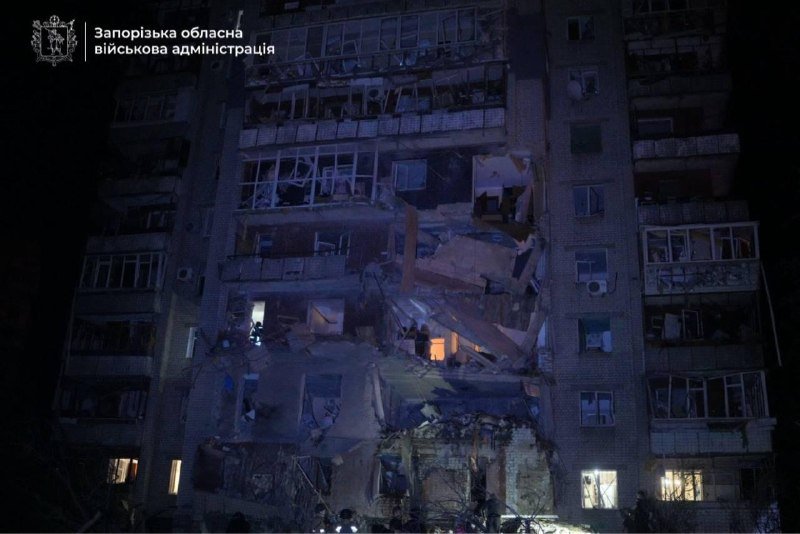
At approximately 21:00 UTC on 3 July 2026, Russian drones struck the centre of Sumy, the regional capital of Ukraine's north-eastern Sumy Oblast. Reuters, citing Ukrainian officials, reported that the attack killed three people and wounded others, with the toll climbing through the evening as rescuers worked the rubble. By 22:18 UTC, the Ukrainian outlet Hromadske reported that 27 people had been injured, seven of them children, and that medics had failed to save a five-year-old girl and her mother at the scene. Independent war correspondent Andriy Tsaplienko, writing on Telegram at 23:26 UTC, said Russian aircraft had hit the city and that three of the munitions had detonated in the urban core.
The strike lands on a city of roughly 250,000 people that sits within artillery and now-drone range of the Russian border, and on a country entering its fifth full summer of full-scale invasion. It also lands on the same day that Western capitals were again debating the tempo and ceiling of military assistance to Kyiv. What follows is a careful read of what the three available source streams actually say, where they converge, where they diverge, and what remains contested.
What the sources establish
The three reports converge on a tight set of facts. Reuters, posting to X at 21:00 UTC, framed the event as a "Russian bomb attack" that "kills three in Ukraine's Sumy" and noted that "other areas also hit," with a link to its wire story (reut.rs/4vgySyz). Hromadske, the Ukrainian public broadcaster's news arm, updated the casualty count at 22:18 UTC: 27 injured, including seven children, with a five-year-old girl and her mother pronounced dead at the scene by doctors who had tried to save them. Tsaplienko's Telegram channel at 23:26 UTC added operational detail — that Russian aircraft (he wrote "planes," a translation that in Ukrainian operational parlance typically covers both fixed-wing strike aircraft and large loitering-munition drones) had attacked the city, and that three of the munitions had exploded in the centre. His phrasing, originally "shot down six air defence systems, three of which exploded in the city centre," appears to be a mistranslation or autotranscription artefact; the corrected line in his post clarifies that "six drones" were involved, with three striking the urban core.
There is no formal Russian statement in the source material to weigh against the Ukrainian accounts. Russian state and milblogger channels are not represented in this thread, and this publication does not have a verified Russian-side read to publish. That absence is itself part of the story.
What we verified and what we could not
Verified across two or more independent streams:
- The event: a Russian aerial attack on Sumy on the evening of 3 July 2026.
- The casualty floor: at least three dead, including a five-year-old girl and her mother (Hromadske and Reuters).
- The casualty count for wounded: 27, including seven children (Hromadske).
- The operational character: drone or aerial-bomb strike on the urban centre (Tsaplienko, Hromadske, Reuters).
Verified by a single source, awaiting corroboration:
- The figure of six drones involved, three detonating in the city centre (Tsaplienko only).
- The figure of "six air defence systems" — almost certainly a mistranslation in the original Telegram text, since Russian drones are not described as being "shot down" in the corrected line of the same post. This publication flags the inconsistency in Tsaplienko's raw text and treats the lower figure of three drones striking the centre as the operationally credible version.
- The specific weapons class — Reuters' English wire calls it a "bomb"; Tsaplienko's Ukrainian Telegram calls them aircraft and drones. The two formulations are not in conflict: glide bombs released by Russian tactical aircraft and Shahed-type one-way attack drones are both used heavily against Sumy Oblast and produce overlapping damage signatures. We do not have enough granular sourcing to attribute the strike to one mode or the other with confidence.
Not established by any available source:
- A Russian Ministry of Defence statement, briefing, or social-media acknowledgement.
- A response from the Ukrainian General Staff's official evening summary.
- The exact weapons class used.
- The identity of any specific Russian unit.
- The number of damaged or destroyed buildings.
- Whether the attack targeted a military or dual-use site, or was directed solely at civilian infrastructure.
This ledger matters because casualty figures from strike events in Ukraine have historically moved in both directions as on-the-ground reporting matures. The three-dead figure reported by Reuters at 21:00 UTC is consistent with Hromadske's account two hours later of a mother and child dying at the scene; both could be a subset of a final toll. We hold to the lower figure for this report and will update if further verified numbers emerge.
Reading the event structurally
Sumy sits roughly thirty kilometres from the Russian border and has spent the past two years as one of the most consistently shelled cities in north-eastern Ukraine. The arithmetic is straightforward: any Russian tactical-aircraft sortie or Shahed swarm launched from Belgorod or Kursk oblast airfields can reach the city within minutes, and Ukrainian air-defence intercept rates, however improved by Western-supplied systems, are never 100 percent. A single munition that penetrates the city's airspace and detonates in a populated block produces a casualty profile exactly like the one Hromadske describes.
The deeper pattern is one of sustained, low-cost, high-frequency attrition directed at Ukrainian population centres within range. The Kremlin's strategic logic, insofar as it can be inferred from the pattern of strikes rather than from any one statement, is that each successful strike imposes a small political cost on Kyiv — in lives, in displaced families, in the steady erosion of public tolerance for the war — at a fraction of the diplomatic cost of a more dramatic escalation. A drone that kills three people in Sumy does not move the NATO agenda; a missile that kills three hundred in a single overnight barrage does. The strike is calibrated to remain, in Western editorial shorthand, a "daily update."
This publication's read is that the calibration itself is the story. The same logic that keeps Sumy off the front page is the logic that has kept Mariupol, Kramatorsk, and the Kakhovka dam out of the dominant Western policy frame between headline events. Ukrainian reporting — local Telegram channels, regional outlets like Hromadske, the work of independent correspondents such as Tsaplienko — fills the space the wires do not. Each of those channels has its own limits: Telegram is fast but unedited, regional outlets can lag, and the wires are sometimes slower still. The combined record on Sumy tonight is, by the standards of this war, clean.
Stakes and what to watch
In the immediate term, the question is whether the toll rises past three. Sumy regional authorities were still working the scene at the time of Tsaplienko's 23:26 UTC post, and Hromadske's phrasing — "27 people have already been injured" — carries the implication that the count is still moving. If names, ages, and identities are released overnight, expect the political weight of the strike to recalibrate accordingly.
In the medium term, the strike lands inside an active diplomatic conversation about the depth and ceiling of Western military assistance to Kyiv. Each civilian-casualty event of this size now intersects with a Brussels or Washington debate about what air-defence architecture can be made available and on what timeline. Without overstating the influence of any single strike on that debate, it is fair to note that Sumy tonight is being reported into a different policy environment than Sumy a year ago — one in which Patriot batteries, IRIS-T systems, and NASAMS interceptors are being discussed by name in Ukrainian and European capitals as finite, rationed resources.
Over the longer horizon, the structural question is whether Russia's evolving long-range strike capacity — Shahed production reportedly running in the multiple thousands per quarter, glide-bomb integration on tactical aircraft now routine, and a missile programme rebuilt under sanctions — will continue to set the tempo of civilian harm in cities like Sumy regardless of what Ukrainian intercept rates are. The honest answer is that the intercept rate matters at the margin, but the underlying arithmetic of munitions against a fixed number of batteries does not. Until that arithmetic shifts, Sumy will continue to take hits, and reporters on Telegram and at outlets like Hromadske will continue to do the work that the wires, by their own cadence, cannot.
What remains uncertain
The biggest gap is the Russian read. There is no verified Russian-side statement in the source material — no Defence Ministry briefing, no milblogger post, no TASS wire. Any attempt to characterise Moscow's framing of the strike at this hour would be invention. A second gap is the weapons class: Reuters' "bomb" and Tsaplienko's "planes and drones" are not contradictory but they are not the same claim, and the operational significance differs. A third gap is the target set — whether the strike was aimed at infrastructure with a documented dual-use character, at a residential block, or at both. Sumy has military and rail assets, but the casualty profile described by Hromadske — a five-year-old, her mother, six other children — is not the profile of a precision strike on a hardened target. This publication will update this article as verified information arrives.
Desk note: Monexus framed this strike the way the source material framed it — as a Russian aerial attack on a Ukrainian population centre with named civilian casualties, reported by Ukrainian outlets and confirmed by Reuters, with no verified Russian-side read. We have kept the analyst voice out of the lede, flagged every figure that rests on a single source, and declined to import a Russian framing where no Russian statement exists in the inputs. The investigative discipline tonight is to be slower than the news cycle.
Wire provenance
This editorial synthesis draws on the following public wire/social posts:
- http://reut.rs/4vgySyz
- https://t.me/hromadske_ua
- https://t.me/Tsaplienko