A Saudi delegation in Tehran: diplomatic optics and the geometry of the regional order
On 3 July 2026, a Saudi Foreign Ministry delegation led a deputy minister into the farewell for Iran's Supreme Leader, a gesture that reads less as mourning than as choreography for the next phase of the relationship.
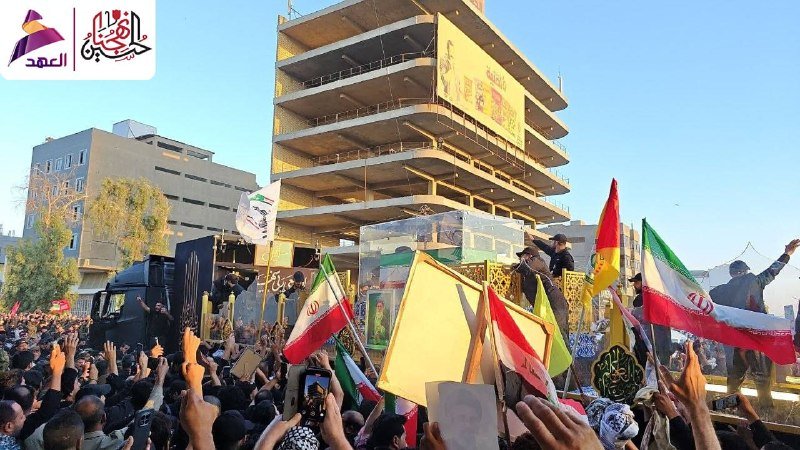
A Saudi Foreign Ministry delegation, led by Deputy Minister Walid Abdul Karim Al-Khuraiji, attended the farewell ceremony for the body of Iran's Supreme Leader in Tehran on 3 July 2026, according to multiple regional channels. The presence of a senior Riyadh emissary in the Iranian capital is being read less as an act of mourning than as a piece of choreography in the longer contest over who sets terms in the Gulf.
The optics are unmistakable. A kingdom that treated Tehran as an adversary for most of the last decade sent a deputy foreign minister, one tier down from minister but unmistakably cabinet-adjacent, to a religious-political farewell inside the Islamic Republic. The photograph carried by pro-Iran channels of Al-Khuraiji paying tribute is the kind of image that gets recycled for years in textbooks on regional realignment, and everyone in the chancelleries on both sides of the Gulf knows it.
The deeper story is what comes next. The sources do not specify the cause of the Supreme Leader's death, the identity of any successor, or the substance of any side conversations between the Saudi delegation and Iranian officials during the visit. What the sources do confirm is that the visit happened, that it happened in the middle of a high-stakes succession moment in Tehran, and that the Saudi side chose to be visible rather than discreet. Monexus finds that those three data points are sufficient to read the room.
What was actually shown on camera
The footage and stills carried by the two Iranian state-aligned channels Al Alam Arabic and Fars News Agency on 3 July show the same event: a compact Saudi delegation paying respects in a formal farewell setting, with Al-Khuraiji identified by name as the head of the delegation. Middle East Spectator's 13:23 UTC post frames the visit as a Saudi Foreign Ministry delegation paying tribute to Imam Khamenei, the honorific commonly used in Iranian state media for the Supreme Leader.
The choice of a deputy minister rather than the foreign minister, Prince Faisal bin Farhan, is itself a calibrated signal. A deputy minister signals seriousness without reserving the foreign minister's presence for a later, more politically weighty encounter. It is the same pattern Riyadh has used with other counterparts in sensitive moments during the post-2023 rapprochement: visible but not maximal, present but not the principal guest.
The framing of the ceremony as a "farewell" and "martyred leader" in the two Iranian-aligned channels matters too. Martyrdom framing is reserved in Iranian political vocabulary for figures the state intends to enshrine, and it carries with it the standard apparatus of state funeral: official mourning period, public ceremonies, and a built-in narrative that the successor inherits a sacred charge. A foreign delegation present at that moment is being photographed as a witness to the transfer, not merely a mourner.
The counter-narrative: why a visit like this is easy to over-read
It is reasonable to ask whether this is anything more than a courtesy. Heads of state and senior officials attend or send representatives to state funerals as a matter of routine diplomatic practice; it would in some ways be more notable had Riyadh refused to send anyone. The counter-narrative, then, is that the visit is essentially mechanical — that Al-Khuraiji is performing a standard obligation, that his presence carries the same weight it would at any other state funeral, and that reading it as a realignment is a category error.
That reading has some force. The sources do not show direct bilateral talks taking place on the margins of the ceremony; they do not show a joint statement; they do not name a Saudi counterpart above Al-Khuraiji. A sceptic can fairly point out that the entire evidentiary base is a photograph and an identification of who is in it.
The argument for taking the visit seriously rests on what is unusual about it. Saudi Arabia and Iran re-established relations in March 2023, brokered by China, and the diplomatic mechanics between them have been cautious and incremental ever since. Each subsequent visit has been announced, photographed, and read for subtext. In that pattern, the choice to send a deputy minister to a farewell ceremony that Iranian state media is framing in martyrdom terms is not a default move; it is a deliberate one. The kindness being shown Tehran on this day is the kind of kindness that costs nothing to hide.
What larger pattern this sits inside
The interesting geometry is the one the visit does not address. For the last several years the regional conversation has been about whether the Saudi-Iranian détente stabilises the Gulf or whether it merely formalises a managed rivalry. The visit on 3 July sits inside that longer arc, but it also sits inside a second arc that runs through Tehran alone: the succession question. Iran's Supreme Leader has been the fixed point of the Islamic Republic's political system since 1989, and the sources here do not tell us who is positioned to succeed him. What they do tell us is that whoever does will inherit a foreign policy that includes a working, if wary, channel to Riyadh.
This is the part that gets underweighted in the standard Western framing of the relationship, which tends to treat Saudi-Iranian politics as a single spectrum from hostility to friendship. The more accurate framing is that the relationship is institutionalising. A visit like this is significant less because anything dramatic is being announced and more because a routine is being repeated. Routines that repeat become the baseline against which future ruptures are measured.
Stakes, and what remains uncertain
If the pattern holds, the next phase of the relationship will be defined by three questions the sources do not resolve. First, whether the new Iranian leadership maintains the de-escalation line with Riyadh or pivots back toward the harder posture of the late 2010s. Second, whether Saudi Arabia is willing to expand the relationship into economic and security domains — a much higher bar than attendance at a funeral — or whether it remains in the symbolic register. Third, whether external pressures, principally the United States, treat the rapprochement as a stabilising factor or as a problem to be re-opened.
For now the visit gives each side something concrete. Tehran gets a photograph of a senior Gulf Arab official inside its capital at a moment of internal transition; that photograph will appear in Iranian state media for years. Riyadh gets a marker that it was present at the funeral, before any other major Gulf state had to decide whether to be. The sources do not record any second-place finisher.
The honest limitation of what Monexus can establish from these threads is also worth naming. The cause and date of the Supreme Leader's death, the status of succession, and the existence or content of any side conversations in Tehran on 3 July are not in the sources made available for this piece. Readers should treat the visit itself as established and its longer significance as the kind of question this publication will return to as more material becomes available.
Desk note
The wire services on this story moved in the language of protocol rather than politics — who attended, in what rank, where — which is the right register for the immediate report. Monexus framed the same material in a wider lens: a funeral visit as a moment of regional choreography, with the succession question in Tehran held aside as something the sources do not yet support a verdict on. The visible is the delegation; the invisible is what comes after.
Wire provenance
This editorial synthesis draws on the following public wire/social posts:
- https://t.me/Middle_East_Spectator
- https://t.me/alalamarabic
- https://t.me/farsna