SCO Secretary General pays tribute at Khomeini shrine in Tehran
Kazakhstani diplomat Nourlan Yermakbayev toured the Khomeini mausoleum in Tehran, the first visible SCO gesture toward the Islamic Republic since polling resumed over the Strait of Hormuz.
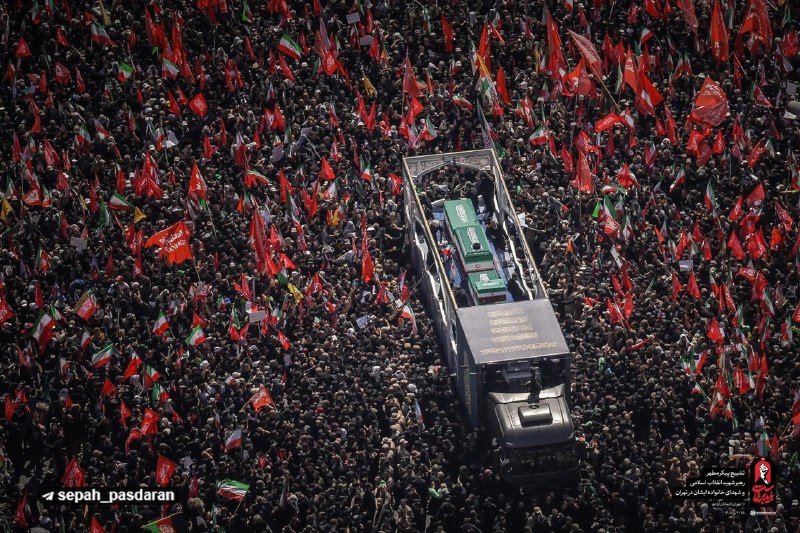
Nourlan Yermakbayev, the Kazakhstani diplomat who has run the Shanghai Cooperation Organization's secretariat in Beijing since January 2025, paid his respects at the mausoleum of Ayatollah Ruhollah Khomeini on the morning of 3 July 2026, in a ceremony that Iranian state media described in unmistakably honouring terms.
According to a Telegram post by Al-Alam's Arabic desk at 13:44 UTC, Yermakbayev "paid tribute to the martyred leader of the Islamic Revolution." The framing — "martyred leader," the martyrdom lexicon reserved in Iranian official discourse for figures killed in the revolutionary struggle — was echoed by Mehr News in Persian at 13:42 UTC and by Tasnim News in English shortly before 13:25 UTC.
The visit is, on its face, ceremonial. It is also the most senior SCO display of respect at the shrine since the body's last summit communiqué with Iran, and it lands in a week when Tehran's position in any emerging Eurasian architecture has become a more practical question than it has been at any point this decade.
What we know, and on whose word
The four reports that surfaced between 13:25 and 13:44 UTC are consistent: Yermakbayev was in southern Tehran, accompanied by a delegation, and laid a wreath or otherwise rendered the customary formal tribute at the Khomeini mausoleum. Middle East Spectator's English-language channel posted the news at 13:29 UTC under an Iran flag, summarising that "the Secretary General of the Shanghai Cooperation Organization also paid his respects."
The sourcing pattern itself is part of the story. Two of the four dispatches originate with Iranian state-aligned outlets — Al-Alam, the Arabic service of Iranian state television, and Tasnim News, widely read as a conservative outlet close to the IRGC's public-facing apparatus. A third is Mehr News, the Iranian state-affiliated wire that supplies much of the country's English-language news copy. Middle East Spectator is an independent English-language aggregator widely used by analysts of the Iran file. None of the four reports carries a SCO secretariat statement, a Beijing readout, or a Kazakhstani foreign-ministry press notice.
That asymmetry is worth flagging. The event is real and well-photographed, but the public footprint of it, as of the UTC timestamps above, is overwhelmingly Iranian.
Why the SCO matters here, in plain terms
The Shanghai Cooperation Organization began as a confidence-building exercise along the former Sino-Soviet frontier and has, in the past decade, become the principal institutional scaffold for Eurasian states that prefer not to organise their foreign policy under Western-led frameworks. Its members now include China, Russia, India, Pakistan and a clutch of Central Asian states; Iran sits, since 2023, as a full member rather than an observer. The Secretary General is the body's chief bureaucrat — not a political figure with a vote on security questions — but the office is a useful channel for signal-sending by host governments.
Yermakbayev's appointment in early 2025 was itself a quiet signal. Kazakhstan, a Central Asian state with deep economic ties on both sides of any future Eurasian settlement, is a less provocative choice than a Russian or Chinese candidate would have been. His visit to Tehran, made personally rather than delegated, carries weight precisely because the office is meant to be apolitical.
A structural reading, in unadorned prose
What we're watching is a slow institutional knitting-together of states that have chosen, for different reasons, to keep some diplomatic distance from the post-1991 settlement. Iran's full membership in the SCO gave Tehran a multilateral venue it had previously lacked, and gave Beijing and Moscow a routine channel for substantive contact with a country that Western sanctions have otherwise pushed into narrower circuits. Visits of this kind — a senior SCO figure at the founding shrine of the Islamic Republic — are the visible tissue that holds that architecture together between summits.
Two cautions apply. First, the SCO does not always speak with one voice. India and China have unresolved border questions; several Central Asian members keep careful balance with Moscow and Washington simultaneously. Second, ceremonial visits of this kind have been a feature of Iranian diplomatic life under sanctions for years; they do not by themselves amount to a strategic realignment. They do, however, register on a continuum, and this one sits at a higher notch than the routine.
What remains contested or thin in the evidence
Two points warrant caution. The four reports that surfaced between 13:25 and 13:44 UTC do not specify the duration of the visit, the composition of the accompanying delegation, or whether bilateral meetings with senior Iranian officials took place on the margins. The framing language — "martyred leader," "holy body," "the martyred leader of the nation" — is consistent across outlets but originates entirely from Iranian sources. Independent confirmation from a non-Iranian SCO member, or a Beijing or Astana readout, would strengthen the picture materially. Until then, the visit is best read as factually established and tonally significant, rather than as a fully sourced SCO political statement.
A second, larger uncertainty is the timing. The visit lands in a year in which several long-running dossiers — the future of the Joint Comprehensive Plan of Action talks, the security architecture around the Strait of Hormuz, the management of Iranian-armed proxy formations in the wider Middle East — are in motion. Whether Yermakbayev's pilgrimage is connected to any of those files, or is simply calendar-fitting inside a longer tour, the four reports do not say.
Stakes
For Tehran, the upside is symbolic but not negligible. Public ritual at the Khomeini mausoleum by a senior official of an organisation Iran fought for years to join reaffirms a place in a non-Western diplomatic circuit at a moment when Iran's room for manoeuvre in Western forums is constrained. For Astana and Beijing, the visit costs little and improves the appearance of an organisation whose relevance to international politics depends on visible activity between summits. For Western capitals, the operative question is whether the SCO is becoming the venue in which Iranian behaviour is being quietly discussed, or whether it remains the secondary multilateral body it has been since Iran's 2023 accession. This week's evidence suggests the former — softly, not yet decisively.
This article is built from four wire and aggregator posts that surfaced between 13:25 and 13:44 UTC on 3 July 2026; Monexus has flagged the Iranian-source dominance of the public footprint rather than treating the framing as neutral.
Wire provenance
This editorial synthesis draws on the following public wire/social posts:
- https://t.me/alalamfa
- https://t.me/mehrnews
- https://t.me/Middle_East_Spectator
- https://t.me/tasnimnews_en
- https://en.wikipedia.org/wiki/Shanghai_Cooperation_Organisation