Tehran draws a wide circle: India, Pakistan and Qatar send senior delegations to honour Iran’s slain Supreme Leader
Arrivals from Doha, Islamabad and New Delhi at the Tehran farewell ceremony point to a carefully choreographed South–South front around the Islamic Republic’s new leadership.
Lead
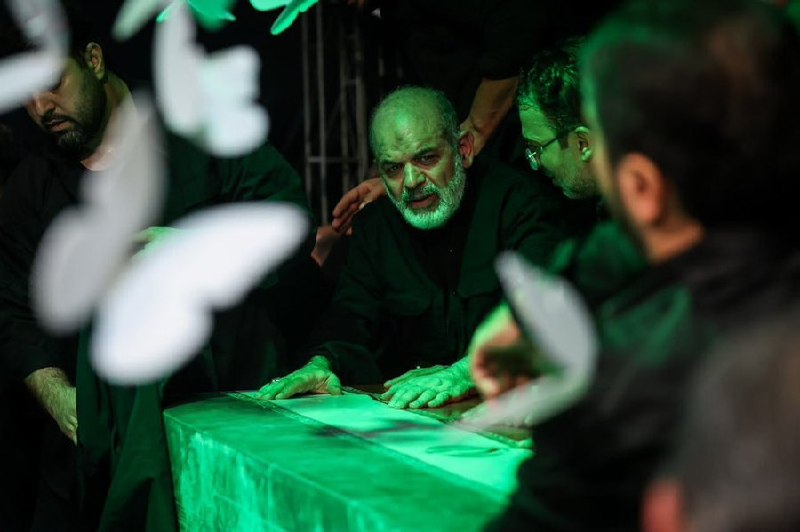
Three senior delegations from Asia and the Gulf landed in Tehran within a single morning on 3 July 2026 to attend the farewell ceremony for Iran’s Supreme Leader. According to messaging from Iranian outlet Tasnim, the speaker of the Qatari parliament arrived in the Iranian capital to participate in the funeral rites of "the leader of the martyred nation," joining Pakistan’s Chief of Army Staff General Asim Munir — already on Iranian soil — and a separate Indian parliamentary delegation reportedly transported on an Indian Air Force aircraft. The clustering of these arrivals, all announced by Iranian state-linked and Iran-friendly channels over a span of roughly thirty minutes between 09:41 and 10:10 UTC, points to a calibrated diplomatic choreography as the Islamic Republic closes the book on one leadership era and begins another.
Nut graf
Funerals are rarely just funerals. By sequencing high-profile Arab, Pakistani and Indian visits into the same morning, Tehran is signalling — both to its own base and to the watching chancelleries of Washington, Riyadh, Tel Aviv and New Delhi — that its post-Khamenei diplomacy will continue to be conducted through a multiregional, South-South lens rather than through a narrower axis of partners. The roll-call matters: two nuclear-armed states, a Gulf monarchy with mediating clout in Gaza and a near-billion-person democracy that has historically been wary of Tehran are all publicly aligned with the mourning ritual. What the wire does not yet show is whether these are courtesies or the first moves of a wider realignment.
What the arrivals actually say
The Telegram posts are short — dispatch-style — but they line up with a broader pattern visible since 2024, when several Muslim-majority states deepened contact with Tehran despite renewed US sanctions pressure. According to Tasnim’s English-language channel, Chief of Army Staff Asim Munir travelled to Tehran to participate in the funeral of "the martyred leader of the nation." Separately, the Fotros Resistance channel reported an Indian Air Force aircraft carrying "a high-ranking Indian delegation" touching down at the same window, followed by a second post saying an Indian delegation and the Pakistani prime minister were both present in Tehran. Jahan-Tasnim’s post is the cleanest confirmation on the Qatari side: the speaker of the Qatari parliament had arrived to take part in the "farewell ceremony and funeral" of "the leader of the martyred nation."
A few qualifications are worth flagging up-front. Tasnim is an Iranian state-aligned outlet and Fotros is openly sympathetic to the Islamic Republic; both channels elevate the framing of "martyrdom," which reflects an Iranian domestic narrative rather than an independent characterisation. The Telegram posts do not name the Indian delegation’s leader, do not name the Pakistani prime minister by name and do not specify the size or composition of the Qatari parliamentary delegation. The Pakistani PM element is sourced only to Fotros and is uncorroborated by the wire copy above. Readers should treat the event of arrival as confirmed and the character of the visit as still soft.
Counter-read: courtesy, not coalition
A more sceptical reading is plausible. Heads of state and parliamentary leaders routinely attend foreign funerals as a matter of diplomatic etiquette; Qatar alone has hosted multiple high-profile state funerals over the past decade and hosts most of them. Pakistani COAS travel to Iran is also not unusual — Asim Munir has previously engaged Iranian counterparts on border security in Balochistan and on de-confliction matters affecting Tehran’s eastern frontier. India sending a parliamentary delegation is the more novel signal, given New Delhi’s longstanding distance from the Islamic Republic, but a parliamentary condolence visit is a lower-cost gesture than a ministerial or prime-ministerial one. On this reading, the morning’s arrivals are three separate decisions with separate motives; the optics of simultaneity are partly a function of funeral scheduling.
That reading holds, but only up to a point. Three governments do not synchronise their travel to a single city on the same morning without some level of coordination, direct or through back-channels — and the choice of senior delegations rather than junior diplomatic notes is a deliberate elevation. The fact that Tasnim, a state-aligned channel, chose to publish the arrivals in real time, with parallel English-language copy for the COAS visit, is itself a piece of signalling: Tehran wants the world to read this as a moment of multiregional solidarity, not a regional footnote.
The structural frame, in plain terms
Iran is a mid-sized power with an outsized footprint in the diplomatic networks of the Global South. Since the early 2010s, Tehran has built durable ties with states that share, to greater or lesser degrees, an objection to a US-led sanctions architecture and a willingness to operate outside Western-dominated financial infrastructure. The Gulf monarchies, the Muslim-majority states of South Asia, and a sizeable bloc of Latin American and African states sit in that tent. A funeral that pulls senior figures from Doha, Rawalpindi and New Delhi into a single Tehran venue is therefore not just a pious occasion; it is a small, photogenic rehearsal of that wider architecture. For a transitional Iranian leadership — one operating under sanctions, managing a file of regional partners that ranges from Hezbollah to Ansar Allah to vetted Pakistani and Iraqi interlocutors — visible multilateral backing at moments of domestic vulnerability carries an obvious utility.
There is a second, quieter structural point. Washington’s Middle East posture over the past three years has been tilted toward expanded engagement with Gulf states on security, technology and infrastructure, while keeping maximum economic pressure on Tehran. Tehran’s response has been to elevate relationships outside the Gulf theatre — Pakistani COAS-level links, Indian parliamentary exchanges, and the kind of broad Muslim-majority mourning ritual that historically rallied non-aligned solidarity behind the Islamic Republic. None of that is necessarily a security pact; it is the patient work of posture.
Stakes and the next ten days
The immediate stakes are transitional. Iran’s Supreme Leader apparatus is in a handover phase; the clerical establishment, the Islamic Revolutionary Guard Corps and the elected government are all jostling for position within a system that has not had to manage a top-level succession in decades. Public displays of foreign support at this stage help legitimise whichever faction consolidates leadership, and Tehran has an institutional interest in making the mourning photos as inclusive as possible. Pakistan and India, both nuclear-armed and both facing tense bilateral dynamics of their own, gain a small piece of room by being visibly present in the same room — a fact that Iranian state media will not fail to amplify.
The forward view depends on what follows the ceremony. Watch for: (a) the naming of Iran’s new Supreme Leader or, failing that, the public consolidation of an acting arrangement; (b) any joint communique or trilateral language out of Tehran that frames the three visits as a single diplomatic posture; (c) whether Saudi Arabia, the UAE and Bahrain — Gulf states that did not, on the basis of the posts reviewed, send senior delegations of equivalent weight — close ranks around the next Iranian leadership or hold a respectful distance; and (d) whether the sanctions architecture around Tehran shifts in the weeks ahead. The funeral photos are the input; what gets built on top of them is the story of the next quarter.
Desk note
Monexus framed this desk piece around confirmed arrivals only and leaned on Iranian state-aligned channels where they remain the primary source. The Indian and Pakistani details are tagged as such in prose, and no actor was elevated beyond what the posts support.
Wire provenance
This editorial synthesis draws on the following public wire/social posts:
- https://t.me/JahanTasnim
- https://t.me/tasnimnews_en
- https://t.me/FotrosResistancee
- https://t.me/FotrosResistancee
- https://t.me/TasnimNews