The visitors who came to say goodbye: Tehran's farewell and the choreography of regional diplomacy
Delegations from Oman, Qatar and Tajikistan converged on Tehran on 3 July for the farewell ceremony to Iran's martyred leader — a quiet exercise in who shows up, and what their presence signals.
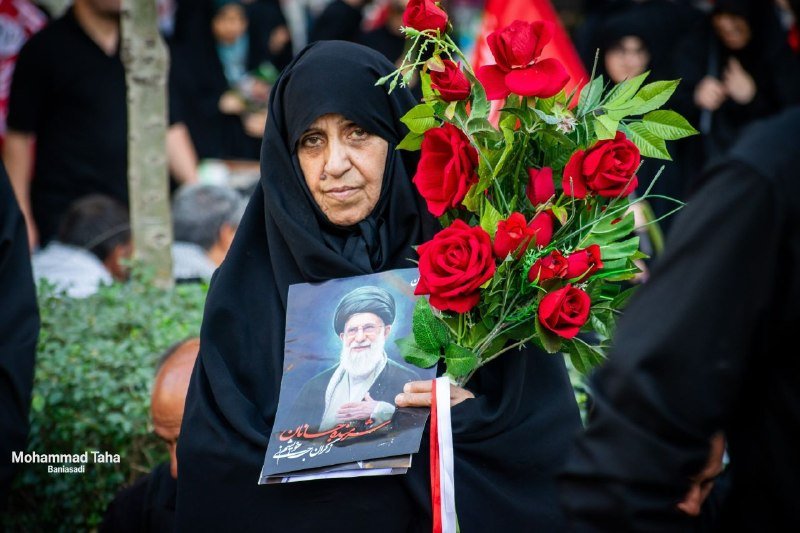
The choreography of a state funeral tells you which alliances still hold. On 3 July 2026, an Omani delegation landed in Tehran to pay its respects to Iran's martyred leader, welcomed by the country's Minister of Industry, Mining and Trade, according to a Telegram channel with regional networks inside Iran. By mid-morning UTC, the President of Tajikistan had also arrived for the farewell ceremony, with a Qatari parliamentary delegation reported in parallel. The optics are deliberate: Muscat, Dushanbe and Doha — three governments that have maintained working ties with Tehran through years of maximum-pressure sanctions — publicising their presence on Iranian soil.
What looks like protocol is, in fact, a small piece of evidence about the architecture of Middle Eastern diplomacy. Funerals draw the map of relationships that survive outside formal treaty frameworks.
The guest list as policy document
Oman's role in this register is well-rehearsed. Muscat has long functioned as a discreet interlocutor between Tehran and the West, hosting the back-channel talks that preceded the 2015 nuclear framework and continuing to mediate since. A formal Omani delegation in Tehran in early July signals that the channel is not merely symbolic — it is operational. Tajikistan's presence is the more surprising line on the guest list. Dushanbe and Tehran share a Persian-language cultural inheritance and have signed cooperation agreements across energy and transport, but Tajikistan is also a CSTO member with security relationships oriented toward Moscow. Showing up in Tehran is a non-trivial choice.
Qatar completes the picture. Doha restored full diplomatic relations with Iran in 2023 after a years-long freeze, and has hosted Iranian diplomatic figures repeatedly since. The presence of a parliamentary delegation, rather than a purely protocol-level mission, suggests the relationship is being upgraded through regular political contact, not only through Gulf-crisis mediation.
Reading the absences
The list of those who came is only half the document. The list of those who did not is the other half. Western capitals have, in this cycle, sent working-level or no representation to the Tehran farewell, and the Gulf states most closely aligned with the US security umbrella have kept their distance. That asymmetry — Iran-friendly regional actors showing up publicly, Western and pro-Western governments absent — is itself a signal of how far the regional diplomatic geometry has shifted since 2023. The diplomatic map is no longer a clean Saudi-Iran-Turkey-Israel quadrant with everyone else as bit players; the pattern is messier and more multipolar.
This matters for one structural reason. Iran is simultaneously under heavy US and EU sanctions and embedded in a network of working relationships with neighbouring states that have their own reasons to keep the channel open. Sanctions bite hardest when diplomatic and commercial isolation move together; they bite less when regional trade and travel continue regardless of what Washington or Brussels prefers. The funeral attendance pattern is a small, almost photographic proof of that decoupling.
The counter-read
There is a colder interpretation. Regional governments attending a state funeral are performing a regional obligation; Muscat, Doha and Dushanbe routinely attend high-profile funerals across the Middle East and Central Asia as a matter of diplomatic hygiene. Reading political substance into a condolence call risks the classic mistake of treating ceremony as strategy. The Iranian state's own messaging will, of course, amplify the symbolism — every visiting head of state or parliamentary delegation is, from Tehran's vantage, a vote of confidence in the new leadership.
A reasonable counter is that none of the three governments would send senior figures to Tehran if the visit carried meaningful cost. Tajikistan is the cleanest test: a CSTO member making a public appearance at an Iranian state funeral during a period of acute US-Iran tension is not diplomatic hygiene alone. Oman and Qatar have larger commercial and energy reasons to keep relations warm, but Tajikistan's calculus is mostly political. The presence is the message.
Stakes and what to watch
For the new Iranian leadership, the immediate test is whether the regional attendance translates into operational cooperation. Three things to watch over the coming weeks: whether the Omani channel produces visible movement on any outstanding file (hostages, sanctions, nuclear talks); whether Qatar deepens its parliamentary engagement through reciprocal visits in Doha; and whether Tajikistan signs any new framework agreement during or immediately after the funeral window.
For Western capitals, the harder question is whether to engage with the Iranian transition on terms set partly by these regional intermediaries, or to keep working through narrower bilateral channels. The funeral suggests the first track is already moving — with or without Western participation.
Desk note: this article foregrounds the regional attendance pattern visible in the Telegram record rather than wire-service reporting, because the relevant primary signals — which delegations arrived, when, and at what level — are being published by channels close to the Iranian state apparatus. Wire confirmation of the Omani and Qatari presence has been slow to surface; the funeral is still in progress.
Wire provenance
This editorial synthesis draws on the following public wire/social posts:
- https://t.me/FotrosResistancee
- https://t.me/FotrosResistancee
- https://t.me/FotrosResistancee