Tehran's Farewell Stage and the Limits of Western Reading
Foreign dignitaries filed through the Tehran Mosalla on 3 July 2026 to honour a dead Supreme Leader. Western readers should resist the temptation to read the pageantry as a verdict on the regime's durability.
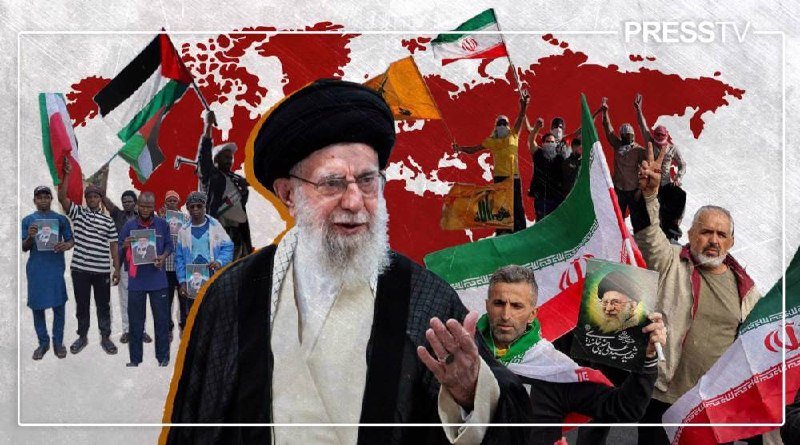
The line at the Tehran Mosalla on 3 July 2026 began forming before dawn. By 05:28 UTC the official channel of the Supreme Leader's office was already broadcasting a ceremony of foreign dignitaries paying respects to "the martyred Leader of the Islamic Revolution, Martyr Imam Khamenei," with frames of foreign delegations moving past the bier and, shortly after, a senior Hashd al-Sha'abi delegation laying their own tribute. By 05:44 UTC the channel had switched to close-up frames of the casket and family members; by 05:51 UTC it was running repeated footage of Iraqi paramilitary figures prostrating in front of the body. The English-language account published at 05:04 UTC framed the day in explicitly devotional terms, urging followers to "rise" and invoking the Quranic habits of the deceased. This is not a normal funeral. It is a coronation in reverse: the regime is rehearsing the optics of succession while the body is still warm.
The Western instinct, on first seeing that footage, will be to treat it as evidence of strain — a brittle system papering over a power vacuum with choreographed grief. The instinct is half-right and half-wrong, and the half that is wrong is the half that travels farthest in English-language commentary.
What the footage actually shows
The Telegram posts that surfaced in the cluster are unambiguous on three points and silent on the rest. They are unambiguous that senior figures from Iraq's Hashd al-Sha'abi — the umbrella of Shia paramilitary formations that grew out of the fight against ISIS — travelled to Tehran and prostrated before the body. They are unambiguous that foreign delegations are being received in an orderly, staged ceremony at the Imam Khomeini Mosalla, the same complex that has hosted Iranian state funerals for four decades. They are unambiguous that the official framing is martyrdom, not death in office: the deceased is repeatedly named "Martyr Imam Khamenei" and the channel is selling the farewell as a culmination rather than a rupture.
The silence is just as loud. The channel posts do not name a successor. They do not announce a date for the Assembly of Experts meeting that, under Iran's constitution, must ratify the new Supreme Leader. They do not name the head of the temporary council, if one has been appointed. They do not name the foreign dignitaries beyond the Iraqi paramilitary figures, and they do not say whether representatives of the Iranian regular military — the Artesh — or the Islamic Revolutionary Guard Corps are present in any formal capacity. None of those omissions is an oversight. In a system that treats information as sovereignty, the timing of a name-drop is itself a policy choice, and the policy choice right now is to withhold.
The Western read, and why it overreaches
The standard Western commentary line on a moment like this runs in two registers. The first, more restrained register, points out that any succession in a theocratic-republican system is by definition contested, and that the absence of a named heir at this hour is a sign of bargaining rather than unity. The second, less restrained register, treats the pageantry — foreign delegations, weeping militants, Quranic framing — as evidence of an artificial performance, a Potemkin grief designed to mask a faction fight. Both registers are partly defensible, and both tend to mistake what a state funeral is for in this region.
State funerals in the Islamic Republic are not private grief events. They are sovereignty broadcasts. They tell the Iranian street who the new court will listen to, they tell the regional armed movements who their patron still is, and they tell external rivals — principally the United States and Israel — whether the succession is being absorbed or contested. A Hashd al-Sha'abi delegation paying respects at the Mosalla is not a curiosity. It is a message that the Iraqi Shia paramilitary project, which has spent the last three years being slowly re-absorbed into the Iraqi state, is reaffirming the Tehran relationship in public, under cameras, at the precise moment a successor is being chosen. Western readers who see only the religious framing miss the paramilitary framing, and the paramilitary framing is the one with operational consequences.
The temptation to read the pageantry as weakness is even more misplaced. The system is doing what systems do: producing a recognisable ritual at a moment when one is required, on a stage it has used before. Iranian state funerals in 1989, after Ayatollah Khomeini's death, looked chaotic for roughly seventy-two hours and then produced a Supreme Leader who served for thirty-seven years. The 2020 death of Quds Force commander Qasem Soleimani produced a different ritual — a multi-city procession under direct US drone-strike threat — and the system absorbed it. There is no reason, on the public evidence available in the source cluster, to assume this system cannot absorb a third.
What the coverage is likely to miss
Two omissions are predictable enough to flag in advance. First, the role of the Iranian Armenian, Assyrian, and Jewish minorities in the ceremony will almost certainly go unreported in English, even though their participation — alongside the standard Shia clerical hierarchy — is constitutionally significant in a system that recognises non-Muslim representation as a feature of legitimacy. Second, the role of women. The English-language official channel has so far broadcast men; whether female members of the Khamenei family, women members of the foreign delegations, or female clerical figures appear later in the day is a substantive question about the next Supreme Leader's coalition, and one English-language commentary will probably ignore.
The deeper omission is the simplest: we do not know who wins. The cluster establishes the date, the venue, the Iraqi paramilitary presence, and the devotional framing. It does not establish the name of the successor, the composition of any interim council, the position of the IRGC, or the position of the regular armed forces. Until those facts are public, the most that can honestly be said is that the regime is performing cohesion while the substantive decisions are being made behind doors the official channel has no interest in opening. Anything more is editorial colour dressed as analysis.
Stakes, written without the usual adjectives
If a Khamenei-aligned continuity figure inherits the position, the regional architecture that has shaped the last fifteen years — Hashd al-Sha'abi as Iranian-leaning Iraqi paramilitaries, the Hezbollah axis in Lebanon, the Houthi relationship in Yemen, the network of clerical ties that runs from Najaf to Qom — is preserved. If a more Guards-heavy figure inherits, the architecture is preserved and tightened. If a clerical figure with a fractious relationship to the IRGC inherits, the architecture is preserved but contested. The probabilities matter, and they will be set inside Iran in the next week, not in the Western commentariat over the next month.
The risk for outside readers is not misreading the funeral. It is overreading it. A pageant is a pageant. What follows it will be quieter, more legalistic, and conducted in Persian by men whose names have not yet appeared on English-language channels. The cluster's last public signal is a countdown: a man who read the Quran every day, who urged others to do the same, and whose funeral is being treated as the opening move of the next thirty-seven years rather than the closing one of the last. The signal is the right one to take seriously. The conclusions readers draw from it will be.
— Desk note: This piece is built on five official-channel Telegram posts timestamped between 05:04 UTC and 05:51 UTC on 3 July 2026. It does not speculate on the identity of the successor, the timing of the Assembly of Experts meeting, or the position of any foreign government beyond the Iraqi Hashd al-Sha'abi delegation the channel itself names. Where Western commentary tends to read the pageantry as weakness, this publication reads it as a sovereignty broadcast whose operational content is the paramilitary presence, not the religious framing.
Wire provenance
This editorial synthesis draws on the following public wire/social posts:
- https://t.me/Khamenei_en
- https://t.me/Khamenei_en
- https://t.me/Khamenei_en
- https://t.me/Khamenei_arabi
- https://t.me/Khamenei_en