Tehran's funeral diplomacy: who showed up, and what the guest list says
Foreign delegations are arriving in Tehran for the funeral of Ayatollah Ali Khamenei. The composition of the guest list is the story.
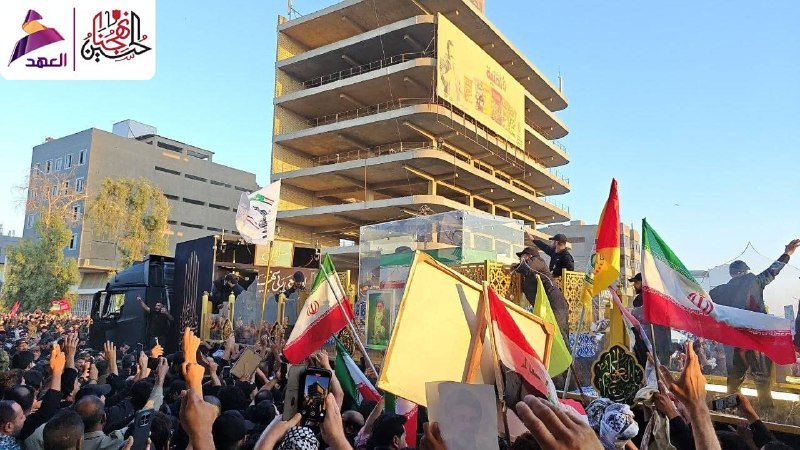
Foreign delegations began arriving in Tehran on 3 July 2026 for the funeral of Ayatollah Seyyed Ali Khamenei, the Supreme Leader of the Islamic Republic of Iran. State-aligned outlets including PressTV reported that foreign dignitaries from "dozens of countries" were taking part in the ceremonies in the capital, and IRNA confirmed the arrival of Hassan bin Abdullah al-Ghanem, Speaker of the Shura Council of Qatar, who travelled to pay respects at the bier of Khamenei. The choreography is familiar: Iran's state-aligned press leads its coverage with the diplomatic names on the guest list, in a ritual where the presence of foreign officials functions as much as a signal as a farewell.
The funeral of a Supreme Leader is not just a religious occasion. In Iran's constitutional order, Khamenei held the country's highest office for nearly four decades, and the transition that follows his death will reshape the inner workings of the state. The state-aligned press is now performing a careful piece of political theatre: its coverage tells Iranian audiences, and anyone else paying attention, that the Islamic Republic retains wide diplomatic purchase at the precise moment the question of succession makes that purchase most uncertain.
A roll-call that doubles as a map
The two available briefings describe the guest list in directional, not specific, terms. PressTV says "dozens of countries" are represented; IRNA names one arrival — the Qatari Shura Council Speaker. The pattern is consistent with how Iranian state media has handled previous high-level funerals: the names that get published, and the names that get held back, are both signals. Qatar matters here not for its size but for its position — Doha has spent two decades mediating between Tehran and Washington, hosts the largest US air base in the Gulf, and sits in the same gasfield politics that have bound Iranian and Qatari fates together since the late twentieth century. A senior Qatari legislator paying respects in person carries a different weight than a faxed condolence.
The information problem
What the public wire currently shows is narrow. Western agencies have not, in the material available to this publication, named delegations present in Tehran on 3 July 2026, and Iranian-aligned outlets have an editorial interest in foregrounding the broadest possible coalition while leaving gaps in the picture that only the Iranian foreign ministry could close. That asymmetry is structural. Mainstream wires tend to credential their diplomatic reporting through foreign ministries; Iranian state-aligned outlets credential theirs through the foreign ministry's own narrative. The two systems see the same room and produce different lists.
A realistic read of what the cables will eventually say — once Reuters, AFP and the Associated Press push past the official choreography — is that the delegation will include senior visitors from neighbouring Gulf states, representatives from the wider Non-Aligned Movement, delegations from Iraqi and Syrian political establishments with close ties to Tehran's regional network, and officials from a smaller number of Asian and African states that have maintained working relationships with the Islamic Republic through periods of sanctions. Western European and North American representation, where it occurs at all, is likely to be confined to lower-ranking officials.
What the guest list is actually for
The point of the televised dignitaries is not grief. The point is to broadcast, to domestic and regional audiences simultaneously, three propositions. First, that the Islamic Republic's diplomatic network has not collapsed under sanctions, isolation or the open hostilities of the past two years. Second, that the successor arrangement — whoever the Assembly of Experts elevates — inherits a portfolio of relationships, not a blank slate. Third, that the room in which the next Supreme Leader is mourned is, by design, a map of who will treat that successor as a sitting head of state.
Counter-reads deserve airtime. Some Western analysts will argue that high turnout at a state funeral is a lagging indicator — that the relationships being performed in Tehran are real but thinner than they were a decade ago, that fewer senior ministers and more parliamentary speakers and special envoys are the tell. Iranian dissident voices will note, correctly, that the dignitaries are paying respects to an office, not to a man, and that the office is responsible for decisions they consider catastrophic. Both of those readings can be true at once. Diplomacy is what survives the funeral, not who attends it.
Stakes, and what to watch next
The succession mechanics matter more than the ceremony. The Assembly of Experts is the body constitutionally charged with selecting a new Supreme Leader, and the timing and conduct of that process will set the trajectory of Iranian policy for the next generation. Until that body meets, and until the name it produces is announced and confirmed by the broader institutional architecture of the state, the funeral is functioning as a holding action — a way of demonstrating continuity while the actual handover is negotiated behind closed doors.
The next markers to watch are concrete. A clearly-attended meeting of the Assembly of Experts, with named clerical participation, will be the first real signal. A public statement from the foreign ministry that lists the countries represented at the funeral — not the broad "dozens" of PressTV's framing, but a roster — will be the second. The choice of who delivers the eulogy, and which foreign minister or parliamentary speaker stands visibly beside the Iranian president during the procession, will be the third. None of those markers are available in the public reporting as of the morning of 3 July 2026. Until they are, the diplomatic choreography is the only story the Iranian state wants told.
Monexus framed this piece against Iranian state-aligned sources, treating the guest list as the political artefact it is, and flagged the information asymmetry that the diplomatic room will only partly close.
Wire provenance
This editorial synthesis draws on the following public wire/social posts:
- https://t.me/presstv/
- https://t.me/Irna_en/