Tehran's Farewell, the World's Optics: How a Funeral Becomes a Foreign-Policy Instrument
Foreign leaders streamed into Tehran on 3 July 2026 to honour Ayatollah Khamenei. The delegations tell their own story — and it isn't the one the wire copy will run.
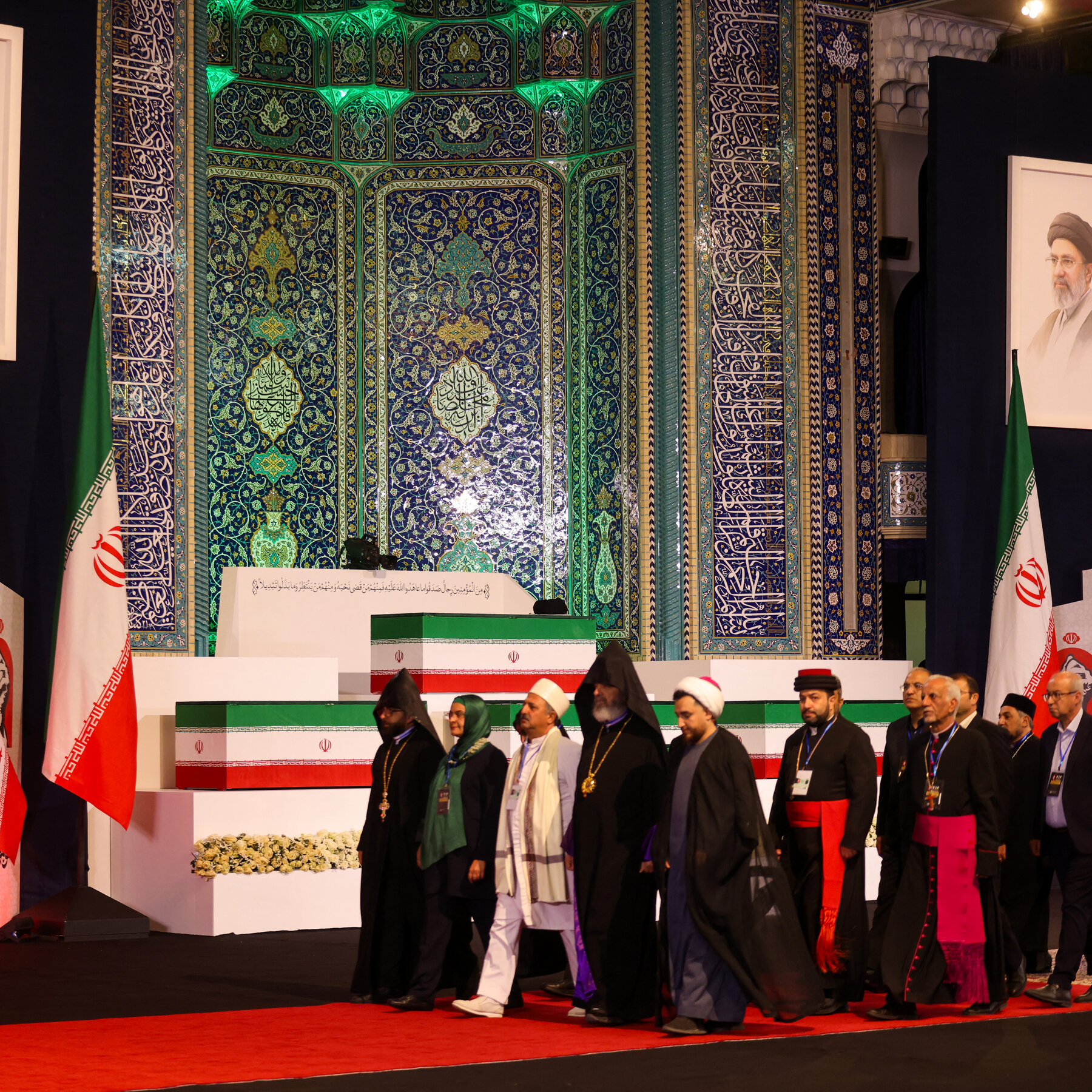
On the morning of 3 July 2026, a plane carrying Tajik President Emomali Rahmon touched down in Tehran to attend the farewell rites for Ayatollah Ali Khamenei. An Iraqi delegation was already inside the capital, paying respects to the man Iranian state media has been calling, since his death, the "martyred Leader." Within the next hour, Iraqi President Nizar Amidi arrived, followed by Georgian President Kavelashvili. By mid-morning, several foreign delegations were meeting Iran's President Pezeshkian on the margins of the ceremony, with PressTV documenting the photo calls in real time.
The choreography is the story. A succession funeral is rarely just a funeral in this part of the world; it is a stage on which Tehran calibrates who counts as a friend, who is prepared to be seen in the room, and which bilateral relationships deserve a camera. The lists flying out of IRNA and PressTV on 3 July are not exhaustive biographies of Iranian foreign policy — they are the public map of it.
What the delegations actually signal
Three names in particular reward close reading. Tajikistan under Emomali Rahmon has kept close cultural and linguistic ties to the Islamic Republic for three decades; his presence in Tehran is the lowest-cost signal on the menu, and his absence would have been the real story. Georgia's Kavelashvili is more interesting. Tbilisi has spent the past year balancing EU accession talk, Western donor expectations, and a working relationship with Moscow that the war in Ukraine has not severed. Sending a head of state to a Tehran farewell is a quieter kind of triangulation: it costs little with Brussels, irritates nobody in Washington, and preserves a Tehran channel that may yet be useful.
Iraq's Nizar Amidi is the most consequential visitor of the day. Iraq hosts US forces, hosts Iranian-aligned militias, imports Iranian gas and electricity, and runs a government that has to balance both. His presence at the head of a delegation, documented by both IRNA and PressTV on 3 July 2026, is a public reiteration of the Iraq–Iran relationship at exactly the moment a new Iranian leadership will be judging who showed up. The optics matter more than the speeches.
How Iranian state media is choosing to frame it
Two channels carried the day's pool footage. IRNA — the official state news agency — opened its English wire with Rahmon's arrival and the Iraqi delegation's visit to the mourners. PressTV, the state broadcaster's English-language arm, pushed harder on the presidential meetings with Pezeshkian and the arrivals of Amidi and Kavelashvili, with the hashtag #MartyrKhamenei stamped across the visuals. Both outlets framed the day as a continuum: the Leader is gone, but the regional architecture he built is being demonstrated in the arrivals hall.
This is the framing the rest of the world will have to read against. Western wire coverage of an Iranian funeral tends to lead with the security state — the IRGC, the succession mechanics, the ballistic-missile inventory. Those facts are real and they will be reported. But the delegations themselves are telling a different story about Iranian foreign policy in 2026: a story in which Baghdad, Dushanbe, and Tbilisi are comfortable enough to send heads of state, and in which Tehran can choreograph that comfort into a single morning of television.
The structural read
A succession event in a sanctioned, revolutionary state is always a stress test of how durable the external relationships are without the man whose name they were built around. Coverage that reduces the day to a security story misses the more interesting question: which of Iran's relationships depend on the institution, and which depend on the personal network of a single leader? The presence of Rahmon suggests the Tajikistan relationship is institutional; the presence of Amidi suggests the Iraq relationship is institutional and energy-commercial, not personal; the presence of Kavelashvili suggests Georgia is keeping an optionality that no one in Brussels will have to defend.
For the new leadership in Tehran, the morning of 3 July 2026 is the first real audit of that portfolio. The guest list will tell them which embassies to lean on, which capitals need cultivating, and which relationships have been kept warm by habit rather than strategy.
What remains uncertain
The sources available for this story are exclusively Iranian state media — IRNA and PressTV — and they share a framing interest. Independent confirmation of the full delegation list, the bilateral meetings held on the margins, and any direct interactions between visiting leaders and the Iranian Supreme National Security Council has not yet surfaced in the open record. It is also not yet clear whether heads of state from the Gulf monarchies, Russia, or China will be represented at the level the day's early arrivals imply is expected. The wire picture will firm up over the next forty-eight hours; for now, what is documented is the choreography Tehran has chosen to broadcast, which is itself a piece of information.
This piece leans on Iranian state media for the morning's arrivals; Monexus will widen the sourcing as independent confirmation lands.
Wire provenance
This editorial synthesis draws on the following public wire/social posts:
- https://t.me/Irna_en
- https://t.me/Irna_en
- https://t.me/presstv
- https://t.me/presstv