Tehran stages a week of mourning for Khamenei — and a test of the succession question
Days-long state ceremonies begin in Tehran after Ayatollah Ali Khamenei's killing in February, with foreign delegations arriving and the Supreme Council convening to choose his successor.
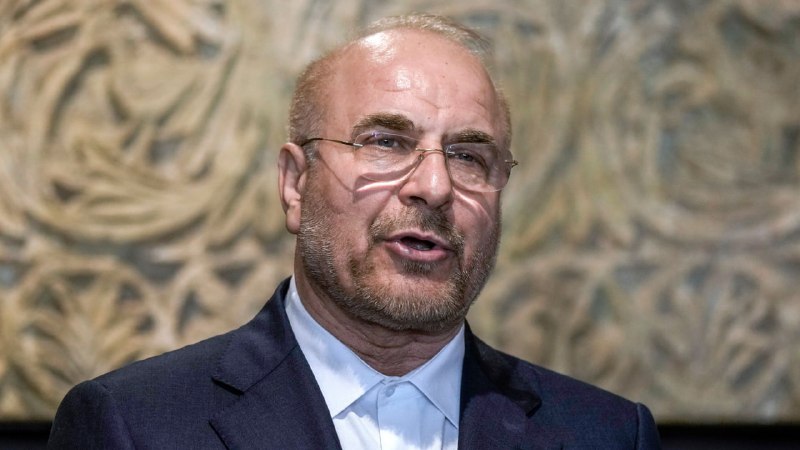
The bier sits under the high vault of Tehran's Grand Mosalla, and the state television cameras have not left it. On 3 July 2026, Iran began the public mourning period for Ayatollah Ali Khamenei, who was killed in February, with foreign delegations arriving in the capital and millions of mourners expected to file past the body before burial. The choreography of grief is also the choreography of succession: the Supreme Council named under Iran's constitution to choose the next Supreme Leader is operating in parallel, and the funeral's guest list is, by design, the guest list of Iran's near future.
What is unfolding in Tehran is more than a rites-of-passage week. It is the most consequential leadership transition in the Islamic Republic's history, staged publicly, with regional allies, rivals and a watching White House all reading the same footage for signals about who holds the levers next.
The mourning itself
Iranian state media have transformed the funeral into a multi-day national spectacle. According to a Telegram channel affiliated with the Abu Ali Express, imagery circulating from Revolution Square depicts a statue of Khamenei's fist rising from the grave — a visual statement, not a routine monument. Reporting carried by Palestine Chronicle on 3 July describes Tehran as converting the funeral into "a powerful display of national unity," with millions expected and delegations from around the world arriving for the events. The mourning, in other words, is being framed by Iranian state-aligned outlets as both catharsis and consolidation at a moment of acute regime vulnerability.
According to BBC News on the same day, Khamenei's body will lie in state at the Grand Mosalla in Tehran from Friday, with days-long funeral events to follow. The location is significant: the Grand Mosalla, the great prayer hall on the capital's eastern edge, is the same venue Iran has used for the funerals of its foundational figures, including Ayatollah Khomeini in 1989 and Khamenei's predecessor in everything but name. The choice signals an effort to anchor the new leadership in the symbolism of 1979 rather than in any single faction.
The succession question — what the constitution actually requires
Iran's constitution provides that, on the death of a Supreme Leader, the Assembly of Experts — a body of senior clerics elected to multi-year terms — is responsible for selecting and supervising the new leader. In practice, much of the preparatory work is done inside the Supreme Council, a narrower clerical body that meets between full Assembly sessions. The question that has animated Tehran-watchers since the February killing is not whether the constitutional process will be observed, but how wide the field of credible candidates will be when it is.
Reporting in Western and regional outlets over the preceding weeks has named a short list: Khamenei's son Mojtaba, a politically connected but institutionally thin figure; the judiciary chief Gholamhossein Mohseni Ejei; and former nuclear negotiator Ali Larijani, who has spent recent years cultivating a profile as a state-builder rather than a factional champion. The competing candidacies imply different foreign-policy postures — toward the United States, toward the Axis of Resistance network, and toward the domestic protests that have shaped Iranian street politics since 2022.
The funeral guest list offers the most reliable early signal. Hezbollah, the Houthis, Iraqi Shia militias and Palestinian factions are reported among the delegations present. Their presence is a deliberate endorsement of the line of continuity, and their absence from any one ceremony would itself be a tell.
Counterpoint: why the official narrative is not the whole story
The state-aligned framing treats the mourning as a unifying national moment. Skeptics — including diaspora outlets and analysts inside Iran — argue the spectacle is performing unity the country does not currently possess. Domestic internet shutdowns, residual anger from the 2022–23 protests and the continued economic pressure of sanctions have not paused for the bier. The risk for the new Supreme Leader is that the pageantry outruns the consent behind it.
There is also the question of what a transition means for Iran's regional posture. The funeral is being held roughly five months after Khamenei's killing, a delay that suggests the security situation around the leadership was — and may remain — unsettled. A leadership whose legitimacy depends heavily on its resistance credentials faces a hard choice: escalate the file it inherited, or seek the breathing room a negotiation track could buy.
Stakes — for the region, and for the negotiating table
For Iran's neighbours and adversaries, the transition is the single most consequential variable in the regional balance. A leadership that chooses consolidation over escalation makes the kind of diplomatic opening that has eluded three U.S. administrations. A leadership that chooses escalation inherits, in addition to the sanctions regime, a network of proxies whose own costs are mounting — Hezbollah degraded in 2024, the Houthis under sustained aerial bombardment, Iraqi militias under domestic pressure.
For ordinary Iranians, the stakes are more immediate: whether the new leadership permits the gradual domestic re-opening that the economy needs, or whether the same security-first posture that defined the previous era continues to govern daily life. The funeral is the pageant; the months that follow will tell which faction of the Iranian state has the final say over what comes next.
What remains genuinely uncertain — and the wire reporting on 3 July reflects this — is the timeline of the succession announcement itself. The mourning is the visible story; the closed-door clerical politics is the substantive one, and the country has not seen a transition of this magnitude in nearly four decades. The next forty-eight hours of which delegations are received, and in what order, will likely do more to clarify the trajectory than any communique.
Desk note: Monexus has chosen to treat Iran's official state-aligned framing of the funeral as a primary source, quoted in its own voice and on its own terms, while flagging where diaspora and Western-wire reporting diverges from it. The succession question is the substantive story beneath the pageantry, and the article has been structured to read both layers at once.
Wire provenance
This editorial synthesis draws on the following public wire/social posts:
- https://t.me/abualiexpress
- https://t.me/PalestineChronicle
- https://en.wikipedia.org/wiki/Supreme_Leader_of_Iran