The Tehran tribute and the architecture of martyrdom politics
Palestinian clerics, Hezbollah commanders, and Amal Movement figures are filing through the Imam Khomeini Mosque in Tehran to pay respects to Ayatollah Seyyed Ali Husseini Khamenei — a choreography that says more about the post-Nasrullah order than the man being mourned.
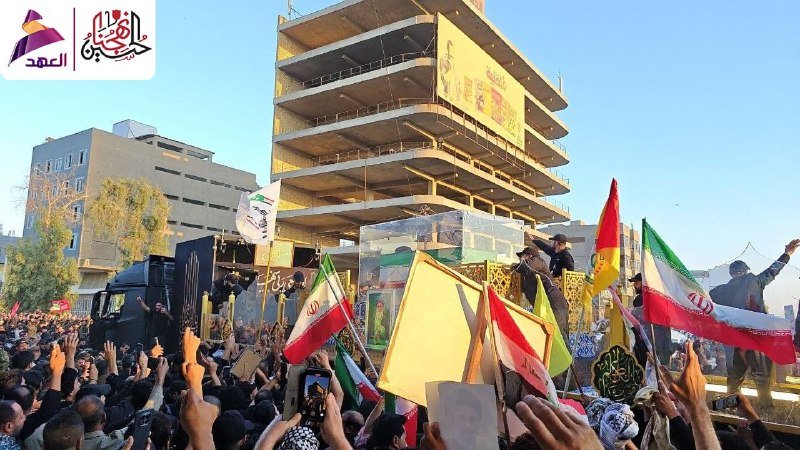
The queue outside the Imam Khomeini Mosque in Tehran on the morning of 3 July 2026 was not a normal diplomatic receiving line. By 09:05 UTC, a delegation from Lebanon's Amal Movement had entered the compound to pay tribute to Ayatollah Seyyed Ali Husseini Khamenei, framed in Iranian state-adjacent reporting as the "martyr of the Islamic world." By 09:11 UTC, senior Hezbollah figures had followed, including commanders and family members of the late Hassan Nasrallah and the late Imad Mughniyeh. By 09:27 UTC, Palestinian clerics and prominent personalities were arriving, described in the same reporting as the "flag bearer of those who support Quds and the Palestinian nation." The choreography was deliberate: each bloc entered in turn, each was photographed at the threshold, each was named.
What unfolded at the mosque is less a funeral than an exercise in political cartography. A head of state dies, and the way the region's armed movements line up to mourn him tells you exactly who is still inside the tent, who is jockeying for position, and which alliances have quietly gone cold. The Amal delegation's presence — Amal being the Shia movement founded by Musa al-Sadr, now led by Nabih Berri — signals that the Lebanese political mainstream still treats Tehran as its senior patron. The Hezbollah contingent signals continuity inside the organisation's command after the loss of Nasrallah. The Palestinian clerical delegation signals that the Quds axis still has external ritual reach. None of this proves Tehran's deterrent power has been restored; all of it proves the choreography of loyalty is still being performed, on schedule, in the prescribed order.
The visual grammar of an alliance
Iranian state-adjacent outlets frame the visitors with a particular vocabulary: "martyr," "Rahbar," "flag bearer," "important personalities." The language is not accidental. It collapses the difference between a cleric, a guerrilla commander, and a political-party boss into a single semantic register, in which the only relevant hierarchy is proximity to the Iranian centre. Hassan Nasrallah, killed in the autumn of 2024, and Imad Mughniyeh, killed in Damascus in 2008, are invoked together as if they were colleagues rather than two generations of operations chiefs separated by a decade and a half of regional upheaval. Their families' presence converts private grief into public covenant.
Amal's role here is the most politically telling. The movement has spent four decades trying to position itself as the Lebanese Shia house that does business with everyone — Beirut, Damascus, Tehran, Washington when necessary — without ever burning any of the bridges. Sending a senior delegation to the mosque while its parliamentary leader Nabih Berri keeps a seat at every Lebanese cabinet table is the movement's signature move: visible obeisance to Tehran, realpolitik everywhere else. In an environment where Hezbollah is rebuilding its command structure and Beirut is negotiating the terms of a still-fragile ceasefire, that ambiguity is itself an asset.
What the Palestinian presence does
Palestinian delegations at Iranian funerals are not new; they are a standard feature of the post-1979 ritual. But the explicit invocation of "Quds" — the Arabic name for Jerusalem that also names the IRGC's external-operations wing and an annual Iranian state-organised day of solidarity with Palestinians — is doing specific work. It positions the cleric being mourned not merely as a national Iranian figure but as the patron of the Palestinian cause. The framing pre-empts any reading of the succession that would narrow it to a factional question inside the Islamic Republic. Whoever succeeds, the message reads, inherits the Quds portfolio as well.
The risk of that framing is that it ties Tehran's standing in the region to a cause over which it no longer exercises unilateral influence. The Palestinian political field today is fragmented between a weakened Palestinian Authority in Ramallah, militant factions in Gaza, and a broader diaspora whose centre of gravity is no longer Beirut or Damascus but Amman, Cairo, and the Gulf. Quds-rhetoric that read as operational in 2018 reads as liturgy in 2026. The delegations still come. Whether the strategic leverage still travels with them is the open question.
The counter-read
The counter-narrative — and it is the one Western wire services have generally preferred since late 2024 — is that the line of mourners outside the mosque is precisely the proof that the axis is hollowing out. Hassan Nasrallah is gone. His most senior operations deputy is gone. The Islamic Republic itself has been hit by direct strikes on its territory, with Israeli operations degrading the IRGC's external command tier. A coalition that needs to put its surviving leaders on television inside an Iranian mosque to remind the region it still exists is, on this reading, a coalition that is announcing rather than demonstrating.
There is something to that, and it should not be dismissed. Yet the alternative reading — that performance is itself a form of power — has historical weight. Funeral diplomacy has kept the Iranian-led network legible through periods in which its actual battlefield performance has been visibly degraded: the 1980s, the post-2003 insurgency years, the long attrition of the Syrian civil war. The mosque visits are not evidence of strength; they are evidence of organisational continuity and message discipline. Whether that continuity translates into operational capability is a separate question, and one the available reporting does not settle.
What the sources do — and do not — establish
The reporting available to this publication is the cluster of items published on 3 July 2026 by the Khamenei_in Telegram channel, documenting the arrivals at the Imam Khomeini Mosque in chronological order: Amal at 09:05 UTC, Hezbollah commanders and Nasrallah-Mughniyeh family members at 09:11 UTC, Palestinian clerics and figures at 09:27 UTC. Each item names the delegations, the venue, and the framing of the deceased; none gives casualty figures, political concessions, or sequencing beyond the arrivals themselves. The reporting does not specify the size of the delegations, the identities of individual commanders beyond the two named dead leaders, or whether any senior Iranian political figure other than the implied host was present.
What can be said with confidence: on the morning of 3 July 2026, Iranian state-adjacent channels staged a sequenced funeral procession for the late Ayatollah Khamenei at which three of the principal Shia political constituencies of the post-2003 Middle East were visibly represented. What cannot be said with confidence from this reporting alone: how much of the architecture those delegations nominally represent is still operational, and how much of it is now performed rather than practiced.
Desk note: Monexus frames the visit-list as political cartography rather than as either a celebration of Iranian power or a Western wire-style obituary for the axis. The line outside the mosque is treated as a working document, not a verdict.
Wire provenance
This editorial synthesis draws on the following public wire/social posts:
- https://t.me/Khamenei_in
- https://t.me/Khamenei_in
- https://t.me/Khamenei_in