Unifrance re-elects Pélisson, sharpening France's push for screen export power
A unanimous re-election hands Unifrance's president a second three-year term as the agency widens its remit across film, television, and audiovisual export promotion.
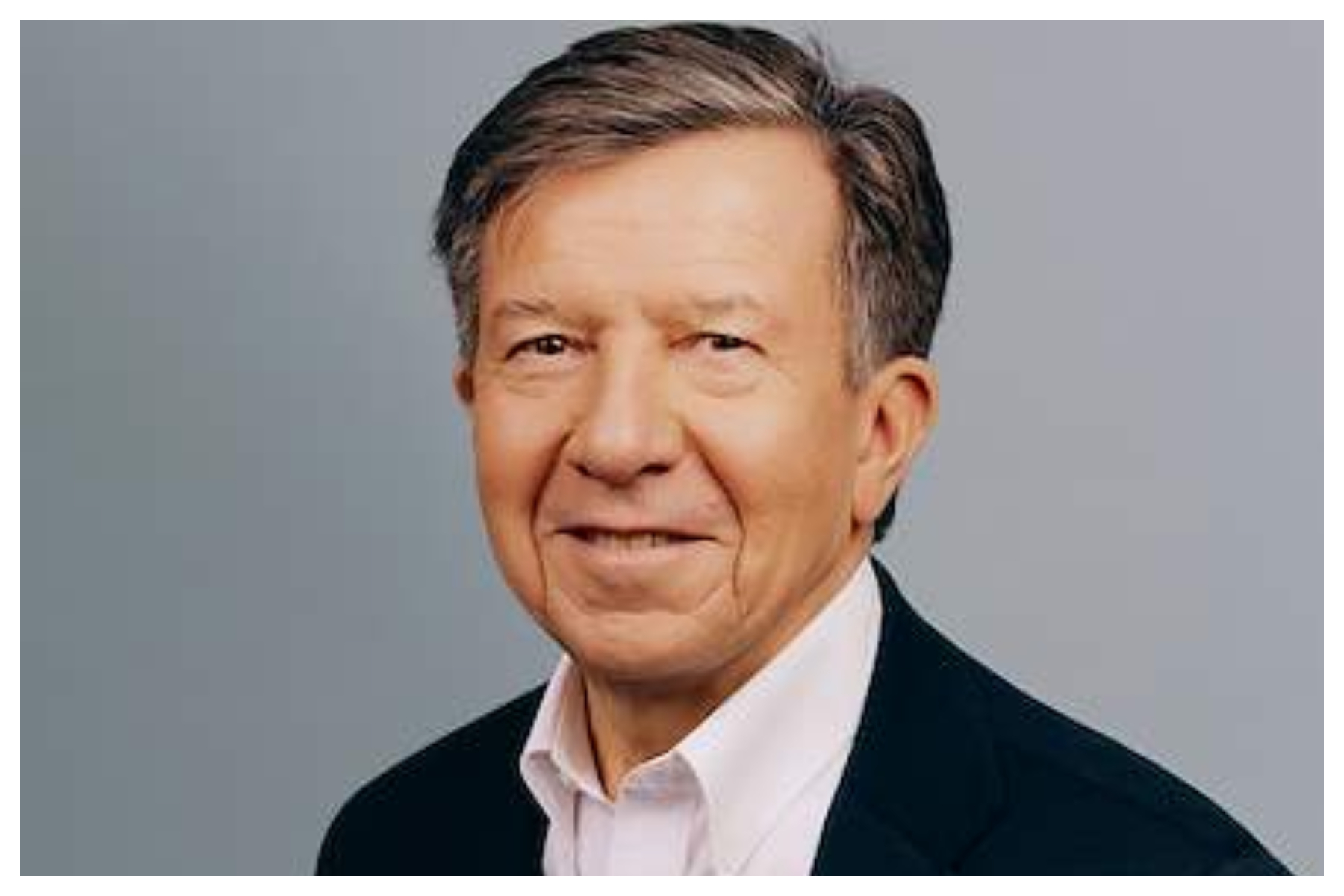
On 3 July 2026, the board of Unifrance, the Paris-based body charged with promoting French film, television, and audiovisual works abroad, re-elected its president Gilles Pélisson to a second three-year term, extending a mandate that began in 2023. The vote, held in Paris, was unanimous, according to Variety's trade reporting on the same day. The renewal matters less for the personality at the top than for what it signals about the agency's trajectory: a deliberate widening of remit, an institutional answer to a streaming-era market that no longer stops at the cinema door.
The re-election is the second formal endorsement for an organisation that, under Pélisson, has begun to look more like a state-aligned export office than a festival-circuit goodwill ambassador. The board's unanimity is itself a signal — French screen institutions are rarely unanimous about anything — and it lands at a moment when Paris is trying to convert its cultural weight into measurable market share in the platforms era.
A wider brief, a longer leash
Unifrance was founded in 1949 to push French cinema into foreign markets; its television brief is younger and its audiovisual brief is younger still. Pélisson, a former TF1 Group and Bouygues Telecom executive with a career spanning both private-sector scale and public-interest culture, has overseen the gradual fold-in of TV export promotion and, more recently, broader audiovisual work — animation, documentary, formats, games-adjacent IP. The second term formalises that drift. The agency's pitch to producers and to the Centre national du cinéma (CNC) is now closer to a single-window export concierge than a stand-alone film promoter.
The change is not cosmetic. French producers selling into a market dominated by US platforms — Netflix, Amazon, Disney+, Apple TV+, Max — need coordinated trade-show presence, English-language materials, dubbing and subtitling support, and the kind of regulatory intelligence that a small sales agent cannot generate alone. Unifrance's job, increasingly, is to provide that scaffolding on a scale that matches what California-headquartered studios command internally.
The counter-narrative: subsidy state, or competitive necessity?
There is a familiar critical line on bodies like Unifrance: that they are a subsidy machine, a soft-power front, and that the theatrical release data do not justify the apparatus. The argument runs that French film, despite a generous tax credit (the CNC's credit d'impôt), despite a dense festival circuit, and despite Unifrance's own promotional budget, has not produced a non-francophone breakout on the scale of a Parasite or a RRR in the last decade. From that vantage, re-electing the same president to extend the same model is rearranging the deck chairs on the Jeanne d'Arc.
That critique understates two things. First, the unit of competition is no longer the art-house film; it is the format, the series, the animated feature, the documentary strand. On those categories, French production — Banijay, Federation, Studiocanal, the Pathé and MK2 libraries — has been globally competitive for years. Second, the structural problem is not the absence of cultural product; it is distribution asymmetry. A French producer walking into a Los Angeles acquisition office in 2026 faces a buyer that has already been pitched by 200 other countries' agencies, several of them tax-payer funded. Unilateral disarmament is not a strategy. The argument for a beefed-up Unifrance is not romantic — it is a level-the-playing-field claim.
The structural frame: cultural export in a platform age
What the re-election sits inside is a wider European re-think of cultural export infrastructure. The EU's Creative Europe programme, the MEDIA strand, the European Audiovisual Observatory, and bodies like Germany's German Films, Spain's ICAA, and Italy's Luce Cinecittà have all been recalibrating since the early 2020s, when the streaming platforms consolidated commissioning power. The shared lesson across these institutions is that single-territory film funds cannot move the needle against globally distributed streamers; coordinated, multi-format, multi-territory export agencies can. Pélisson's re-election reads, in that sense, as a French adaptation to a market structure that the old Unifrance was not built for.
The domestic political logic is also straightforward. French cinema is one of the few sectors where the country's industrial policy and its cultural policy point in the same direction — both favour a strong national production base, both favour a national champion for export promotion, and neither is interested in provoking a public fight with the industry's unions. Re-electing the incumbent, by unanimous vote, costs nothing on the political ledger and clears space for the harder choices about budget, scope, and the relationship to the CNC that will define the second term.
Stakes: what the next three years decide
If the second Pélisson term follows the trajectory of the first, expect Unifrance to push deeper into television and audiovisual export, to harden its data infrastructure for producers (market intelligence, deal-tracking, festival logistics), and to negotiate more aggressively with the US-headquartered platforms over French-content quotas, windowing, and discoverability. The latter is the harder fight and the one with the most consequence. The EU's updated Audiovisual Media Services Directive sets quotas on platform catalogues; the question for French producers is whether those quotas translate into visible placement, into renewal, into financing for the next cycle of production. Unifrance, under a re-elected Pélisson, will be one of the bodies making that argument in Brussels and in the platforms' European headquarters.
The risk is institutional drift the other way: a body so absorbed by platform politics that it loses the festival-circuit and arthouse-export work that originally justified it. The mid-size French film, the one that plays Toronto and Berlin without breaking out, is precisely the kind of work a state-aligned export office exists to subsidise. If Unifrance tilts too hard toward series and formats, that work will feel the squeeze.
What the sources do not specify — and where the evidence thins — is the size and shape of any budget adjustment attached to the re-election, the specific board-level votes that preceded the unanimity, and the CNC's own posture toward the second term. Those questions will surface in the autumn, when France's screen-policy calendar picks up again. For now, the message from Paris is continuity with expansion, a second three years to finish the first one's reorganisation.
This publication framed Unifrance's re-election as a screen-export story rather than a soft-power story, foregrounding the platform-era distribution asymmetry that gives the agency its present rationale and treating the subsidy critique as a structural counter-argument rather than a settled verdict.
Wire provenance
This editorial synthesis draws on the following public wire/social posts:
- https://en.wikipedia.org/wiki/Unifrance
- https://en.wikipedia.org/wiki/Centre_national_du_cin%C3%A9ma_et_de_l%27image_anim%C3%A9e