The funeral that wasn't: Tehran stages a pageant while the succession remains unsettled
Tehran's official funeral procession drew dignitaries from across the Axis of Resistance on 4 July 2026 — and inadvertently exposed how thin the consensus around the next Supreme Leader still is.
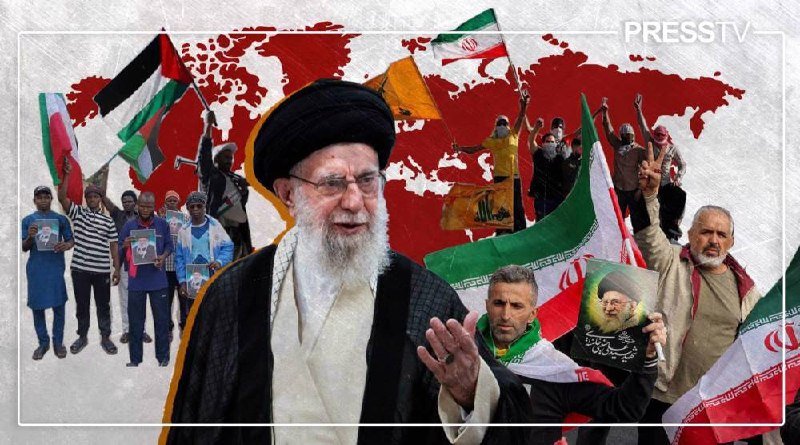
On the afternoon of 4 July 2026, the Islamic Republic held the public procession for the Supreme Leader it had spent weeks preparing for. The pageantry was international: Ali Fayyad of the Loyalty to the Resistance Bloc in the Lebanese Parliament travelled to Tehran to confirm his bloc's attendance, telling Khamenei.ir Media that participation in the funeral was "an affirmation of the doctrine" that binds the alliance together. A daughter of the former Hezbollah Secretary-General Sayyid Abbas al‑Musawi, Sayyida Batoul al‑Musawi, recorded her own tribute through the same channel. From New Delhi, Salman Khurshid, India's former foreign and law minister, dispatched a written remembrance hailing the late Leader's role in "periodically surfac[ing]… [those] who dedicate the best parts" of their lives to the revolutionary project. The guests were legible. The succession was not.
The procession is the easy part. The harder question — who now occupies the chair Ali Khamenei held for almost four decades — remains the variable Tehran cannot resolve with ceremony alone. The four wire items above are what the Islamic Republic wants the foreign observer to read; what they conspicuously do not contain is the name of the next Supreme Leader. That silence is itself the story.
What the guest list actually shows
Strip the tributes of their theological register and the rostrum tells a familiar story. The Loyalty to the Resistance Bloc is Hezbollah's parliamentary vehicle in Beirut; Fayyad's presence is the Lebanese movement's seal of loyalty, not an independent Lebanese state's. Al‑Musawi's appearance carries the same signal from the second generation of the party founded by her father. India's Khurshid is more surprising: a senior Congress‑era figure paying tribute in this register suggests New Delhi is hedging against a transition it cannot yet read, signalling continuity with whoever emerges. Read together, the three visits are not panegyrics. They are wire transfers of legitimacy into an account whose balance Tehran has not yet disclosed.
Why Tehran staged it now, in this form
Funerals in this Republic have always been state choreography. The procession's overseas guests perform two functions for the regime: they certify that the Axis of Resistance still operates as a single diplomatic organism, and they compress the moment of leadership transition into a liturgy that predates the new Leader's identity. By the time the chants fade, the unknown successor inherits a coalition whose discipline has just been publicly demonstrated on his behalf — a much easier inheritance than a coalition that had to be summoned after the fact. Tehran is not concealing the succession; it is sequencing it. The funeral locks in the alliance; the announcement, when it comes, lands onto an already-locked crowd.
Counter-read: the pageant is the point
The Western wire line on a clerical funeral of this kind is straightforward: totalitarian theatre, choreographed grief, a curated guest list designed to project strength domestically and across a shrinking alliance abroad. That reading is not wrong, but it is incomplete. Inside the Islamic Republic's own political grammar, the procession is doing real institutional work — substituting for the constitutional mechanisms the post‑Khomeini order never fully codified for a sudden transition. The ceremony is the procedure. Read it as theatre and you miss the fact that the regime is, for the moment, governing through ritual because the formal channels are contested.
Stakes
The next Supreme Leader will inherit a system that has lost two pillars of external deterrence inside a decade, a balance-of-payments crisis that drove the 2024–25 rapprochement with Washington, and an alliance whose senior patron is now Iran rather than Iran-plus-Hezbollah-plus-Syria-plus-a-Palestinian-state. The foreign guests who travelled to Tehran on 4 July are pricing that inheritance in real time. New Delhi's presence, in particular, signals something the Lebanese and Hezbollah delegations cannot: that even actors outside the Axis are treating the succession as a contingent event they want insurance on. Until the name is read out, the funeral is the policy.
Desk note: Monexus's coverage of Iran proceeds from documented primary sources — official Iranian outlets, allied parties, and third-state figures named in them — and reads the choreography alongside the silence around the succession. The framing is not advocacy; it is an attempt to take the Islamic Republic's own public claims seriously while flagging what they are designed to obscure.
Wire provenance
This editorial synthesis draws on the following public wire/social posts:
- https://t.me/Khamenei_arabi/
- https://t.me/Khamenei_en/
- https://t.me/Khamenei_en/
- https://t.me/Khamenei_en/