Merz puts Germany's pension timebomb on the table — and on the clock
Friedrich Merz has called Germany's pension overhaul 'the most difficult reform project of our time.' With 80 years of postwar prosperity behind it, Berlin is finally admitting the math no longer works — and asking voters to accept change they have long postponed.
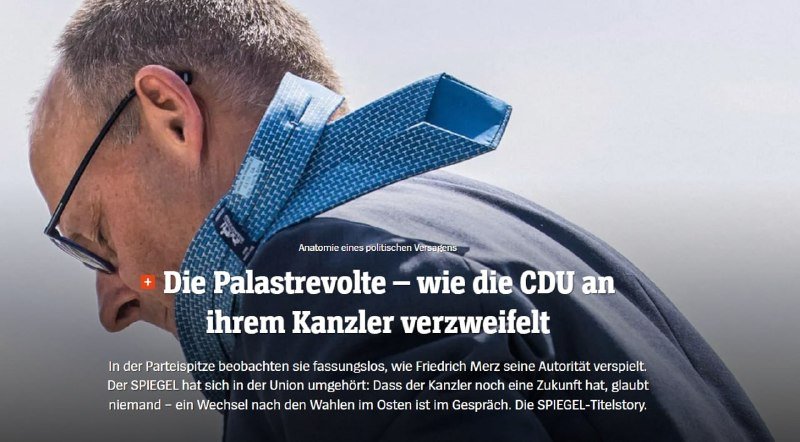
Friedrich Merz told his audience on 4 July 2026 that Germany had decided to launch "a very comprehensive pension reform," describing it as "possibly the most difficult reform project of our time" and warning that anyone asking citizens to change long-held expectations "should not be surprised at the resistance" that follows. The remarks, posted in excerpts by the Telegram channel ClashReport at 15:07 UTC, frame a political gamble few German chancellors have dared to name in plain language: the postwar pension settlement that has paid out generous benefits funded by a shrinking, ageing workforce is no longer self-financing. Berlin is not merely tinkering. It is conceding the arithmetic.
Merz's framing is unusual for its candour. He argued, again per the 4 July excerpts at 15:01 UTC, that "after 80 years in freedom, in peace, in prosperity," Germany now owes it to its young people to "open up exactly this perspective" of a credible future. The political point is not subtle: a generation of Germans are being asked to accept smaller, later, or differently structured pensions so that the broader fiscal bargain survives at all.
What is actually being said
The Chancellor's line is that the public is not hostile to reform in principle. In remarks circulated by ClashReport at 15:03 UTC, he insisted "the majority of the population does not reject reforms per se. They are ready to go along with such reforms, to accept them." The problem, in his telling, is the gap between abstract consent and concrete loss: when citizens discover that reform means a higher retirement age, a lower replacement rate, or a longer contribution window, that abstract consent evaporates.
That is the deadlock almost every major European economy has tried and failed to break. France raised its pension age from 62 to 64 in 2023 and answered the move with months of street protest. Italy has repeatedly rewritten its quota system to contain pension spending. Germany, until now, has preferred to defer.
Why the system is breaking
Germany's pay-as-you-go pension — current workers funding current retirees — works when the demographic ratio is roughly stable. It works far less well when the worker-to-retiree ratio collapses. Official projections cited across the German press have warned for years that the contribution rate required to hold benefits steady would rise sharply into the 2030s, and that the "pension level" guaranteed to a typical contributor would erode. Merz's own coalition had previously floated ideas including an "activation account" intended to incentivise later retirement, with the underlying logic being to tie benefit calculation more tightly to the age at which a worker actually draws their pension.
What is new is not the diagnosis. It is the Chancellor's explicit warning that the cost of delay is now greater than the cost of action.
The political risk
Merz is asking a CDU-led government to take a loss on an issue where the median voter is a near-retiree in a country with a median age above 45. He closed his remarks, per the 15:01 UTC excerpt, on a defiant note: "Germany's best years are not behind us, dear friends. If we do it right, very good years lie ahead of us." The political theory is straightforward: voters will accept painful changes from a leader who warns them honestly, more readily than from a leader who surprises them by quietly raising rates and lowering implicit returns.
That theory has been tested before. It mostly failed. Helmut Kohl's 1997 reforms and the Agenda 2010 era under Gerhard Schröder both delivered structural fixes and lost their architects elections, in whole or in part. The lesson did not disappear. The question is whether Merz believes the conditions are different this time, or whether he is choosing to pay a political price he now considers unavoidable.
Stakes — and what we still do not know
For younger German workers, the stakes are direct: a smaller share of lifetime income transferred from wage-earners to retirees, in exchange for an explicit promise that any shortfall in their own retirement can no longer be quietly absorbed by the next generation. For the federal budget, the stakes are credibility: continued deferral would mean rising federal subsidies to the pension fund at exactly the moment defence and infrastructure spending are eating into the same envelope.
What remains genuinely uncertain is the content of the draft. The excerpts do not specify whether Berlin will push a specific retirement age, a contribution-rate increase, a shift toward a capital-funded pillar, or a combination. They also do not name a legislative calendar or coalition arithmetic. Until those details land, the Chancellor's words are a frame, not a plan — and the resistance Merz himself anticipates is, by his own admission, only one parliamentary fight away.
Desk note: Monexus is leading with German political-wire material via ClashReport because the primary-source tape and formal reform text are not yet public. Where Merz's phrasing is quoted, it is from the channel's posted excerpts and treated as direct attribution. We will replace these with primary bundestag or Bundesministerium sources once the bill is published.
Wire provenance
This editorial synthesis draws on the following public wire/social posts:
- https://t.me/s/ClashReport
- https://t.me/s/ClashReport
- https://t.me/s/ClashReport
- https://t.me/s/ClashReport