The MiG-29 File: How a Closed-Door Briefing Became a Test of Polish-Ukrainian Trust
A closed-doors briefing in Warsaw has put a rare public dent in the otherwise smooth Polish-Ukrainian defense relationship, with a Ukrainian outlet alleging Warsaw miscalculated on MiG-29 transfers.
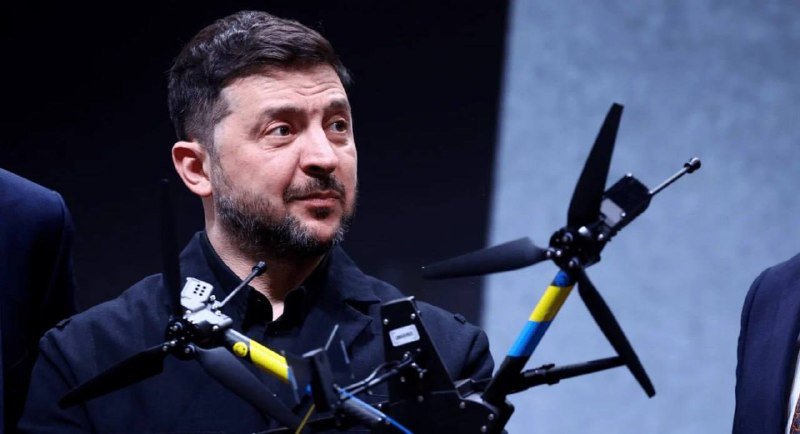
On 3 July 2026, the Ukrainian Telegram channel TSN published a long-form piece under the headline "A tough game behind closed doors: how MiG-29s broke Kiev and Warsaw and who is to blame." The post, surfaced in reporting threads on 4 July, frames a series of recent MiG-29 transfer decisions as a stress test of the Polish-Ukrainian defense relationship — and points a finger, carefully but unmistakably, at Warsaw.
This publication's reading of the available reporting is straightforward: behind the diplomatic pleasantries that have characterised Polish-Ukrainian defense ties since the first Soviet-era airframes began moving east, a quieter story is now being told in Ukrainian-language media. The story is not that Poland has abandoned Ukraine. It is that the mechanics of MiG-29 handovers have become a friction point, and that someone, somewhere in a closed room, is being blamed for it.
What the TSN piece actually alleges
The TSN report, summarised in the original 4 July Telegram thread, characterises the MiG-29 negotiations as a "closed-door game" that produced outcomes neither capital can fully defend in public. The Ukrainian framing treats the Warsaw end of the conversation as the proximate cause of friction: scheduling, condition of airframes, pilot training pipelines, and the political optics of every transfer announcement. The piece's title — "who is to blame" — sets the tone. It is a question being asked from Kyiv, not a verdict being delivered from Brussels.
The reporting leans on the asymmetry that has defined MiG-29 transfers from the start. Poland operates a fleet of MiG-29s inherited from the Soviet era and modernised over the past decade. Ukraine flies the same airframe, and lost a substantial share of its fighter inventory in the opening phase of Russia's full-scale invasion. The logic of transfer is therefore clean on a briefing slide. The execution, in the version TSN is now telling, has been less so.
The Warsaw angle, and why a Polish voice is hard to find
On 3 July, the X account @sknerus_ — a feed that tracks Polish and Baltic security affairs — posted a short reaction to the TSN thread with the laconic line, "No surprise that it's in Warsaw XD," paired with a video clip. The brevity is the point: the Polish-language discussion of MiG-29 transfers has been visibly thin compared with the Ukrainian-language storm, and the most substantive Polish commentary is happening in informal channels rather than on the front pages of Rzeczpospolita, Gazeta Wyborcza, or the TVN24 evening broadcast.
That asymmetry matters. Ukraine's media environment is mobilised around the war and quick to name institutions, decisions, and officials when something goes wrong. Poland's media environment treats MiG-29 transfers as a sensitive bilateral file — the kind of topic where defence correspondents write carefully, where the Ministry of National Defence briefs in private, and where the government's coalition arithmetic (a Tusk-led administration balancing Ukraine solidarity with a PiS-sceptical voter base on the right) discourages public throat-clearing. The result is a public conversation that is loud on one side and muffled on the other, even though the airframes in question sit in Polish hangars.
What this is, structurally
Read against the longer arc of Poland's defense posture since February 2022, the MiG-29 file is less a rupture than a phase shift. Warsaw moved early on the political question of arming Ukraine — the first NATO government to send main battle tanks, the hub for the Leopard 2 coalition, the logistical backbone for most heavy equipment now reaching the front. MiG-29s were always going to be a harder problem: smaller numbers, higher symbolic value as NATO-standard-adjacent kit, and an airframe that, unlike a Leopard, visibly carries Warsaw's flag on its tail when it shows up on a Ukrainian tarmac.
Closed-door frictions are an unsurprising feature of that kind of transfer. They become news when one capital decides the other side has handled a specific decision badly, and chooses to say so publicly. TSN's piece is the second half of that choice. The first half is the Ukrainian military's quiet unhappiness, which has been a subtext in Kyiv Post and Ukrainska Pravda coverage for months. The visible accusation is what is new.
What remains contested, and what to watch
The sources do not specify which MiG-29 decision TSN considers the breaking point — the framing in the Telegram thread is narrative rather than forensic. A reader should treat the "broken" in the headline as a working hypothesis from one side of the conversation, not a confirmed state of the alliance.
What is worth watching, on a short horizon, is whether Polish-language outlets begin to engage the TSN allegations on the merits. If Rzeczpospolita or Defence24.pl pick up the file in the next ten days, the friction has crossed into the Polish mainstream; if they do not, this remains a bilateral irritant aired in Ukrainian media and absorbed quietly in Warsaw. The airframes themselves, either way, are likely to keep moving. Whether the political trust around them moves with them is the question TSN has now put on the table.
Desk note: Monexus treated the TSN report as a one-sided framing from a Ukrainian outlet, and weighted the Polish-language signal — chiefly the @sknerus_ reaction — as confirmation that the friction is being noticed across the border, even where it is not yet being discussed on Polish front pages. Wire services have not, as of this filing, picked up the closed-door briefing claim.
Wire provenance
This editorial synthesis draws on the following public wire/social posts:
- https://t.me/tsn_ua
- https://x.com/sknerus_/status/2073063864048975872