Netanyahu's Washington problem: when the patron's team thinks the client is wrong
Trump says Bibi 'knows who the boss is.' His own advisers, by one reading, think the client is wrong about almost everything — and a 91% market says they will still sit down this month.
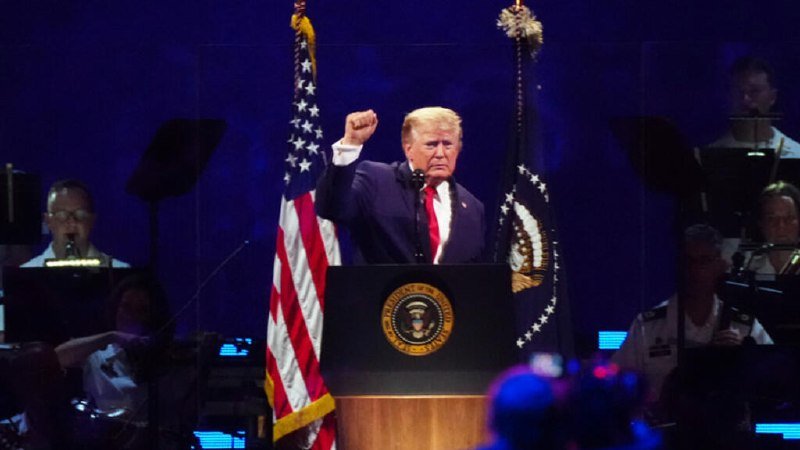
On 4 July 2026, two contradictory signals arrived from Washington within minutes of each other. President Donald Trump declared publicly that Prime Minister Benjamin Netanyahu "knows who the boss is" — an extraordinary line in a country that does not formally pick Israeli prime ministers. Earlier the same day, an American official told reporters that "many of Trump's closest advisers believe that Bibi Netanyahu was wrong about everything." The Polymarket contract on whether the two men meet this month sat at 91%. Both signals can be true. The interesting question is what kind of alliance produces them at the same hour.
What the two signals actually mean
The first is theatre, and the second is staff work. Trump's "boss" line, posted on his own feed on 4 July at 18:19 UTC, is the kind of language a property-deal-brat turned president uses to remind an audience that the United States bankrolls Israel's missile-defence umbrella, sustains its qualitative military edge, and shields it diplomatically at the UN. The second signal — conveyed to journalists and circulated on X by way of the "sprinterpress" account the same evening — is the more revealing one. When a president's aides leak that they think the foreign leader is wrong on the substance, that is not background colour. It is the administration signalling to its domestic press gallery, to Israeli embassy staff reading the cables, and to Netanyahu's coalition partners at home, that the licence to act unilaterally has narrowed.
Why the aides may have a point
Strip out the theatre and the underlying critique has a coherent shape. The aide-reported view is that Netanyahu misjudged the war in Gaza, misjudged the political cost of his coalition's far-right partners, misjudged how long the United States would absorb civilian-casualty optics at scale, and misjudged how the regional realignment — Turkey's rising role, the post-Assad disorder, Iranian nuclear positioning — should be sequenced. None of this has to be wrong for all of it to be contested inside the White House. Senior American administrations often privately think their Israeli counterparts are wrong about specific files even while publicly standing with them. The news on 4 July is not the existence of that friction. It is that it is being aired openly, on the record, to a reporter who felt comfortable putting a named "American official" behind the line.
The 91% number and what it actually prices
Polymarket's contract — sitting at 91% on 4 July, 18:30 UTC, for a Trump–Netanyahu meeting in July — is not a referendum on whether relations are warm. It is a referendum on whether a photograph of the two men sitting in the Oval Office is deliverable inside the window. Photographs are deliverable even when the substantive meeting is tense. In other words, the market is pricing the optics, not the alignment. The leak about the advisers and the Polymarket number point in the same direction: the two leaders will be in the same room this month, but the room will not paper over the disagreements. Anyone treating the meeting as a clearance of the underlying tensions will be reading the wrong variable.
What Israel reads from Washington when this happens
Israeli prime ministers have lived through versions of this script before — senior US aides on the record that the Israeli leader is off course, presidential language that re-asserts the hierarchy, a meeting convened to manage the optics. The historical pattern is that the Israeli side uses the meeting to extract specific deliverables: a missile shipment timed to a news cycle, a UN vote delayed by a week, a clarifying line on red lines for an adversary. Whether Netanyahu's team can extract that kind of relief from Trump in July 2026 is the actual test of the relationship, and it is the question the aides are quietly telling reporters they doubt.
The framing that should be resisted is the simple one. This is not a rupture. It is the visible cost of the asymmetry the United States and Israel have both lived with for decades — an America that pays the bills and holds the veto, and an Israel that runs the operations. When the bill-payer's staff says out loud that the operator is wrong, the asymmetry does not invert. It just gets louder.
Stakes
If the aides' view is correct and Netanyahu is wrong on the main files, the cost falls on Gaza first, on the Palestinian civilian population that bears the proximate consequences of any strategic miscalculation, and on Israel's long-term diplomatic position in the region. If the aides are wrong and Netanyahu's instincts are vindicated by events, the cost falls on the White House staff who put their fingerprints on the criticism. Either way, the meeting itself — the 91% one — is the least interesting part of the story. What to watch is what leaks out of it, and from which side.
What the sources do not specify is which specific files the advisers think Netanyahu is wrong about — Gaza, Iran, the coalition, the hostage file, or all of the above — and whether the line was planted by officials who want to soften Netanyahu up for a deal, or harden him against one. That distinction, more than the meeting itself, will determine whether July 2026 reads as the month Washington's patience ran out, or the month the two governments rehearsed their old routine for a new audience.
— Monexus Staff Writer
Wire provenance
This editorial synthesis draws on the following public wire/social posts:
- https://x.com/sprinterpress/status/...