Vladimir Putin's 'partial ceasefire' offer lands on the wrong front
Kremlin's latest 'peace' gesture targets the same summer that has produced the heaviest drone and missile barrages of the war. Kyiv and its backers have good reason to treat the offer as cover for the next escalation, not a step back from one.
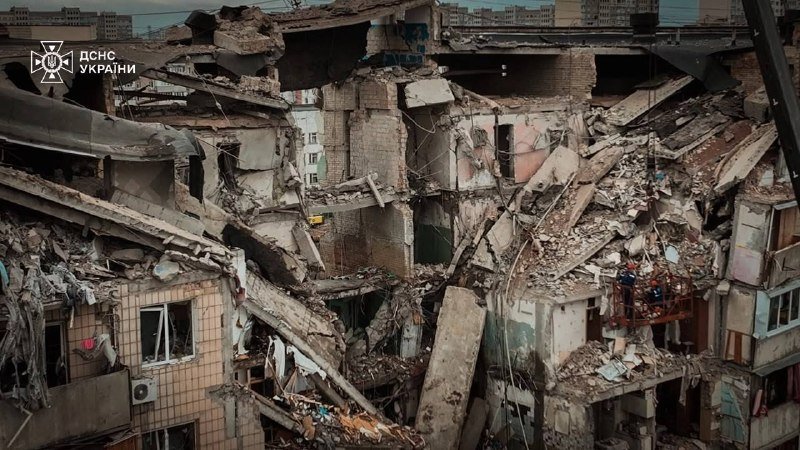
On 4 July 2026, in the eleventh week of what Ukraine's general staff describes as the most sustained aerial campaign of the full-scale war, Russian state-aligned channels carried Vladimir Putin's offer of a "partial ceasefire" — a phrase calculated, by every reading available, to be taken seriously in European chancelleries and rejected in Kyiv. The TSN news desk summarised the proposal and its cynicism in a single beat: details, the network noted, pointed to a gesture built for headlines rather than horizons. The phrase doing the diplomatic work is "partial" — and the partiality is the message. (Source: TSN, 4 July 2026.)
Monexus reads the offer as the latest iteration of a familiar Russian negotiating tactic: announce a goodwill gesture aimed at a Western audience, then continue operations on the ground that the gesture is supposedly designed to pause. It is not peace. It is the choreography of peace. And the choreography has, in past rounds, bought Moscow precisely what it needs most — time, splits between Western capitals, and a fog in which further escalation can be relabelled as "response."
A gesture shaped for the cameras it expects
The Russian side has shown, across the war, a consistent preference for ceasefire proposals that exclude the fighting that matters most. Past iterations have proposed pauses over particular oblasts while leaving the active axes of advance untouched; the partiality has always tracked where Russian forces are advancing, and where they are not. Ukrainian officials and Western-allied analysts have documented the pattern; the new offer, on the surface of it, repeats it. The phrase "partial ceasefire" is doing two jobs at once. It signals virtue to a Western reader scanning a wire headline. It leaves Moscow free to keep the pressure on the southern and northeastern sectors where the grinding advances have consumed Ukrainian positions metre by metre through the summer.
The cynical framing is not paranoia. It is what the same Russian negotiating team has attempted before, and what the same Kyiv negotiating team has been obliged to read as cover for the next assault wave rather than a pause from the current one.
Why Kyiv reads the offer as escalation
The arithmetic in July 2026 is not the arithmetic of the war's middle years. Ukrainian sources, including the general staff and civilian monitoring channels, have described the current phase as defined by long-range drone and missile barrages aimed at infrastructure, logistics, and population centres — the kind of operation that a "partial" pause is unlikely to touch. A ceasefire that excludes these strikes is, from Kyiv's standpoint, a tactical gift to Moscow, allowing resupply and rotation of the very systems the barrages are degrading. The Ukrainian objection is structural, not sentimental: a pause that does not include the dominant instrument of current Russian pressure is not de-escalation. It is selective de-escalation in Moscow's favour.
There is also the timing. The offer arrived in the same week that European governments have wrestled visibly over how to keep support for Ukraine durable through winter and beyond. A partial offer creates a wedge between those who want to test any plausible-sounding peace gesture and those who insist that no gesture from Moscow deserves trust until verified on the ground. That wedge is the deliverable.
What a Western capital that wants to be useful should do
The temptation in Berlin, Paris, and (to a lesser extent) London is to engage with the proposal on its own terms — to test it, to ask whether anything can be salvaged, to demonstrate seriousness. That instinct is respectable. But the test is not whether Putin is willing to sign a paper. The test is whether the fighting that the partial ceasefire carves out will actually pause, and pause on terms verifiable from outside Russia. The bar should be set higher than the headline.
The leverage Kyiv needs is the same leverage it has needed since the full-scale invasion began: weapons deliveries on a cadence that does not require a parliamentary vote every month; air-defence systems in the kind of quantity that turns the barrages into a less efficient instrument; sanctions enforcement that closes loopholes faster than they are opened; and a sanctions architecture that reaches the third-country enablers Moscow has been adept at recruiting. None of this requires engagement with the partiality of the present offer. All of it is consistent with ignoring it.
The plausible alternative read
The charitable interpretation is that Moscow is, finally, prepared to trade something genuine — that the word "partial" describes an opening position, not an end state, and that diplomacy works by starting with offers that don't yet include the hardest concessions. This publication finds that reading unconvincing for three reasons grounded in the same Russian negotiating record. First, the Kremlin has been offered openings before and has used each one to rebuild force rather than to bargain in good faith. Second, the offer landed without an accompanying verification mechanism, which is the actual content of any ceasefire — without monitors, without a withdrawal schedule, and without enforceable definitions of what counts as a violation, the word itself is empty. Third, the partiality mirrors Russian force posture; that is too consistent to be coincidence.
What remains uncertain
The sources available to Monexus do not specify which sectors, units, or capabilities the Russian side would consider covered by a "partial" pause. The Kremlin's own framing is, by design, vague — vagueness is the offering. Kyiv's general staff has not, in the material available, issued a formal rejection; the political leadership has, historically, reserved formal responses for proposals with more substance. The most honest summary is that the partial-ceasefire framing functions, in this round, as a Western-press story more than a negotiating event, and should be treated as such until verification architecture is on the table.
Desk note: TSN, a mainstream Ukrainian outlet, carried the framing of "details of a cynical statement" in its own headline — a phrase that, in Kyiv's journalism, is offered routinely when an offer from Moscow arrives without the architecture that would let it be tested. Monexus reproduces the framing because the reporting fits the pattern, not as a slogan.
Wire provenance
This editorial synthesis draws on the following public wire/social posts:
- https://t.me/s/tsn_ua