Qom fills with mourners as Iran's clerical establishment stages farewell to a slain 'martyred leader'
State-aligned Tasnim newsreels depict a Qom funeral for a figure it calls a 'martyred leader.' The footage is real — but what it sells the outside world is something else entirely.
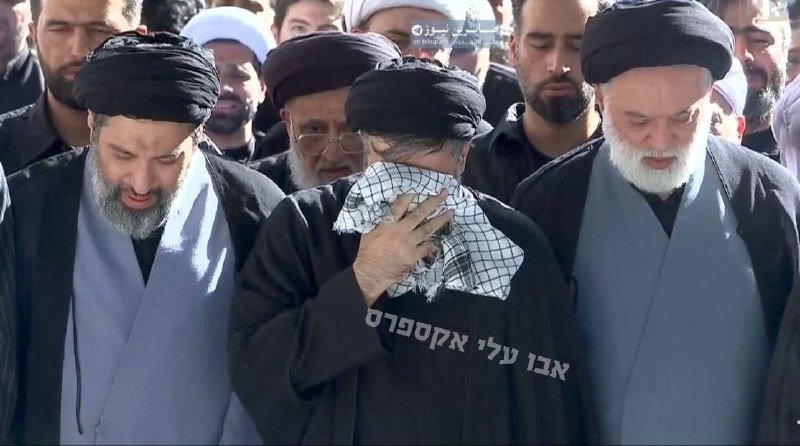
The footage is unmistakable and the source is unambiguous. On 4 July 2026, between roughly 14:10 and 15:02 UTC, Iran's state-aligned Tasnim News Agency published a cluster of dispatches from Qom: cars streaming toward a funeral, mourners chanting, organisers directing parking for a cortege the agency attributes to a "martyred leader" whose identity it leaves unstated in English-language captions. The hashtag it appends to every clip — #Badarqa_Aghai_Shahid_Iran — is the editorial thesis of the day: a nation in mourning, a leader exalted by death, and a revolutionary repertoire renewed in real time on a city square.
A script, rehearsed
The choreography is familiar to anyone who has watched Iranian state media during the funeral of a senior Islamic Revolutionary Guard Corps commander or a cleric killed in action abroad. Tasnim's English-language feed runs the standard sequence: footage of vehicles arriving; crowd shots of men in black; a soundbite of mourners crying "revenge"; an editorial caption asserting that "the presence of lovers does not end with the farewell to the martyred leader." The language is doctrinal — shahid (martyr), badragah (a near-Shia honorific implying the deceased is already in paradise's presence), muhibban (lovers) — and it is deployed with the regularity of a corporate press release.
Tasnim is not a neutral wire service. It is the news agency of the IRGC, founded in the early 2000s and formally affiliated with the Corps' public-relations apparatus; Western governments and a number of Western outlets treat it as a state-aligned outlet rather than an independent one. That is not, on its own, a reason to ignore it. It is a reason to read it as the establishment speaks to itself. What Qom's streets are made to mean, in Tasnim's rendering, is the legitimacy of the clerical order in its most martial register.
What Tasnim does not say
The English captions are studiously incomplete. The word "leader" sits unmodified. The phrase "martyred leader of the nation" appears in a 14:43 UTC headline, without a name, without a date of death, without an account of the operation that killed him, and without any indication of who, if anyone, is being held responsible. Compare that to the wire copy out of Tehran that this publication has tracked in recent years, where the names of slain commanders are almost always followed within minutes by the date and the geography of the strike that ended them. The opacity here is not accidental. It is the apparatus preserving flexibility: a martyr can be deployed, rhetorically and operationally, before the public knows who he was.
There is also no counterpoint on Tasnim's channel. No vox pop from families of the deceased's victims. No frame of the cleric as a human being, with preferences and contradictions and a birthday. The mourner is a typology. The city is a backdrop. The hashtag is a unit of political product.
Reading the footage as audience, not as fact
The honest way to treat these dispatches is not as news in the journalistic sense. Tasnim is producing a real-time record of an audience: who turned up, in what numbers, in which ritual posture, chanting which slogans. The numbers themselves are unverifiable from outside — turnout at Iranian state funerals is contested terrain, with opposition channels inside Iran and diaspora outlets typically producing sharply lower estimates than the official agencies. The footage this publication is looking at on 4 July 2026 is consistent with a large, well-organised crowd; it is not, by itself, evidence of a national mood.
This distinction matters because Western commentary on Iranian state funerals routinely collapses the two — taking regime-staged grief as a referendum on the regime. The reverse is closer to the truth. The clerical establishment's genius, across four decades, has been to convert elite death into popular theatre. The crowd in Qom is part of the news; it is not the news.
The stake for the rest of us
For non-Iranian readers the relevant question is not whether the funeral happened. It happened. The relevant question is what the funeral is doing. A martyr script, replayed on schedule, performs three jobs at once: it legitimises a successor to the slain figure; it binds the street to the institution that organised the mourning; and it sends a signal, at home and abroad, that the establishment absorbs its losses without policy adjustment. The chants of "revenge" are not the vox populi. They are the script.
Monexus finds that the wire treatment of these Qom dispatches would benefit from a simple discipline: name what the footage is, attribute it to Tasnim, and resist the temptation to transmute a state-media product into a window on the Iranian street. The footage is real. The nation Tasnim claims to be speaking for is a more contested thing.
Desk note: Monexus treats Tasnim as the IRGC's English-language public-relations channel and reports its claims with that framing intact. Where wire coverage treats Tasnim's crowd counts as evidence of public sentiment, we flag that read as the establishment speaking to itself rather than a neutral observation of Iranian society.
Wire provenance
This editorial synthesis draws on the following public wire/social posts:
- https://t.me/tasnimnews_en
- https://t.me/tasnimnews_en/14:10-UTC-post
- https://t.me/tasnimnews_en/14:43-UTC-post