Swift and Kelce marry at MSG — and the news cycle shows its true priorities
Two wire-flash confirmations, a global news audience, and a quiet question about what counts as a story in 2026.
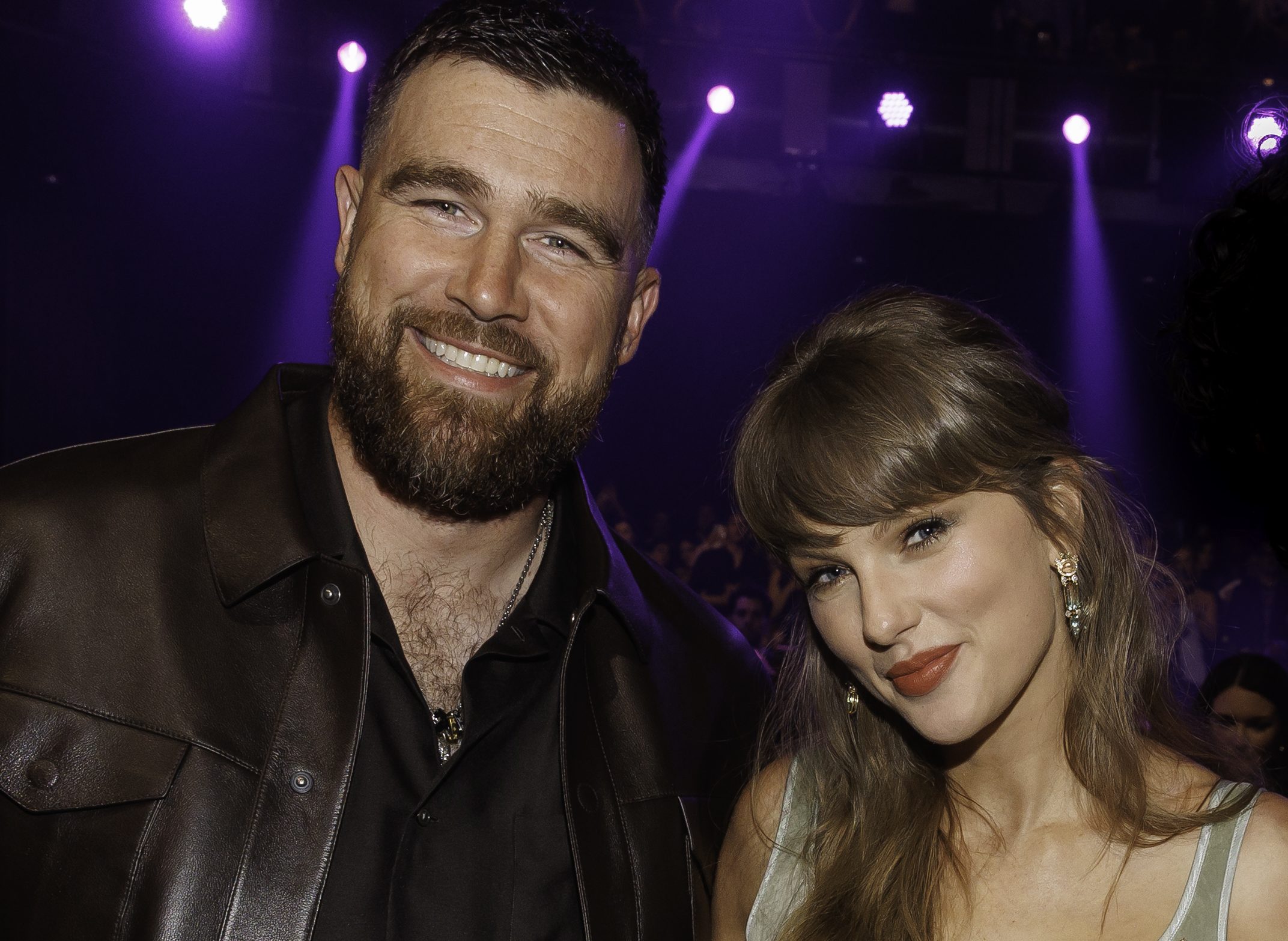
At 15:38 UTC on 4 July 2026, BBC's world feed carried a single sentence: Taylor Swift married Travis Kelce in a New York City ceremony officiated by Adam Sandler, with Midtown Manhattan streets shut as fans gathered outside the arena. Eight hours earlier, the Polymarket account on X had already declared the marriage "official," pegging Madison Square Garden as the venue. Two wires, two flashes, one celebrity-industrial event.
The marriage of a singer-songwriter and an NFL tight end is not, on its face, a geopolitical story. It is a story about attention — about what the global news apparatus treats as a flash-worthy event on the United States' Independence Day, and what that treatment reveals about the routing of collective attention in 2026.
What the wires actually confirm
The two source flashes are precise and limited. The BBC world ticker, posted to its Telegram channel at 15:38 UTC, names the principals, the officiant, and the venue's neighbourhood; it does not, in the truncated message captured here, give a date beyond the day of broadcast or list guests. The Polymarket X account, posting at 23:55 UTC on 3 July, asserts the marriage and the venue but is, by its nature, a market-signal rather than a reporter of fact: its value lies in the speed at which a trading crowd prices an outcome as resolved.
What this publication can confirm from the two items alone is narrow: two named individuals are reported as married; the venue is identified as Madison Square Garden in Midtown Manhattan; the officiant is named as Adam Sandler; streets in the surrounding area were closed; and a crowd assembled outside. No further details — guest list, date of ceremony, legal jurisdiction, financial arrangements — are present in the available source material. Where the wider entertainment press will fill the gaps in the coming days, the public record, as of this writing, is still thin.
Why the cycle moved this fast
Celebrity weddings have always drawn coverage, but the velocity here is the point. A marriage rumour that, a decade ago, might have surfaced in a tabloid splash and percolated through the week moved from market-priced claim to wire confirmation in under sixteen hours. The Polymarket flash functions as a leading indicator for outlets that monitor prediction-market resolution as a real-time news feed; once a market settles, downstream desks have permission to treat the outcome as confirmed.
This is not an indictment of any individual reporter. It is a description of a system. When the financial plumbing of attention — prediction markets, search trends, social-listening dashboards — registers an event as resolved before a traditional source has filed, the incentive is to confirm and amplify rather than to verify independently. The BBC flash does not say "according to sources." It says it happened. That phrasing reflects a confidence that the underlying claim has already been validated upstream, by the crowd.
The counterweight
Two cautions are worth recording. First, prediction markets price consensus as much as fact; a market resolving in one direction is evidence that bettors believe an outcome, not independent proof of it. Second, celebrity-event reporting has a long history of premature confirmation — engagement announcements, pregnancies, reconciliations — that subsequent reporting has had to walk back. The wires here may be correct; the structural point is that the system is built to publish first and caveat later, and the audience has been conditioned to read the first version as the final one.
A third, quieter point: the news cycle on 4 July 2026 chose to lead its entertainment desk with this. Whatever else happened — market closes, diplomatic cables, weather disasters, court rulings — was displaced by a celebrity wedding in Midtown. That displacement is itself a piece of information. The algorithmically optimised news diet does not allocate column-inches by civic weight; it allocates them by engagement weight, and a Swift–Kelce marriage is engineered, by design of every party's brand apparatus, to dominate that metric.
What it tells us about the room we're in
The 2026 attention economy has a particular shape. A singer with a stadium-filling fanbase and an athlete at the centre of the NFL's media cycle marry at one of the most surveilled venues in North America, on a national holiday, with an officiant who is himself a high-recognition celebrity. Every ingredient is engineered for virality. The news system is not a neutral observer of that engineering; it is its distribution layer.
The stakes are not trivial. When a global news audience consumes, in a single feed refresh, the confirmation of a celebrity marriage and little else, the opportunity cost is real. Foreign correspondents filing from under-reported regions compete with stadium weddings for the same scroll. Editors do not choose this framing out of malice; they choose it because the engagement data demands it. The result is a public sphere in which the boundaries between news, entertainment, and market signal have effectively dissolved.
For the reader, the practical takeaway is modest and worth practising. A flash from a prediction-market account is a signal to look for confirmation, not the confirmation itself. A wire headline that names no source is a prompt to ask what is being asserted and by whom. And a story that fills a global feed within hours is worth pausing on — not because it is wrong, but because the speed of its arrival is itself a piece of information about the system that produced it.
Two wires, two flashes, one marriage. The rest is up to whoever is reading.
This piece treats the 4 July 2026 Swift–Kelce wedding reports as a case study in how global news routing works in 2026, rather than as celebrity coverage on its own terms.
Wire provenance
This editorial synthesis draws on the following public wire/social posts:
- https://t.me/BBCWorldoffl
- https://en.wikipedia.org/wiki/Madison_Square_Garden