Tehran's farewell as choreography: what the mourning for Iran's 'martyred leader' actually signals
Tasnim's rolling coverage of a two-day farewell in central Tehran reads less as reportage than as liturgy — and the framing tells us more about the regime than the mourners do.
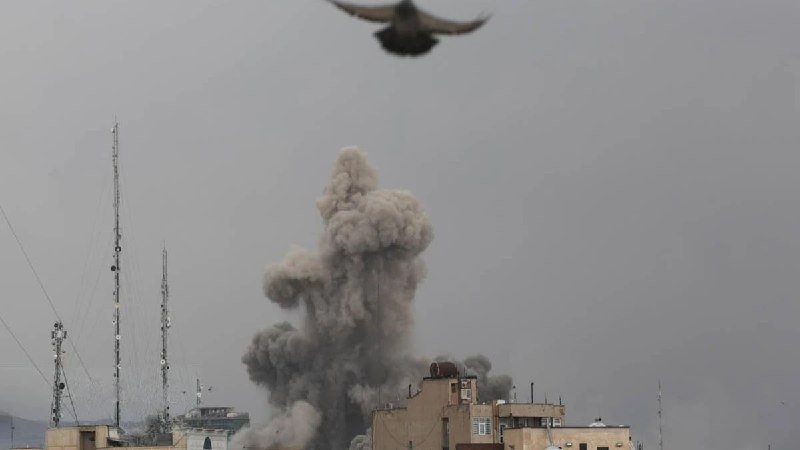
On 4 July 2026, Iran's state-affiliated Tasnim News Agency ran a rolling sequence on Telegram that read less like journalism than like a director's notebook. Six dispatches between 19:06 UTC and 21:14 UTC — timestamps verified on the @tasnimnews_en channel — described the second day of farewell to a "martyred leader," the opening of additional mosque doors to accommodate crowds, and the figure of "a man from among the people" embodying collective grief. The hashtags were identical on every post: #Badarqa_Aghai_Shahid_Iran and #must_rise.
The choreography is the story. Tasnim is the public-facing wire of the Islamic Revolutionary Guard Corps, and its English-language Telegram feed is the closest thing the Iranian state has to a live wire during moments of national mobilisation. When the same hashtags, the same epithet ("the leader of the nation"), and the same visual cues repeat across six bulletins in roughly two hours, the production is the message.
The language of martyrdom, recycled
Every Telegram item in the cluster refers to a "martyred leader" whose body is being farewelled across two days. The framing is consistent with the corpus of terminology Tasnim and the wider Iranian state media apparatus deploy around senior figures killed in action or in office — language that fuses religious mourning with political legitimacy. "Badarqa_Aghai_Shahid_Iran" — the persistent hashtag — is a fixed banner, not a developing one.
The detail that stands out is the small human interlude in item 1 (21:14 UTC): "a man from among the people, with a heart full of sorrow." Even that vignette is staged — Tasnim is naming an everyman precisely because everyman grief is what the regime wants to render visible. In Iranian state-media grammar, the funeral of a senior figure doubles as a referendum on the system's connection to ordinary Iranians. The second-day headline, "the mourners created another epic," confirms the intent: scale and repetition are the political assets being produced.
Counterpoint: what the wire does not show
Western wires have not, in the materials available to this publication, named the deceased figure or independently verified the crowd sizes Tasnim claims. That asymmetry is itself worth marking. Tasnim has every incentive to maximise both the turnout figure and the emotional register; Reuters, AFP, and the BBC, when they cover such ceremonies, tend to report Tasnim's numbers with explicit attribution rather than as fact. The sources available to this publication do not include an independent crowd count, an on-the-ground Western correspondent's account, or satellite imagery of the mosque precinct. The picture we have of 4 July 2026 in Tehran is, for now, the picture the IRGC's own newsroom wishes us to have.
There is also a question the bulletin does not address. The state broadcaster's choice to run a second day of ceremonies with identical hashtags suggests the target audience is dual: a domestic one, expected to demonstrate loyalty in person and online, and a foreign-language one, expected to carry the imagery into feeds where Iran coverage is thin. The English-language Telegram channel is doing both jobs at once.
The structural read
Inside Iran, public mourning for a senior figure is one of the few mass-mobilisation rituals the state still runs with full institutional weight. Elections are managed; parliament is curated; the Friday sermons are choreographed. Funerals are the moments when the regime's claim to emotional legitimacy — the argument that it speaks for a people, not just a faction — is most loudly tested. When Tasnim reports that "new doors of the mosque" had to be opened due to "enthusiastic presence," it is making an argument about scale; when it foregrounds "a man from among the people," it is making an argument about representation. Both arguments serve the same political function: the system as embodied steward of national grief.
The hashtag #must_rise, repeated on every item, is the connective tissue. It tells readers — domestic and foreign — that the mourning is not a coda but a prelude. Whatever the underlying event that produced this funeral sequence, the state's preferred narrative is one of ascent, not closure.
What remains uncertain
This publication cannot, on the basis of these six items alone, identify the deceased leader, confirm the circumstances of death, or corroborate Tasnim's description of turnout. Those are first-order facts that independent reporting — from Reuters, the BBC's Persian service, or Iran International — will need to establish before any firm reading of the political consequences is possible. What the source set does establish is the production: six bulletins, identical framing, two-hour cadence, a single integrated hashtag, and a final vignette engineered to feel spontaneous. That production is itself the most reliable fact on the page.
Desk note: Monexus reads Tasnim as a primary source for what the Iranian state wishes to project, not as a neutral wire for what is happening on the ground. Where the bulletin shows choreography, the story is the choreography.
Wire provenance
This editorial synthesis draws on the following public wire/social posts:
- https://t.me/tasnimnews_en
- https://t.me/tasnimnews_en
- https://t.me/tasnimnews_en
- https://t.me/tasnimnews_en
- https://t.me/tasnimnews_en
- https://t.me/tasnimnews_en