A Funeral in Tehran and the Architecture of the Resistance
Foreign leaders from Kuala Lumpur to Islamabad converged on Tehran for the funeral of Ayatollah Khamenei. The choreography was as choreographed as it was revealing.
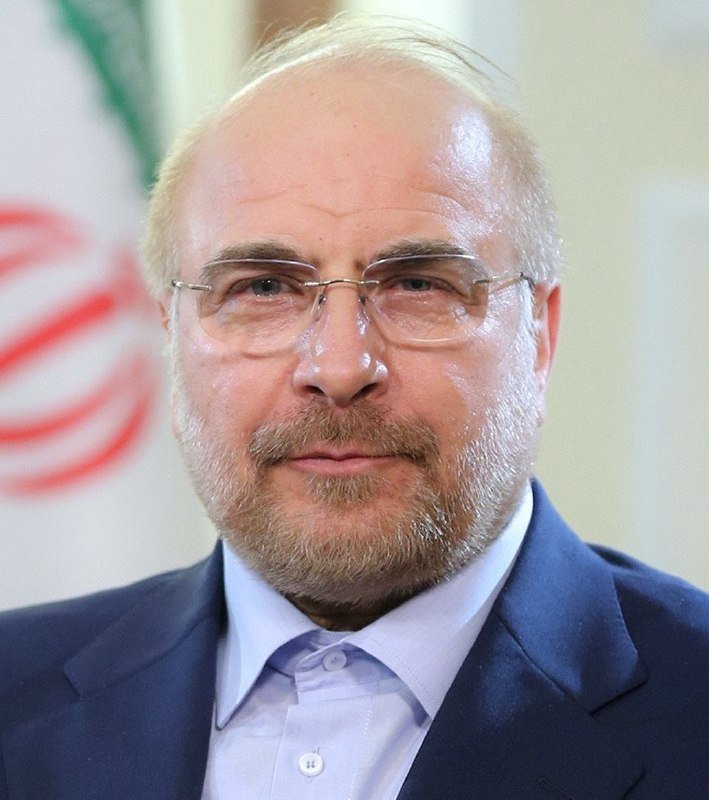
The procession files through central Tehran under banners that have been trimmed at the edges. Pakistani Prime Minister Shehbaz Sharif is on record calling Ayatollah Khamenei "a great scholar, a great leader who showed resilience, courage, patience" — a formula of praise more ceremonial than inventive, and exactly the kind of language Kuala Lumpur and Islamabad now reach for when they want to be seen in the same room as the Islamic Republic's senior clergy. Malaysian Agriculture and Food Security Minister Mohamad Sabu, in a separate interview carried by Khamenei.ir, made the same pilgrimage. The visitors' list is the story.
A funeral is a liturgy of state. The dignitaries who arrived in Tehran on 4 July 2026 were not performing private grief; they were performing alignment. Every handshake, every televised condolence, every sentence about "resilience" and "scholarship" is a line of credit extended publicly by one government to another. The pattern — and the limits of how directly it can be read — is what this piece is about.
A Malaysian minister in Tehran
Mohamad Sabu is a working cabinet minister in Anwar Ibrahim's unity government, not a head of state. His presence in Tehran, on the margins of a senior clerical funeral, is the kind of diplomatic signal that a Western foreign ministry would file under "noteworthy" rather than "alarming." The Malaysian coalition has historically maintained working relations with the Islamic Republic while declining to take up the hardest of its causes; Sabu's interview with Khamenei.ir, on the occasion of what that outlet calls "the funeral procession of the pure body of the martyred Leader of the Islamic Revolution," is the kind of soft-pedestal coverage that costs relatively little and is reciprocated in trade and study visits.
The read depends on framing. To one set of observers, a Muslim-majority democracy sending a sitting minister to Tehran is a routine exercise in pluralism and inter-civilisational courtesy. To another, it is a small brick in a much larger wall — the wall of dignitary turnout that confers legitimacy on a clerical succession at a moment when Iran's regional position is contested by Israel and by Western capitals. Neither reading is novel; both are accurate.
A Pakistani prime minister's praise
Shehbaz Sharif's condolence, released in writing and picked up widely, leaned even harder into the lexicon of veneration. "A great scholar, a great leader who showed resilience, courage, patience" is the sentence most quoted, and for good reason: in Pakistani political idiom, calling a foreign leader a great scholar before calling him a statesman is itself the tell. It puts the cleric on the higher shelf.
Pakistan's relationship with Tehran has its own load-bearing elements — the Iran-Pakistan gas pipeline, the shared border at Balochistan, the cross-border jihadi ecosystems that neither capital wants to discuss candidly. A prime minister who is publicly courting Gulf petrodollars for economic rescue cannot afford to be photographed refusing a funeral invitation. So the question is not why Sharif went, but how warmly he chose to speak when he got there.
Who was notably absent
The more revealing ledger is the names that did not appear on the cameras. No Western head of state travelled to Tehran for the funeral. The Gulf monarchies, publicly and in their own press, kept their distance. Ankara sent a senior envoy rather than the president. Moscow's posture, in the available reporting, was circumspect — a statement of respect without the television theatre of a leader at the casket. The architecture of the gathering was, in effect, the architecture of the relationship: the room tells you who is in the coalition by who shows up, and who declines politely in advance.
The structural frame
A reading that hangs the whole story on personalities misses the geometry. Across the past decade, the Islamic Republic has constructed — and at points strained — a transnational political ecosystem that the Western press variously calls the "Axis of Resistance" or the "resistance front." Whatever the label, it has a recognisable centre of gravity in Tehran and a set of adjacent capitals and movements that draw symbolic sustenance from clerical authority in Qom. Dignitaries at a senior funeral are renewing leases on that symbolic real estate in public.
For capitals that participated, the calculation is straightforward: a small diplomatic deposit now — a condolence, a televised handshake — buys standing in a network that continues to matter on issues from Lebanon to the Gulf of Aden to the Palestinian file. For capitals that stayed away, the calculation is the inverse: visible solidarity costs more than it returns.
What we do not know
The reporting from official channels is ceremonial by design. Specifics — the closed-door meetings between visiting delegations and Iranian officials on the margins of the funeral, the communiqués that may have been exchanged — are not in the available material. The Malaysian minister's interview, as carried by Khamenei.ir, is a soft-format opportunity rather than a substantive bilateral exchange; the Pakistani prime minister's statement is a written condolence, not a negotiated outcome. Treating either as evidence of a deeper strategic pact would be a stretch. Treating both as theatre is not.
A funeral is when an order remembers itself in public. The order that turned up in Tehran on 4 July 2026 is one that has been under sustained pressure — militarily, economically, and in the editorial pages of every Western wire. That the visitors still came, and that they said what they said, is the news. This publication reads the gathering as a continuity signal rather than a rupture: the diplomatic economy that puts a Malaysian minister and a Pakistani prime minister on the same dais as Tehran's senior clergy is older than this funeral, and will outlast it.
Wire provenance
This editorial synthesis draws on the following public wire/social posts:
- https://t.me/Khamenei_en
- https://t.me/Khamenei_en
- https://t.me/Khamenei_en