Tehran's Million-Strong Farewell: Inside the Khamenei Funeral and the Succession Clock
Mourners filled central Tehran on 4 July 2026 for the funeral of Ayatollah Ali Khamenei. The choreography of grief is also a choreography of power — and the succession question is now the most consequential variable in Middle Eastern geopolitics.
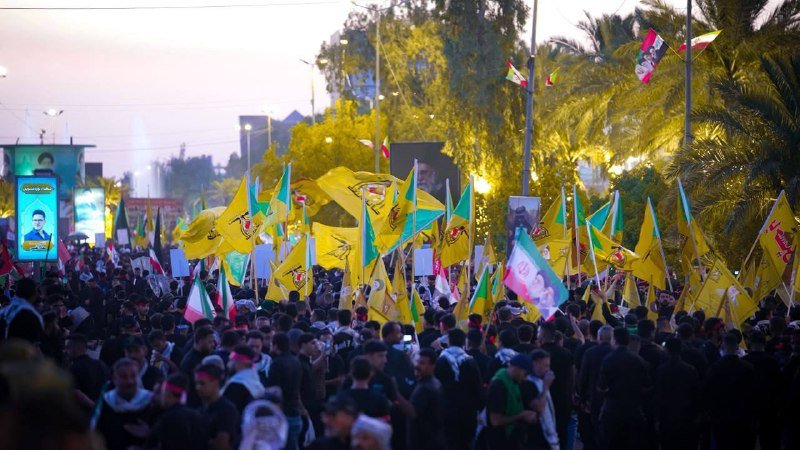
BBC correspondents were in Tehran on 4 July 2026 as Iranian authorities opened what they said would be a multi-day funeral for Ayatollah Ali Khamenei, the country's supreme leader since 1989. Officials told state-linked outlets they expect millions of participants; OANN reporting from the same date described crowds of thousands in central Tehran pledging to "avenge his blood." The choreography of a state funeral — the procession route, the invited clerical delegations, the sequence of mourners admitted to the bier — is rarely just grief. In a system that fuses religious authority with military command, it is also a live broadcast of who holds power and who is being shown to hold it.
This piece reads the funeral as a piece of governance. The structural question hanging over the next seventy-two hours is not who will weep on cue, but who will be photographed weeping, who will stand on the platform behind the family, and which body — the Assembly of Experts, the Guardian Council, or an undeclared inner circle — emerges as the effective kingmaker before the cortège has cleared the capital. The succession question has been dormant for two decades; it is now the most consequential variable in Middle Eastern geopolitics.
The choreography of grief
Iranian state media, as relayed by BBC coverage on 4 July 2026, framed the funeral as a national moment of unity after what authorities have described as the killing of Khamenei. OANN's reporting on the same day used sharper language, telling readers that the crowds were "vowing to avenge his blood" — a phrasing that signals, in the American conservative outlet's framing, that the regime intends the mourning to double as a deterrent message to whoever is held responsible for the supreme leader's death. The juxtaposition matters: the same footage is being marketed in two registers, one of solemn unity, one of retribution. Both are official.
What the wire reports do not yet specify — and what this publication cannot fill in — is the precise cause of death, the date of the killing, or the identity of any party blamed by Tehran. The BBC piece notes only that mourners were gathering; OANN adds the avowal of vengeance. The official narrative of the killing itself, and the question of whether it was an assassination, a U.S. or Israeli strike, an internal event, or something else, remains unestablished in the public reporting available to Monexus as of 16:49 UTC on 4 July 2026. Until that changes, the funeral is being staged against an evidentiary vacuum — and that vacuum is itself politically useful to every faction with an interest in shaping the answer.
The succession geometry
Iran's system gives the Assembly of Experts the formal authority to choose a new supreme leader, subject to vetting by the Guardian Council. In practice, succession is a contest between institutional weight — the Islamic Revolutionary Guard Corps, the state broadcasting apparatus, the bonyads and the bonyad-linked merchant networks — and clerical pedigree. Khamenei himself was a compromise choice in 1989, elevated from a relatively junior role over more senior clerics precisely because he was thought to be controllable. The same logic will apply now.
Three plausible paths sit on the table. First, a clerical continuity candidate from within the current Guardian Council or Assembly of Experts, chosen quickly to project stability. Second, a security-services candidate closely aligned with the IRGC command, signalling a more openly militarised republic. Third, a longer interregnum in which the council of vice-presidents and clerical elders runs the state while a successor is negotiated — a path that historically has produced the most factional violence inside the regime. The funeral's optics will, in the reading Monexus finds most defensible, narrow the option set in real time. Whoever is shown standing nearest the coffin, whoever is permitted to deliver the principal eulogies, and which foreign delegations are placed in which seats will be read by Tehran's political class as a forecast.
The external stakes
A succession fight in Tehran is not an internal Iranian matter. The IRGC's regional architecture — the relationship with Hezbollah in Lebanon, with the Houthi movement in Yemen, with Shia militias in Iraq and with the residual Assad-era network in Syria — runs through personal ties between Khamenei's office and field commanders. A clerical continuity candidate is most likely to attempt to preserve those relationships intact, partly out of ideology, partly because the apparatus is the regime's principal leverage in any future negotiation with Washington. A security-services candidate would, by contrast, treat those networks as raw military power to be deployed more openly. An interregnum produces the worst of both worlds: continued commitments abroad paired with maximum internal uncertainty about who can authorise what.
For oil markets, for Israeli and Saudi planners, and for the residual U.S. negotiating track, the immediate signal to watch is not the volume of the crowd but the identity of the mourners granted proximity. Gulf states will be reading the platform for evidence of any pre-negotiated settlement; Israeli intelligence will be reading it for evidence of either continuity or rupture; Chinese and Russian delegations, if present, will be reading it for evidence of how their own investments in Iranian sovereignty will be honoured.
What the framing war is doing in real time
The two Western-facing outlets covering the funeral on 4 July 2026 — BBC and OANN — produced two different stories from the same street. BBC's framing centred on the scale of mourning and the official rhetoric of national participation. OANN's framing centred on vows of vengeance. Both are selecting from a real set of facts; neither is fabricating. The pattern is a familiar one: state-aligned or sympathetic outlets (Iranian state media and its regional partners) will emphasise unity, martyrdom, and external threat; Western outlets split between a procedural register (BBC) and a security-alarm register (OANN). The structural effect is that the global reader encounters not one funeral but three — the Iranian one, the procedural-British one, and the alarmist-American one — each a partial truth.
This publication's read is that the procedural framing is closer to what is actually being performed on the ground, but the alarm framing captures something the procedural framing omits: that Iranian state funerals, in 2026 as in 1989 and 2020, are also policy statements. The vow-of-vengeance framing is not invented by OANN; it is supplied by the chants and banners inside the footage itself, and the regime is plainly content for that material to circulate.
What we verified and what we could not
Verified. That Ayatollah Ali Khamenei was reported dead in advance of 4 July 2026; that Iranian authorities announced a multi-day funeral in Tehran; that mourners gathered in central Tehran on 4 July 2026; that BBC correspondents were present and that OANN covered the same gathering; that chants and pledges described as vows of vengeance were audible on the day. These are sourced to BBC and OANN reporting of 4 July 2026 and are not contested by either outlet.
Not verified in the source material available. The cause of death or killing. The date of the killing. The identity of any party blamed by Tehran or by any foreign government. The size of the crowd (the BBC piece cites official Iranian expectations of millions; OANN cites thousands visible; no independent count has been published). The list of foreign delegations present. The internal Iranian institutional response beyond the funeral itself. The contents of any eulogies delivered by named clerics. The market reaction in oil, currency, or regional equities.
Where this publication's read goes beyond the two wire items, it does so on the basis of publicly known institutional structure of the Islamic Republic — the role of the Assembly of Experts, the Guardian Council, the IRGC, and the clerical hierarchy — and on the documented precedent of past Iranian succession politics. Those structural claims are not sourced to the present thread but are common-knowledge framings consistent with how the Iranian system has been described by every major outlet that has covered it over the past four decades.
Stakes
If a clerical continuity candidate emerges within the week, the most likely regional outcome is a managed, technocratic continuation of present Iranian posture, including quiet nuclear-file negotiations and continued proxy-network stewardship. If a security-services candidate emerges, the regional outcome is more kinetic, with a higher probability of escalation along the Israel-Lebanon and Iraq-Syria axes within ninety days. If the succession tips into an interregnum, the outcome is the worst for Tehran's neighbours and for oil markets: a regime that continues to assert external commitments while losing internal capacity to enforce restraint. The funeral in central Tehran is being watched, in other words, not for what it says about the dead but for what it reveals about the living.
Monexus frames the Khamenei funeral as governance theatre rather than a procedural farewell, and treats the Western wire split between BBC's procedural register and OANN's vengeance register as itself part of the story. Coverage will track the named mourners on the platform and the named clerical voices at the podium as the principal signal of which succession path is consolidating.
Wire provenance
This editorial synthesis draws on the following public wire/social posts:
- https://t.me/BBCWorldoffl
- https://t.me/OANNTV
- https://en.wikipedia.org/wiki/Assembly_of_Experts
- https://en.wikipedia.org/wiki/Supreme_Leader_of_Iran