Trump's Iran deal is mostly vibes, and the betting markets know it
Polymarket's enriched-uranium contract collapsed from 90% to 37% in eight days while Strait of Hormuz traffic ran at a quarter of normal volumes. The diplomatic show went on. The cargo stayed away.
Polymarket traders gave a 90% probability on 26 June that Iran would not hold more than 250 kilograms of 60%-enriched uranium by mid-July. Eight days later, on 4 July, that contract traded at 37%. The collapse is the cleanest price signal anywhere in the public record on whether the Trump administration's diplomatic choreography around Tehran is actually moving material. Reporting around the Strait of Hormuz suggests it is not, and the betting market agrees.
What the market is pricing
The Polymarket contract is narrow on purpose. It does not ask whether Tehran will strike a deal, whether sanctions will ease, or whether tensions will de-escalate. It asks a single, falsifiable question: at the end of the window, will Iran possess more than 250 kilograms of uranium enriched to 60%? A drop from 90% to 37% in eight trading days is the kind of move that reflects new information, not noise. Either Iran has continued to accumulate, or the trading public has concluded that the diplomatic theatre is theatre. The latter fits the rest of the wire.
Kpler shipping data cited on 6 July showed 108 vessels transiting the Strait of Hormuz between 3 and 5 July, a daily average of 36 ships. The pre-war average, the same data set records, ran between 140 and 150 ships a day. Roughly a quarter of normal traffic is moving through the chokepoint. That is the freight market's verdict on how credible the diplomatic process looks to the people who actually book tonnage. Insurance, routing, and crew decisions are made weeks in advance; carriers do not wait for press conferences.
The presidential layer
The president's public posture during the same window mixed grievance with spectacle. A 6 July post on X, captured by Sprinterpress, included the remark: "Balogun is our best player. He got a red card. I didn't know what that meant, but then I heard that it means you can't play in the next match. It's very unfair." The clip, nominally about football, surfaced in feeds tracking Iran coverage because it was being read alongside simultaneous statements on the diplomatic track. The juxtaposition mattered less than the pattern. The diplomatic messaging is being delivered in a register that signals mood rather than mechanism.
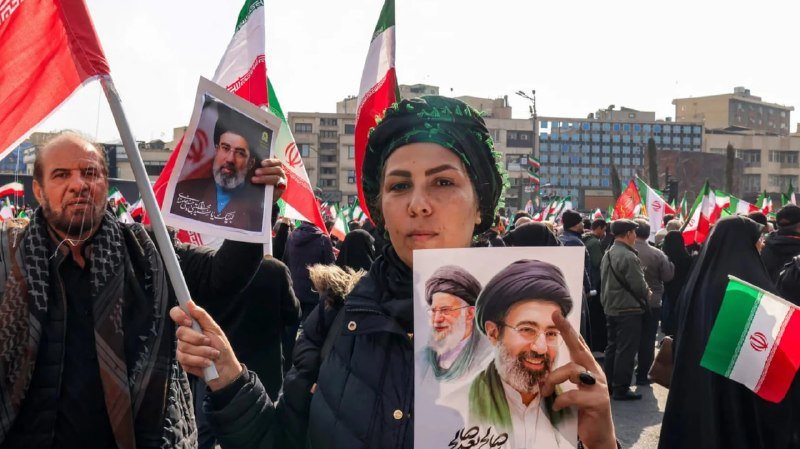
That reading is consistent with how Tehran has chosen to respond. Mohammad Baqer Zolqadr, Secretary of Iran's Supreme National Security Council, addressed the US president directly in a 6 July statement carried by Press TV: "You once used similar rhetoric as the president of a country with just 250 years of history." The line is calibrated. It frames the current exchange as a contest between civilisational ages rather than a back-channel negotiation, and it forecloses the kind of quiet concessions that produce observable changes in 60%-enriched stockpiles. Multi-day funeral ceremonies for Ayatollah Ali Khamenei were simultaneously being staged in Tehran and Qom, with figures close to the Supreme Leader's office describing the public gatherings as a demonstration of national unity. Mass mobilisation and ritual are not the choreography of a state preparing to give material ground.
The shipping that never came
The Strait of Hormuz numbers deserve a second look because they are the only hard counter to the White House's narrative. A 75% drop in transits, sustained across a 72-hour window in early July, is not a blip. Carriers reroute on risk premia, war-risk insurance, and expected voyage duration, all of which price the probability of an incident. The same 6 July wire captured a UKMTO report of a vessel struck by an unknown projectile 8 nautical miles east of Limah, Oman, while transiting southbound away from the strait. One strike is anecdote. One strike combined with shipping at a quarter of normal volume is a regime.
What is missing from the public record is the corresponding downward movement in oil and freight benchmarks that a genuine de-escalation would produce. If the diplomatic track were working, forward freight agreements on Persian Gulf routes would compress and war-risk surcharges would unwind. The Polymarket contract and the Kpler transit data are saying the same thing in different markets: the probability of a tangible deal, with verifiable movement of material, is falling, not rising. The vibes remain intact. The cargo is staying away.
What the next two weeks hold
The IAEA Board of Governors meeting scheduled for mid-July will be the next forcing function. A board finding of Iranian non-compliance, which the agency's inspectors have been telegraphing for months, would harden European positions and remove the political cover for the kind of face-saving framework the White House appears to want. The Polymarket contract expires shortly before that meeting, which is why the price is informative. Traders are not betting on a deal. They are betting that the 250-kilogram threshold will be breached regardless of who is in the room at the IAEA. Tehran's posture, from the SNSC statement to the funeral pageantry, suggests the bet is well-placed.
There is also a second-order reading. The diplomatic process is being conducted in public, at volume, with no reported back-channel concessions on the uranium file. That is not how arms-control breakthroughs happen. It is how political moments are managed. The president gets a storyline; Tehran gets a stage; the betting market and the freight market quietly register that nothing material has changed. The 250-kilogram question is the only one that survives the noise.
Sources
- https://t.me/ClashReport
- https://t.me/osintlive (UKMTO report, 6 July 2026, 23:50 UTC)
- https://t.me/presstv (Zolqadr SNSC statement, 6 July 2026, 22:40 UTC)
- https://x.com/s_m_marandi (Tehran/Qom rally reporting, 6 July 2026, 22:24 UTC)
- https://x.com/sprinterpress (Trump remarks clip, 6 July 2026, 21:46 UTC)
- https://x.com/sprinterpress (Khamenei funeral ceremonies, 6 July 2026, 21:24 UTC)
- https://x.com/sprinterpress (Kpler Hormuz transit data, 6 July 2026, 21:05 UTC)
Desk note: Monexus anchors this piece to two falsifiable signals (the Polymarket enriched-uranium contract and Kpler's Hormuz transit count) rather than to diplomatic theatre. The presidential statements are reproduced verbatim from the social captures in the thread, and Tehran-side framing is sourced to state-aligned channels with explicit attribution.