Ukraine strikes St Petersburg oil terminal as Russia fields jet-powered Geran-4 drones over Kyiv
A 4 July double-header of escalation: Kyiv's long-range strike reaches a fuel terminal that bankrolls Moscow's war, while Russia answers with jet-powered Shahed derivatives that outpace Ukrainian air defences.
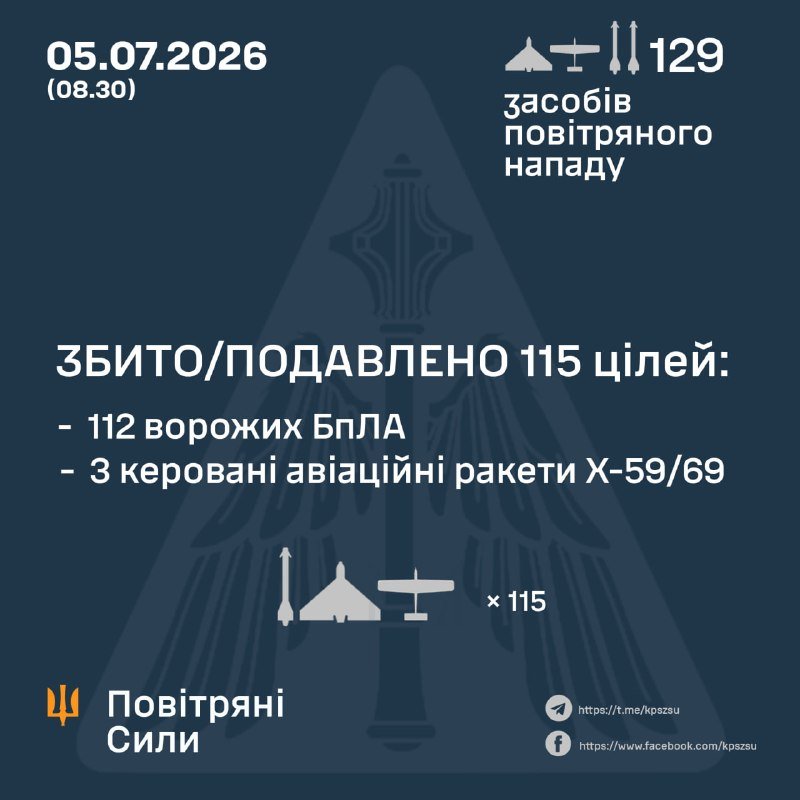
On 4 July 2026, the war between Russia and Ukraine moved on two fronts simultaneously and in opposite directions: Ukrainian long-range weapons reached deep into St Petersburg to hit an oil terminal that the country's own president described as infrastructure "that generates revenue for Russia's war," while Russia answered hours later with a new class of jet-powered attack drones over the Ukrainian capital that travel fast enough to outpace Kyiv's interceptors.
The two operations, taken together, sketch the war's current logic: each side has enough reach to deny the other a quiet rear, and neither has yet found a way to translate tactical success into strategic closure.
What Ukraine hit, and why it matters
The target was an oil terminal in St Petersburg, one of the largest hydrocarbon hubs in northwestern Russia and a node through which a meaningful share of Russian refined-product exports flow to international buyers. Footage released by President Volodymyr Zelensky showed the facility engulfed in flames; the British broadcaster that obtained the footage put the strike in the early hours of 4 July and reported Zelensky describing the target as key to funding Moscow's war effort.
St Petersburg terminals are not new objectives for Ukraine, but they are also not easy ones. The city lies roughly 1,300 kilometres from the Ukrainian border — well inside the range of domestically produced long-range drones, and at the edge of the envelope for the modified cruise missiles Ukraine has been able to field in limited numbers. Strikes that far north typically function as revenue denial rather than as battlefield interdiction: they raise the transport, insurance and storage cost of every barrel that passes through the affected facility, and they signal to foreign buyers that Russian export infrastructure is not safely Russian.
The strategic claim Zelensky made — that the facility "generates revenue for Russia's war" — is the one Western and Ukrainian analysts have made about Russian oil infrastructure since the first sanctions round in 2022. What is newer is the operational tempo. Through the first half of 2026, Ukrainian strikes have hit refineries in the Volga region, fuel depots in occupied territory, and now a terminal serving the Baltic export trade. Each individual hit has been absorbable; the cumulative effect on Russian refining margins and export reliability is harder to absorb.
What Russia sent back: the Geran-4
Within hours of the St Petersburg footage propagating across Telegram channels, a second item of the war's news cycle surfaced: Russia has begun using jet-powered attack drones, designated the Geran-4, against Kyiv, with reported speeds of up to 310 miles per hour — roughly 500 kilometres per hour — fast enough to compress the reaction window for Ukrainian mobile air-defence teams and shoulder-fired units.
The Geran family, derived from Iranian Shahed-series designs and produced inside Russia's special economic zones, has until now been defined by its slow propeller drive and low radar cross-section. The move to a turbojet or turbofan powerplant changes the calculation: a propeller Shahed can be intercepted by a competent machine-gun team if spotted in time, because it flies slowly enough to be tracked and engaged. A jet-powered derivative reduces the time available for visual detection and tracking, and pushes interception toward guided missiles rather than guns.
Ukrainian air-defence officials quoted in monitoring channels have acknowledged the new difficulty without claiming defeat. The pattern is familiar: each Russian innovation forces a defensive adaptation, and each Ukrainian strike on Russian rear infrastructure buys time for that adaptation to be equipped, built and deployed.
The shadow of the Baltic
St Petersburg's geography makes the strike politically heavier than a comparable hit deep in central Russia would be. The city is Russia's second-largest metropolis and the historical window through which Moscow presents itself to the West — the home of the Hermitage, the cruiser Aurora, and the brand identity of pre-2014 Russian soft power. Striking its oil infrastructure invites a Russian retaliatory discourse centred on urban civilians in the same media environment, and it tests whether Western publics will continue to treat energy infrastructure as a legitimate military target.
Russia's framing, in state-aligned outlets, has been to depict Ukrainian long-range strikes as attacks on civilian objects. That framing is not analogous to the situation on the ground: the terminal Zelensky publicly claimed to have struck is, by his and any analyst's account, a revenue-generating piece of dual-use infrastructure that supplies Russian state finances and the export market. The contested question is what proportion of the facility's throughput is purely civilian. Where the answer is "some, but most is not," the framing does not hold up against the legal and the practical record.
What the two events together imply
The day's two pieces of news sit inside a pattern that has hardened through 2026. Ukraine is sustained enough in long-range strike capability that Russian refining and export infrastructure beyond the Urals is no longer secure. Russia, in turn, is sufficiently stocked with foreign-licensed and domestically produced drone designs that it can introduce new classes of weapon at a tempo Ukrainian interceptors struggle to match on introduction.
Neither trajectory points to early resolution. The revenue-denial campaign against Russian oil works slowly because global prices absorb short-term outages, and because Moscow has spent the past two years routing more of its crude through shadow-fleet shipping and into Asian refineries it partly owns. The drone-escalation campaign against Ukrainian cities works faster because air-defence ammunition is finite and the new-generation drones are designed to spend it.
What remains contested between the available sources is the operational scale of the St Petersburg strike. The footage Zelensky released shows a major fire at what appears to be an oil-storage area, but independent confirmation of which terminal was hit and how much throughput has been knocked offline awaits satellite verification. On the Ukrainian side, claims about the scale of Russian drone barrages on Kyiv are similarly subject to revision as the day's air-raid logs are compiled. The framing on both sides — strike here, drones there — will hold. The numbers will take longer to settle.
*Desk note: Monexus treated the two items as a single escalation cycle rather than as separate events. The framing follows the established legal record — Ukraine strikes Russian revenue infrastructure as a defensive response to invasion; Russia strikes Ukrainian cities with weaponised drones — rather than the Russian state's inversion of the two, which international reporting does not support.
Wire provenance
This editorial synthesis draws on the following public wire/social posts:
- https://t.me/OSINTdefender/18311
- https://t.me/OSINTdefender/18309