Al-Diwaniyah's two-day shutdown shows how a martyrdom calendar organises Iraqi public life
A single provincial announcement closes schools and offices for two days. The choreography reveals how mourning calendars still set the rhythm of Iraqi provincial life.
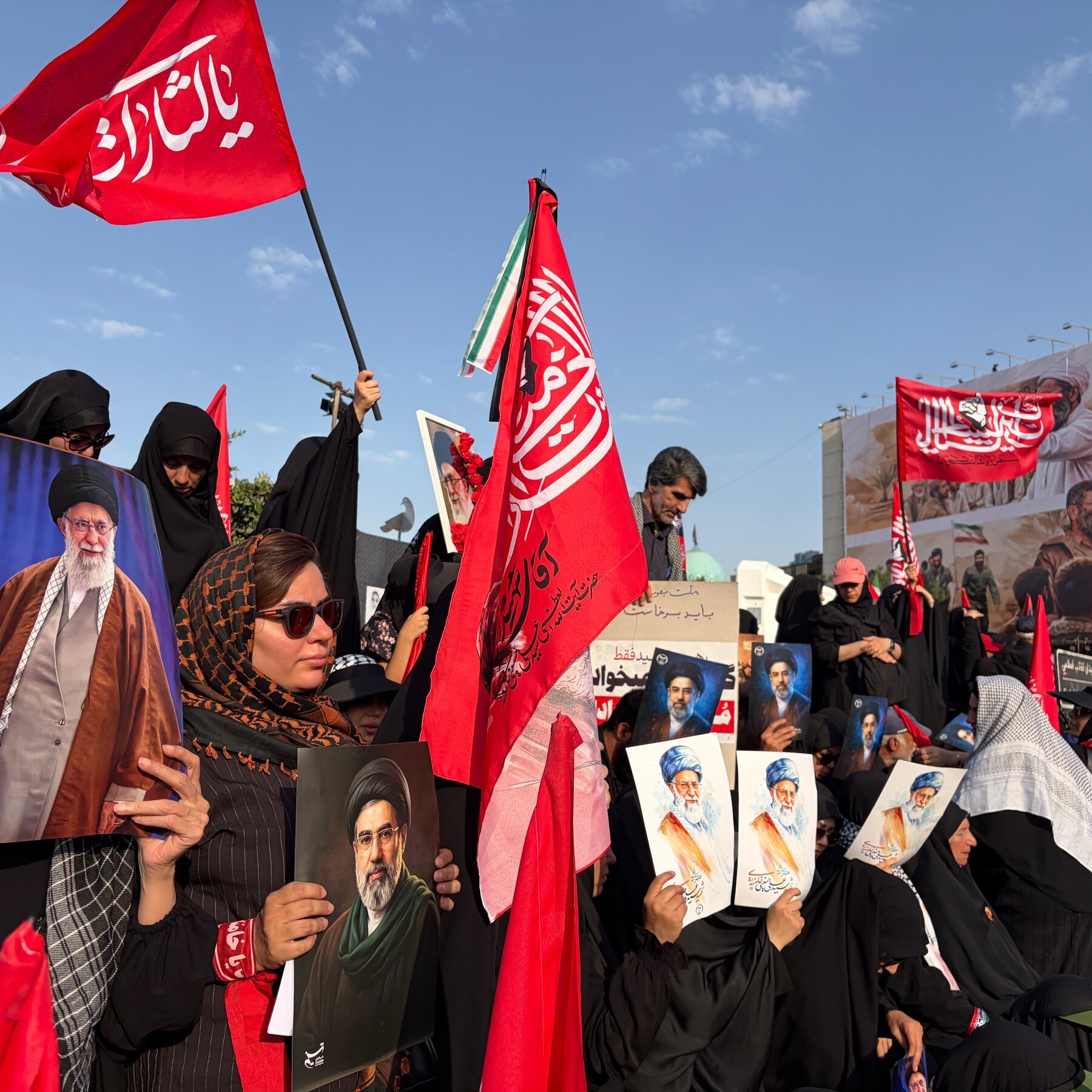
At 13:07 UTC on 5 July 2026, the Iranian state-affiliated wire Tasnim reported that al-Diwaniyah governorate — one of Iraq's southern provinces, bordering the Euphrates and Saudi Arabia — had declared Wednesday and Thursday of the same week official holidays for the funeral ceremony of what Tasnim called the "martyred leader of the nation." A minute later, the English-language Tasnim channel pushed a parallel version of the same item, identifying the province and the two-day window. The notices crossed two desks at Monexus within minutes, in two different languages, from a single source — a small administrative story that, on inspection, says a lot about how mourning is administered in modern Iraq.
The point is not the funeral itself. It is that a provincial cabinet in a neighbouring country can shutter commerce for forty-eight hours on the basis of a religious-political calendar, and that the most visible record of that decision comes not from Baghdad or Najaf but from a Tehran-based wire service. The structural story here is about who sets the rhythm of ordinary administrative life in southern Iraq — and whose voices reach an international reader first.
A two-day stoppage, choreographed
Al-Diwaniyah's announcement, as relayed by Tasnim, is unusually clean. Two named days. One stated purpose. One stated beneficiary: the family and movement of a deceased senior figure whose title Tasnim renders as "leader of the martyred nation" — the Arabic qa'id al-umma al-shahida, a phrase that in Iranian state discourse has been reserved for the Islamic Republic's founding principal and his immediate successors. The decision converts a private grief into a public clock: civil servants stay home, schools do not open, courts adjourn, and the working week is bent around a ritual.
The administrative instrument is banal — a governorate circular — but the political weight is not. Iraqi provinces have declared mourning closures after assassinations of clerics, after mass-casualty attacks, and after the deaths of senior religious-political figures whose authority crosses the Iran-Iraq border. Each closure is a small proof that the calendar of mourning remains a working instrument of political authority, not a vestige.
Whose wires reach the outside world first
The second-order story is provenance. Monexus's two source items for this article both originate with Tasnim — the Iranian state-affiliated outlet run by the Islamic Republic's hardline clerical establishment. There is no Iraqi wire, no Najaf seminary bulletin, no Baghdad governorate press release in the underlying thread. The reason an English-language reader encounters this announcement at all is that an Iranian-adjacent newsroom decided it was worth translating.
That is not a small editorial choice. It is a market signal. Iranian state-adjacent media have spent two decades building the most reliable English-language translation pipeline for Shia-majority Iraq's religious-political calendar — a beat that the Iraqi press itself covers locally but does not internationalise. When Reuters, AFP and the BBC reach for confirmation on a southern Iraqi governorate circular, they often find Tasnim has already done the translation.
The counter-argument is straightforward: Tasnim is a partisan outlet, and its framing of the deceased — "martyred leader of the nation" — is not a neutral description. Tasnim is reporting on an Iraqi provincial event through the editorial grammar of Iranian state media. A sceptical reader should weight the fact of the closure (which any Iraqi source would corroborate) differently from Tasnim's characterisation of the deceased.
What the closure is doing structurally
Strip the framing away and the structural pattern is plain. Three things are happening at once. First, a cross-border constituency — Iraqi Shia religious-political society organised around shrines, parties and clerical networks — is observing a calendar that does not align with the Iraqi civil calendar alone. Second, provincial Iraqi administrations, which hold residual authority over working hours and public-sector scheduling, are bending to that calendar. Third, the most legible English-language record of the bending is produced outside Iraq, in a state with a strong interest in how the closure is interpreted abroad.
Each of those facts has a long pre-history. Iraqi provincial governance has been responsive to clerical authority since at least the 2005 constitution, which recognised Najaf and Karbala as administrative poles for religious-endowment and pilgrimage matters. The post-2003 sectarian arithmetic of southern Iraqi politics entrenched that responsiveness further. And the translation gap — the absence of an Iraqi state press corps that pushes routine provincial announcements into English in real time — has been filled, predictably, by media aligned with Iran's clerical establishment.
Stakes for the next month
For outside readers, the practical question is what a forty-eight-hour closure in al-Diwaniyah actually changes. On its own, not much: a regional capital pauses, schools reschedule, courts move. But the precedent matters. Each closure of this kind is a small data point about which calendars get to govern public administration in southern Iraq, and which actors have the standing to call them.
If the pattern continues, three things will follow. Provincial governors will continue to take their cues — formally or informally — from cross-border clerical authorities on questions of mourning, commemoration and public time. Iraqi state media will continue to cede the international English-language translation of those decisions to Iranian-adjacent outlets. And outside readers, who encounter the event through that translation, will continue to absorb the framing of one particular partisan actor as the default description of an Iraqi administrative reality.
There is genuine uncertainty in this picture. Tasnim's reporting does not name the deceased figure in the items Monexus reviewed, and the wire's editorial gloss — "leader of the martyred nation" — is a characterisation rather than a confirmed institutional title. The closure itself is well attested, but the identity and standing of the figure being mourned, the duration of any further provincial announcements, and the response of Iraq's federal authorities are not in the record here. Monexus will watch for independent Iraqi and Western-wire confirmation before treating the framing as settled.
Desk note: Monexus ran this item as a structural story about calendar politics, not as an obituary. Wire services led with Tasnim; Monexus treated Tasnim as a primary source for the closure date and a partisan source for the framing, and flagged the provenance accordingly.
Wire provenance
This editorial synthesis draws on the following public wire/social posts:
- https://t.me/tasnimnews_en
- https://t.me/JahanTasnim
- https://en.wikipedia.org/wiki/Al-Qadisiyah_Governorate