Gunmen, a police station, and the long silence on Balochistan
Armed men seized a police checkpoint in Gwadar district on 5 July 2026 — and the world's newsrooms barely looked up. That absence is the story.
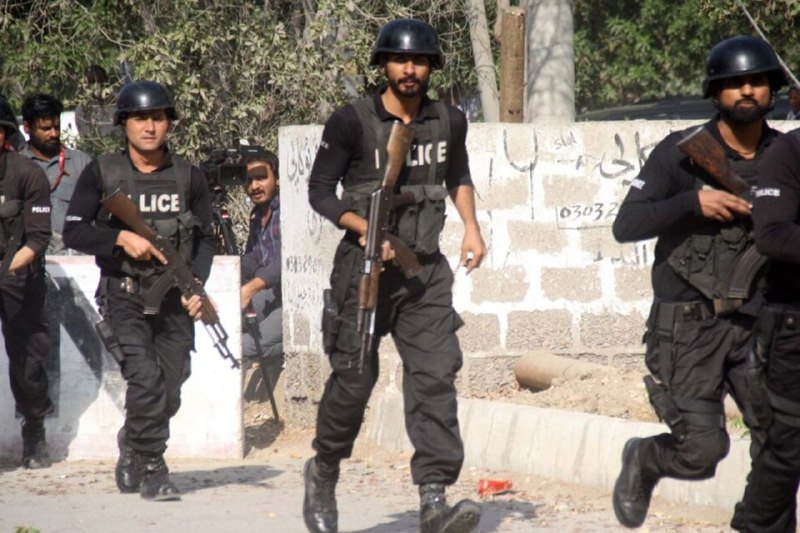
On 5 July 2026, around the 12:22–12:23 UTC mark, two Iranian state-adjacent wire channels — Tasnim News and Jahan Tasnim — moved near-identical, unconfirmed dispatches across Telegram: armed men had overrun a police checkpoint in Gwadar district, on the Arabian Sea coast of Balochistan province, in southwest Pakistan. Within the hour, the same wording was being forwarded into Persian-language timelines by accounts that normally chase Tehran's security beat. Then the story stopped. No casualty figure, no claim of responsibility, no Pakistani federal spokesperson. Just the one paragraph, repeating.
The marginal position of that report in the global news cycle is itself the more interesting story. Gwadar is not a peripheral place. It sits at the hinge of the China–Pakistan Economic Corridor — a planned deep-water port, rail spurs, and highways linking western China to the Indian Ocean, conceived as the strategic answer to a US–Indian naval encirclement. An armed seizure of a security post inside that corridor, even on preliminary reporting, is the kind of detail that should detonate across the financial press. Instead, the desk here had to read a Tasnim summary to find it. That asymmetry — a contested security event in the corridor's flagship port, reported on the wire by Iranian outlets that nominally have no stake in Balochistan — deserves more than a shrug.
How the framing is being set
Tasnim and its Persian-language sibling Jahan Tasnim are not the natural first-call wires for a Balochistan attack. Their carry of this story is a tell: it gets the item into Persian timelines, where the Iranian security establishment and its amplifiers can reach it, and then indirectly into the Western wires through the usual pickup economics. Initial accounts tend to recycle a single, unsourced claim — "armed men captured a Pakistani police station." The reporting gives no attacker identification, no casualty tally, no confirmation from the Balochistan Levies or from the Inter-Services Public Relations (ISPR), the Pakistani military's communications arm. This publication treats that single source as a flag, not a finding.
The structural pattern is familiar. When insurgent activity enters a corridor built by foreign capital, the temptation in Western briefs is to compress the story into a terrorism line — the same file folder that holds the Middle East and the Sahel. That framing preempts the obvious counter-question: who benefits from a security shock in a port that China, Pakistan, and Gulf investors are betting fifty-year money on?
The structural silence around Balochistan
Balochistan has hosted a low-intensity insurgency for two decades, drawing in ethnic-nationalist armed groups and a more recent ideological layer. The province holds copper and gold at Reko Diq, and sits under the planned terminus of CPOC. The insurgency is older than the corridor; it did not begin because a Chinese-built port broke ground in 2007. But the corridor has raised the stakes of the insurgency without resolving its original drivers. Reporting that flattens this distinction tends to obscure a basic point: a guerrilla movement inside a strategic asset corridor is a strategic fact for Beijing, Islamabad, Riyadh, and the Gulf monarchies, whether or not the latest skirmish is covered on the Western front pages.
The non-coverage is not a conspiracy. It is the routine product of a global news economy in which a single wire floor — Islamabad, Dubai, or Beijing — runs the embargo list for South Asian security. Gwadar does not have one. When nobody on the wire desk is staffed to chase a single Tasnim-sourced report, the default is that the report dies on the timeline. That is the structural frame, put plainly: stories stick when there is a bureau to confirm them, and disappear when there isn't, regardless of the underlying facts on the ground. The biggest multilateral infrastructure project of the decade is unfolding in a province that the international press has never built a desk around.
Two readings, two futures
Reading one: the checkpoint seizure is another flicker in a long-running insurgency that Pakistan's security services have, on balance, contained. The corridor has been attacked before; Gwadar has been attacked before; the political and operational geometry has not shifted. Under this reading, the Western press's lack of interest is calibrated, not negligent.
Reading two: the checkpoint seizure is the latest in a cluster of incidents inside CPOC's flagship geography — a slow grind that taxes the Pakistani state, deters the marginal investor, and forces Beijing to think about whether a fifty-year asset is genuinely secure. Under this reading, the absence of coverage is the news. A market that only prices the corridor when there is an ISPR press notice has already mispriced it.
The honest position is that the available reporting does not yet allow a verdict. What is not in dispute is the asymmetry: a single Persian-wire summary carried an unconfirmed Balochistan security event into the global pipeline, and the international press did not pick it up. That gap is what Monexus is pointing to.
Stakes, plainly
If the second reading turns out to carry weight, the implications are not only for Pakistan. They are for every state and private investor with exposure to long-tenor infrastructure in zones of contested sovereignty — from the Chittagong–Matarbari belt on the Bay of Bengal, to Lobito on the Atlantic, to Iran's Chabahar, which sits a couple of hundred kilometres up the same coastline from Gwadar and is positioned as the Indian and Western answer to the corridor. A portfolio of port and corridor bets across the global South assumes a security floor that the same global news economy is no longer staffed to measure. The Tasnim wire is the thinnest of evidence. The structural silence around it is thicker.
Desk note: Monexus treated this story as a confirmation-flag, not as a confirmed incident. Where the wire carried only Tasnim-sourced claims, the piece quotes the framing, names the gap, and declines to attribute the attack to any group until Pakistani or independent wire reporting corroborates. Where the policy establishment wants the corridor to be uneventful, the newsroom's job is to notice the dispatch that did not get second-source confirmation.
Wire provenance
This editorial synthesis draws on the following public wire/social posts:
- https://t.me/tasnimnews_en/...
- https://t.me/JahanTasnim/...