When the cameras turn to a funeral, the frame becomes the message
Fars News is broadcasting its own mourning. The bigger story is that an Iranian state outlet is now openly branding Western coverage a "media war" — and daring you to disagree.
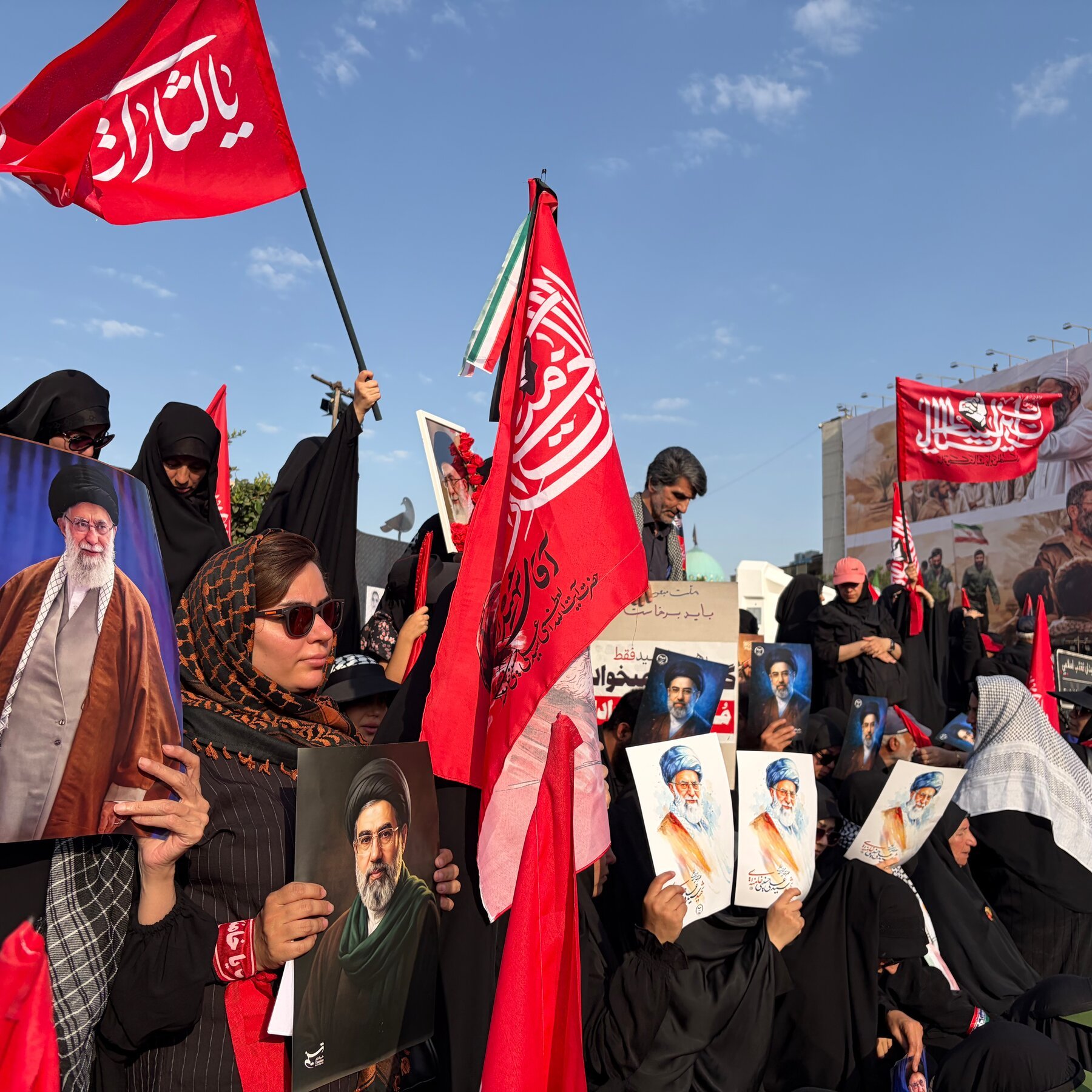
A funeral procession in Tehran, broadcast live by an Iranian state wire, is not normally the venue for a media-theory argument. On 5 July 2026 it became one anyway. Fars News began its coverage by labeling the entire Western press response a "media war" against the ceremony, and from there posted clips of mourners pledging to die for the fallen leader and of crowds declaring "we did not come to say goodbye." The footage is real; the framing is the product.
The interesting move is not the grief. It is the move of openly naming Western cameras as an opposing army. That is a sophisticated communications posture, and it deserves to be read on its own terms before being mocked or dismissed.
A different kind of hostage tape
Standard information-warfare scripts from Tehran tend to position the Islamic Republic as the passive object of Western misrepresentation: bad-faith framing, hostile editing, malicious context. The 5 July Fars clip inverts the arrangement. The channel does not ask the viewer to feel sorry for Iran. It asks the viewer to feel watched. The mourners on screen say they are aware of the cameras pointing at them from the other direction, and they perform anyway. That is a different rhetorical register than Tehran's English-language spokespeople usually adopt, and it is more effective than the standard denial-and-rebuttal cycle.
It is also calibrated to a specific audience. The clip lands hardest with readers who already suspect that Western war coverage of the Middle East is shaped, cropped, captioned, and scored in ways that serve specific editorial priors. To that audience, Fars does not need to argue. It simply needs to point.
The counter-narrative that is never aired
The counter-read is that Iran has genuine, institutional reasons to be sensitive about how its leadership losses are covered. Western wires do, routinely, default to a vocabulary of "regime," "theocracy," "clerical hardliners," and "martyrdom cult" when describing the same institutions that Fars News describes with reverence. Both descriptions are partial. The Western vocabulary flattens the social fact that large numbers of Iranians — including those who hate the government's domestic record — treat state mourning rituals as a civic occasion that has nothing to do with their personal politics. The Iranian-state vocabulary, conversely, asks the viewer to take its grief at face value as national grief, without the complicating detail of who inside Iran is excluded from that national "we." Both framings are doing work. Neither gets the last word on its own.
A structural frame, in plain prose
What is happening here is the slow professionalisation of counter-camera power. For decades, weaker media systems absorbed Western framing as the default and rebutted it in text. The newer model is to absorb the framing and rebut it in image: pointed mirrors turned back at the original cameras, framed inside the same broadcast grammar. The audience for such clips is bilingual by necessity — it watches both the Western feed and the rebuttal feed and treats the gap between them as the news. That is not the same thing as believing Fars. It is the same thing as no longer automatically believing anyone.
This is uncomfortable for every news organisation with a stake in the old frame, including this one. The honest response is to publish the clips, transcribe what they actually say, identify what we cannot independently verify, and let the reader see the seams. Pretending the rebuttal footage does not exist — which is what much of the Western coverage will do — is the surest way to make it land harder where it does circulate.
What is actually at stake
The short-term stakes are narrow. A funeral is a funeral; the cameras will move on within a news cycle. The longer-term stakes are about who sets the visual dictionary of Middle Eastern power. When a state wire can broadcast its own mourning and pre-frame the Western response as an act of war within the same clip, the burden on Western outlets shifts from "report the event" to "report the event under live counter-broadcast scrutiny." That is a structurally different job, and most newsrooms have not yet built for it.
The viewer who watches both feeds and treats their disagreement as the story is, against their will, more sophisticated about how this region is actually covered than any single outlet they are watching. That is the headline. It is also the discomfort.
A desk note: this article treats Fars News footage as a primary visual source rather than as backdrop. The publication holds no view on the underlying politics of the funeral itself; it holds a view that Western wires which refuse to engage with the counter-frame will be the biggest losers of the new camera order.
Wire provenance
This editorial synthesis draws on the following public wire/social posts:
- https://t.me/farsna/1
- https://t.me/farsna/2
- https://t.me/farsna/3