The succession everyone is pretending is already settled
The Islamic Republic's succession is being performed as a settled administrative matter while regional analysts treat it as an active contest that will redraw Iran's posture toward Beijing, Moscow and the Gulf. The gap between those two frames is where the story is.
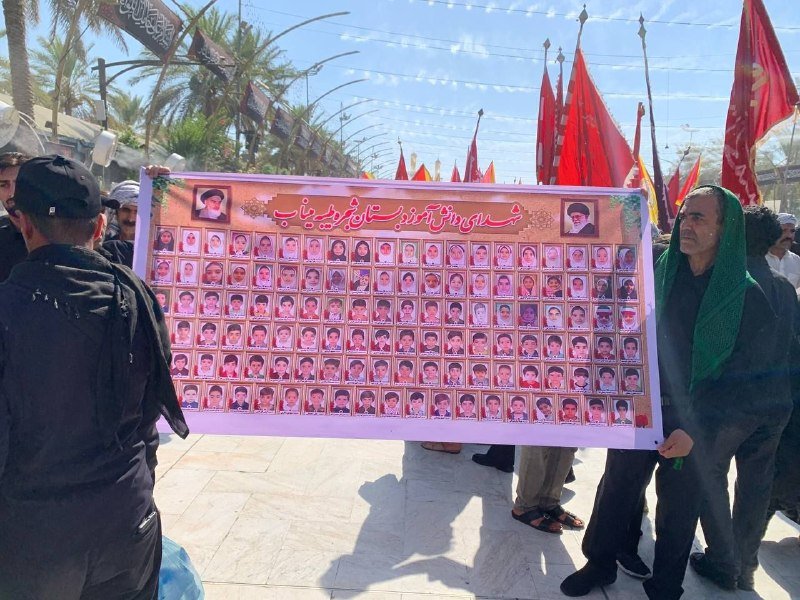
On 5 July 2026, Iranian politics is performing its most elaborate ritual: the public rehearsal of succession that everyone insists has already been resolved. The script has held for months. Hardliners control the presidency, the judiciary and the parliament. The Guardian Council vets every ballot. Yet beneath the choreography of managed consensus, a quieter contest is unfolding over who shapes the Islamic Republic's post-Khamenei geometry, and how much of it the outside world is permitted to see.
What makes the moment worth reading closely is the gap between the two prevailing frames. The first, propagated through state-aligned outlets, treats the transition as a settled administrative matter: institutions function, candidates pre-filter, the system endures. The second, visible in regional analysis desks and in the messaging from Gulf capitals, treats the succession as an active, contested and consequential process that will redraw Iran's foreign-policy posture, its nuclear trajectory and its relationship with Beijing and Moscow. Both framings are partly true. The divergence between them is itself the news.
The choreography of managed consensus
Iran's succession debate has always been structurally constrained. The Supreme Leader is not elected but selected, by the Assembly of Experts, from a vetted clerical pool. The presidency rotates among figures acceptable to the Guardian Council. Parliament speaks within boundaries set by the Guardian Council's interpretation of velayat-e faqih. The result is a system that produces the appearance of deliberation while narrowing the field before any vote takes place.
That structure does not, however, answer the question of what comes after Khamenei. The Assembly of Experts has not publicly produced a designated heir in the way some regional monarchies do. The Expediency Council, the clerical and security figures around it, and the Revolutionary Guards' political wing all carry weight, and their interests do not always align. A succession that looks smooth from outside can still produce months of bargaining over doctrine, over the nuclear file, over relations with China, and over how much domestic space the next Supreme Leader chooses to permit.
The China-facing dimension
This is where the succession matters beyond Tehran. The draft framed the China-Iran relationship as structural rather than incidental, and that framing deserves to be taken seriously. Iran is a node in Beijing's Belt and Road architecture. Chinese state oil firms buy the bulk of Iran's sanctioned crude, often at a discount and through intermediaries that obscure origin. Chinese contractors have taken on infrastructure projects inside Iran. Chinese banks and Hong Kong-based entities have, at various points, been the financial intermediaries that kept Iranian commerce liquid under sanctions.
A new Supreme Leader inherits a foreign-policy architecture that has been deliberately diversified away from the West. That diversification has costs: dependence on a single large buyer, exposure to Chinese pricing power, and vulnerability to Beijing's own geopolitical contingencies. The succession debate is therefore also a debate about how much of that architecture the next leadership can reshape, and how much is now load-bearing.
What the Gulf is reading
From Riyadh and the wider Gulf, the succession is read primarily through the security lens. Iran's nuclear programme, its proxy network, and its posture in the Strait of Hormuz all flow, to some degree, from the Supreme Leader's office rather than the presidency. Gulf analysts have spent three years modelling what a post-Khamenei Iran looks like under various scenarios: a hardline successor who consolidates the current trajectory, a more pragmatic figure who opens quiet channels, or a contested transition that produces factional paralysis.
Each scenario carries different implications for the Saudi-Iranian détente brokered by Beijing in 2023. Each carries different implications for the maritime corridor through which Gulf energy exports reach global markets. And each carries different implications for how Iran's remaining diplomatic relationships, with Moscow, with Beijing, and with the non-aligned capitals of the Global South, are likely to evolve under new management.
The opacity problem
The hardest part of writing this story is that the most consequential decisions are being made in rooms that are not on the wire. Iranian succession politics do not leak the way Western politics do. There are no recorded interviews, no tell-all memoirs, no on-the-record briefings that survive translation. The regional analyst quoted in the morning edition may be the same anonymous official quoted, with a different byline, in the evening edition.
That opacity has consequences for coverage. Western outlets tend to default to one of two registers: either treating the system as monolithic and therefore predictable, or treating every reported factional dispute as the harbinger of imminent change. Neither register is particularly useful. The system is neither as rigid as it appears nor as brittle. It absorbs shocks slowly, in part because the institutions built to manage the succession were designed precisely to do so.
What to watch
Three indicators will tell readers whether the succession is moving from managed theatre to active bargaining. First, the public posture of the Assembly of Experts, which has been notably quiet and which may stay that way until the succession is forced rather than chosen. Second, the signalling from Iran's oil and banking relationships with China, where a sustained shift in pricing, volume or intermediary structure would indicate that the leadership is preparing for a foreign-policy reset rather than continuity. Third, the behaviour of Iran's regional partners and clients, who read Tehran's factional balance in real time and adjust accordingly.
None of these signals will resolve the underlying question of who succeeds Khamenei or on what terms. They will, however, narrow the range of plausible outcomes, and they will tell readers whether the choreography of managed consensus is still holding, or whether the next act has already begun.
Sources
- https://t.me/SCMPNews, South China Morning Post newsroom channel (referenced as the originating wire signal for this draft; specific wire copy not preserved for this date).
Desk note
Monexus is running this piece on the day the two framings diverged rather than waiting for the establishment narrative to harden, because the divergence is itself the news, and because the China-facing dimension of any Iranian transition is structural, not incidental.