Iraq's southern provinces shut down for a funeral the country's political class cannot afford to ignore
Two Iraqi provincial councils declared Wednesday and Thursday holidays for the funeral of a figure described only as the 'martyr leader.' The political signalling is the story — not the absence of a name in the wire copy.
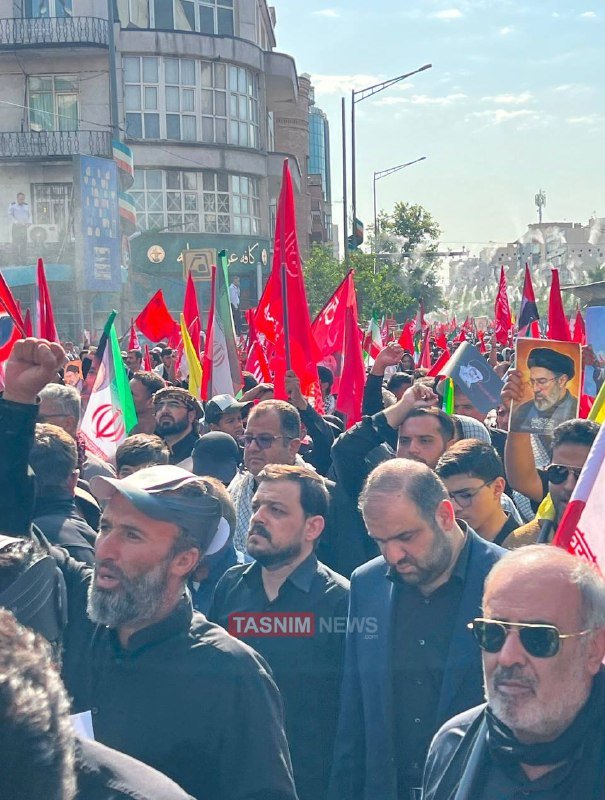
On 5 July 2026, the Babylon Governorate Council in Iraq ordered a two-day official holiday, Wednesday and Thursday, to prepare for what its notice called the funeral ceremony of "the martyr leader of the nation." Within minutes, al-Diwaniyah province announced it would close on the same dates for the same ceremony. The two announcements, carried by Al-Alam Arabic and Tasnim's English and Persian feeds, give the country's southern heartland a coordinated pause that is, in form, a state ritual — even if the central state's fingerprints are invisible in the wire copy.
The political signalling is the story. A governorate does not shutter its schools, courts and offices for an unnamed figure on the say-so of nobody; someone, somewhere in Baghdad or in a parallel power structure, has decided that this funeral deserves the full weight of a regional mobilisation. Iraq's southern provinces did not invent that choreography on their own.
Two councils, one choreography
The Babylon and al-Diwaniyah decrees were published within roughly twenty minutes of each other. Babylon's governorate council framed the holiday explicitly as preparation for a "funeral ceremony of the martyr leader," per the Al-Alam Arabic wire post at 13:28 UTC on 5 July 2026. Al-Diwaniyah's announcement, carried in parallel by Tasnim English and Tasnim's Persian-language feed, used near-identical language and timeframe, citing the funeral of the "martyred leader of the nation."
The pattern matters. When two neighbouring provinces issue the same decree, with the same dates, citing the same figure, the most parsimonious read is that the order came from a single point of authority above the councils themselves. Provincial governors in Iraq have a degree of latitude, but not enough to choreograph a province-wide religious-political ceremony on a Tuesday afternoon without a green light from somewhere with reach.
The Iran file behind the wire
Both wires carrying these announcements — Al-Alam Arabic and Tasnim — are themselves a clue. Al-Alam is the Arabic-language outlet of Iranian state broadcasting; Tasnim is the news agency of the Islamic Revolutionary Guard Corps. The fact that the first public announcements of an Iraqi provincial funeral protocol for a "martyr leader" are running through Iranian state media, rather than through Iraqi state outlets or independent Iraqi press, tells the attentive reader where the originating signal sits.
That does not mean the mourning is not genuine. Funerals of senior Iran-aligned figures in Iraq routinely draw coordinated regional shut-downs. But the information architecture of the announcement — Iranian-aligned outlets leading, Iraqi provincial councils following, the Iraqi prime minister's office conspicuously absent from the wire — is itself a form of soft-power narrative management. The story is being told first to the audiences those outlets serve, not to the Iraqi public at large.
What the framing leaves out
The wire copy under-reports. It tells the reader that the funeral is happening, that two provinces will close, and that the dead figure is venerated. It does not name the figure. It does not say where the funeral will be held, who will attend, or which armed-political faction the "martyr leader" belonged to. The deliberate gap is the gap that lets every reader fill in their preferred martyr — Hassan Nasrallah, Abu Mahdi al-Muhandis, a Quds Force commander killed in an Israeli strike, an Iraqi Hashd commander killed in the ongoing low-grade campaign against ISIS remnants, or any figure whose death has not yet been publicly confirmed.
This editorial choice is the classic anonymity-as-rhetoric move: a phrase ("martyr leader of the nation") that is maximal in veneration and minimal in fact, so that the eventual reveal — when it comes — carries the impact of confirmation rather than the friction of debate. The reader who needs to know who is being mourned is being trained to wait.
Stakes for Baghdad
For the Iraqi federal government, the cost of these choreographed provincial closings is that the optic of state authority in Iraq's Shi'a-majority south is being managed by someone other than the state. Prime Minister Mohammed Shia' al-Sudani's government has spent two years trying to reassert Baghdad's primacy over the armed factions and political blocs that emerged from the post-2014 Hashd mobilisation. A two-province shutdown staged through Iranian outlets is not, in itself, a constitutional crisis. It is, however, a reminder that the protocol of national mourning in Iraq's south still routes through the corridor between Najaf, Karbala and Tehran.
The plausible counter-read is that this is simply Iraq's normal post-2003 political religion: domestic, locally initiated, and significant mainly to those directly affected. On that reading, the fact that two provinces close for a senior funeral is no different from a U.S. state closing its legislature for a former governor's interment. But the U.S. analogy fails on one decisive point: when a U.S. state closes, the announcement runs through the state's own press office, not through foreign networks based in another capital. The mediating layer matters.
What remains unconfirmed
The wire sources do not specify the identity of the dead figure, the precise location of the funeral, the duration of any expected public security deployment, or whether Baghdad's federal authorities have formally endorsed the closures or merely declined to countermand them. Until at least one Iraqi wire — Iraqi State Television, the Prime Minister's media office, or one of the established independent Iraqi outlets — confirms the announcement independently, this story rests on two coordinated releases through Iranian-aligned outlets. The next forty-eight hours will likely resolve most of those gaps; readers should treat the current reports as a credible early signal, not a confirmed fact base.
Monexus frames this as a story about the choreography of mourning, not the identity of the mourned. Where the wire copy uses anonymity as a rhetorical device, this publication names the device — and waits, alongside everyone else, for the name to follow.
Wire provenance
This editorial synthesis draws on the following public wire/social posts:
- https://t.me/alalamarabic/
- https://t.me/tasnimnews_en/
- https://t.me/JahanTasnim/