Iraq's Shiite elite turns out for Khamenei: a funeral that doubles as a foreign-policy signal
As the farewell ceremony for Iran's supreme leader began on 5 July 2026, Iraqi figures from across the Shiite political spectrum and Bahrain's most senior cleric queued up to declare allegiance — a coordinated display of regional alignment that outlasts any single successor.
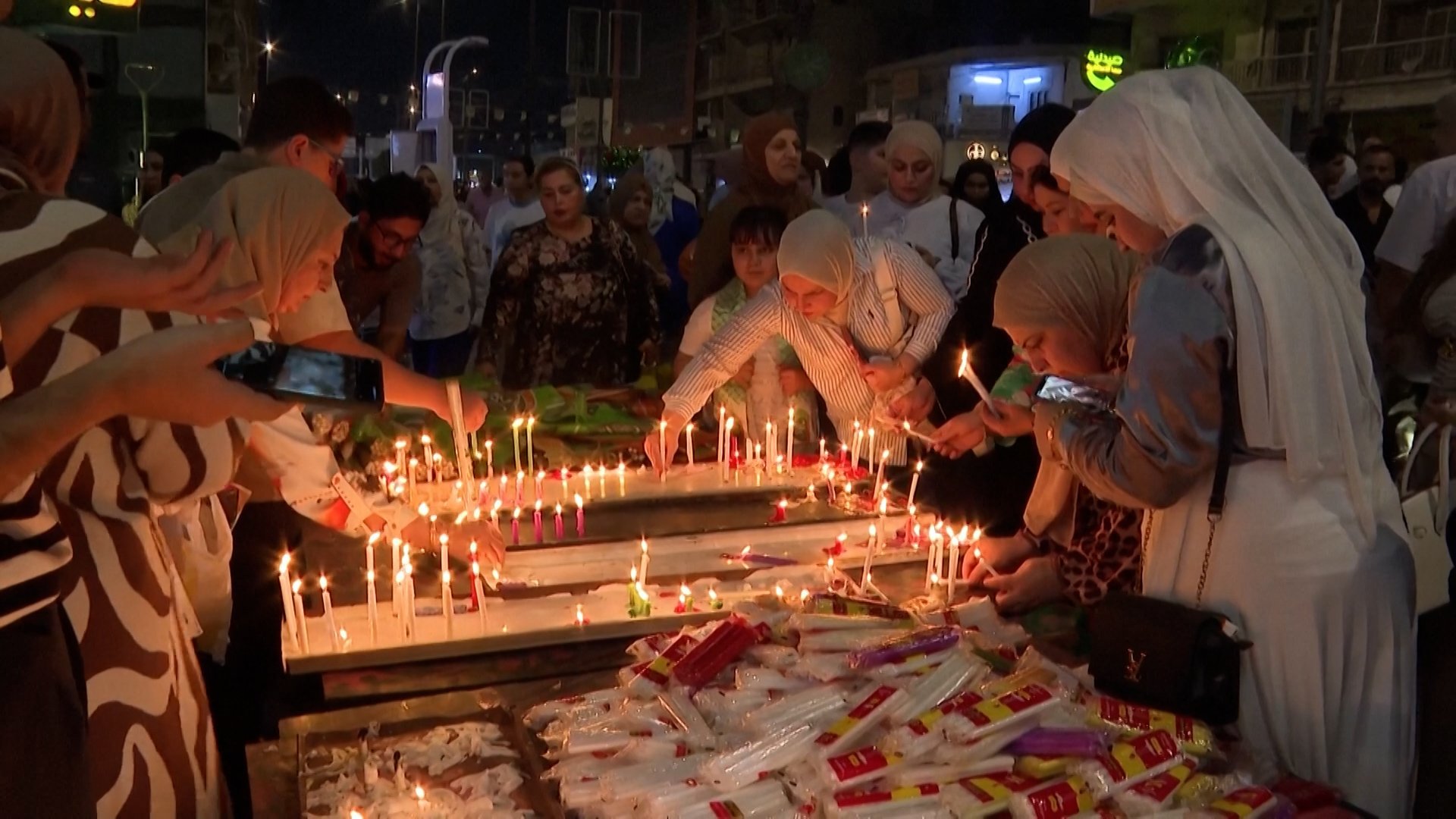
The farewell ceremony for Iran's supreme leader opened in Tehran on the morning of 5 July 2026, and within the first ninety minutes two of the most consequential voices in Shia-majority Iraq had already placed themselves on record. Sheikh Hamam Hammoudi, head of the Supreme Islamic Council of Iraq, told reporters that "the world will witness the zeal of Iraqis in the funeral ceremony" and that Iraqis would not abandon a leader who had stood with them. Bahrain's senior cleric Sheikh Isa Qassem, addressing mourners at the same moment, called the deceased "a man of the hereafter" and the most prominent religious authority of his country. The choreography was unmistakable: a regional alignment project, in plain clerical dress, broadcasting live.
The public display matters less for its piety than for what it tells the outside world about the post-Khamenei settlement. Iran has spent four decades converting clerical authority into a network of allied parties, militias, parliaments and security services that runs from the Mediterranean coast to the Persian Gulf. A leadership change in Tehran does not, on the evidence of the first hours, reset that network. It activates it.
A coordinated send-off
The news wires from Tehran converged on the same sequence of arrivals. Tasnim News English reported at 08:28 UTC on 5 July 2026 that Hammoudi had confirmed Iraqi participation in the funeral, framing it as a show of cross-border solidarity. Fars News International carried a matching line at 08:20 UTC the same day, attributing the "zeal of Iraqis" formulation to Hammoudi's media office. By 09:42 UTC, Mehr News had broadcast the Bahraini endorsement from Sheikh Isa Qassem — a striking intervention, given that Bahrain is a Sunni-ruled monarchy that has spent fifteen years suppressing a Shia-led opposition movement, several of whose spiritual mentors have historically looked to the Iranian clerical model for legitimacy.
The geographic spread is the point. Iraq's Supreme Islamic Council is one of the two largest institutional pillars of Iraqi Shia politics, alongside the Sadrist movement; the Islamic Supreme Council of Iraq was for decades closely aligned with Tehran's Islamic Republic. The council's current leader, Sheikh Hamam Hammoudi, has held senior Iraqi state posts, including a term as speaker of parliament. Bahrain's Sheikh Isa Qassem was himself the spiritual head of the now-dissolved Al Wefaq opposition society, and has remained the senior religious reference for Shia Bahrainis despite his 2017 citizenship revocation. Two men, two very different political ecosystems, one message: the network is intact.
What the eulogies actually say
Listen past the piety, and the eulogies carry three concrete signals.
The first is continuity of alignment, not mourning. Hammoudi's statement that Iraqis will not leave "the one who stood by them" reads, in plain English, as a binding commitment to continue the strategic relationship that has run through Iraqi Shia parties for the duration of the post-2003 order: Iranian training, Iranian political cover in Baghdad, Iranian mediation with both Washington and Moscow. The political wing of the Islamic Supreme Council of Iraq has, in past cycles, been more willing than its rivals to publicly distance itself from Iranian security influence. That hedging is, for the moment, off the table.
The second signal is sectarian solidarity across hostile borders. A senior Bahraini cleric publicly eulogising Iran's supreme leader is not, in 2026, a routine pastoral act. It is a statement to the Bahraini state, to the Gulf Cooperation Council, and to Washington that the Shia clerical class of the Gulf is not interested in marking the post-Khamenei moment as a rupture. Whether that is consensus or one cleric's view is a separate question; the public record is what it is.
The third signal is legitimation of the succession itself. Whoever succeeds the supreme leader in Tehran will face a delicate early test: do the external nodes of the network treat them as the legitimate reference? Statements of this kind, arriving within hours of the funeral opening, are doing that work. The protocol of public grief is, in this system, the protocol of political recognition.
The network and its geography
Iran's regional architecture runs through a handful of institutional hubs. In Iraq, the Supreme Islamic Council of Iraq, the Badr Organization, and various units of the Popular Mobilisation Forces (PMF) — many of them trace their lineage to the Supreme Council's military wing — supply political and paramilitary depth. In Syria, the relationship with the now-departed Assad state shaped a decade of land-corridor politics; the new authorities in Damascus have not been party to today's ceremony. In Lebanon, Hezbollah remains the most heavily armed non-state force in the Levant, and its leadership is, at the time of writing, navigating both succession of its own and a punishing domestic crisis. In Yemen, the Huthi movement has been an active combatant through the Gaza war and the subsequent maritime campaign. In Bahrain, the Shia clerical class has continued to operate under sustained legal pressure.
None of those nodes has so far issued a public eulogy that diverges from the alignment signal. That silence is itself information. In any coalition, the absence of a public break is read as consent.
The structural fact underneath the ceremony is that Iran's regional position was built, in the 1990s and 2000s, around a single clerical authority figure. That figure is now being mourned. The question every outside government is asking is whether the network survives the transition intact, fractures along national lines, or — as some Gulf states and parts of the US policy community have long hoped — decouples into a set of locally-focused Shia parties that no longer treat Tehran as their political centre.
The early signs from Baghdad and Manama suggest that, at least for this news cycle, the answer is the first option.
The Western view, and what it misses
Western wire coverage of the funeral has, on the evidence available so far, tended to frame the ceremony through the lens of Iranian domestic succession. The frame is reasonable: the supreme leader's office is the apex of Iran's executive and religious authority, and the question of who occupies it is the dominant political question inside the country.
The frame is incomplete. A leadership change at the apex of a transnational political-military network is, by definition, a regional event. The Iraqi statements do not say "we are sad." They say "we will be there" — and that is a foreign-policy commitment, dressed in the language of condolence. Analysts who treat the funeral only as a domestic Iranian story risk missing the early evidence of how the external branches of the network intend to position themselves in the succession contest.
There is a second Western reflex worth naming. Coverage in some quarters will reach for the language of "cynicism" — implying that the Iraqi statements are formulaic, that the Gulf Shia presence is performative, that the underlying relationships are transactional and will adjust to whoever in Tehran is most useful to whom. That framing is not wrong, exactly. All of these relationships are transactional in some measure. But it mistakes the form of the transaction. Public eulogies in this system are the way commitments are sealed. They are not window-dressing on commitments sealed elsewhere. Treating them as theatre is a category error, and one that can lead to misreading of the regional balance in the months ahead.
What remains uncertain
Three things are genuinely contested in the available record.
First, the scale of the Iraqi turnout. Hammoudi said the world "will witness" Iraqi participation. That is a forward-looking statement, not a confirmed figure. The actual size and composition of the Iraqi political delegation at the funeral site in Tehran — whether it crosses the major Shia party lines, whether it includes figures associated with the Sadrist movement, whether it brings formal state representation from the federal government in Baghdad or the Kurdistan Region — is not specified in the source material available at the time of writing. Speculation here is unwarranted.
Second, the standing of Sheikh Isa Qassem's statement inside Bahrain. Bahraini state media has not, on the evidence so far, endorsed the framing. Whether the public endorsement represents a consolidated Shia clerical position in Manama, or one prominent cleric's view, cannot be determined from the available reporting.
Third, the position of the Syrian transitional authorities — who took power in late 2024 and have since been navigating a sharply different relationship with Tehran — is not addressed in the source material. Their absence from the public eulogy record, if it persists through the day, is itself a signal that will need separate analysis.
What the available reporting does support, plainly, is the conclusion that the opening day of the funeral has functioned as an alignment reaffirmation. The network is showing that it can co-ordinate a public message across at least two very different national contexts within hours. That is the news. The successor to the supreme leader has not yet been named in the material available to Monexus; when that name arrives, it will be read against the backdrop set today.
Desk note: Monexus framed this story around the regional political signalling, not the domestic Iranian succession. The funeral is a foreign-policy event as much as a mourning one, and the Iraqi and Bahraini statements on the morning of 5 July 2026 are the load-bearing facts of the day.
Wire provenance
This editorial synthesis draws on the following public wire/social posts:
- https://t.me/mehrnews
- https://t.me/tasnimnews_en
- https://t.me/FarsNewsInt
- https://en.wikipedia.org/wiki/Supreme_Islamic_Iraqi_Council
- https://en.wikipedia.org/wiki/Hamam_Hammoudi
- https://en.wikipedia.org/wiki/Isa_Qasim
- https://en.wikipedia.org/wiki/Al_Wefaq
- https://en.wikipedia.org/wiki/Axis_of_Resistance