Iran holds Khamenei's funeral as regime moves to project continuity
Iran's clerical establishment is using the public葬礼 of Ayatollah Ali Khamenei to choreograph an orderly transition, but the tight scripting around his funeral suggests a leadership under stress rather than a system at ease.
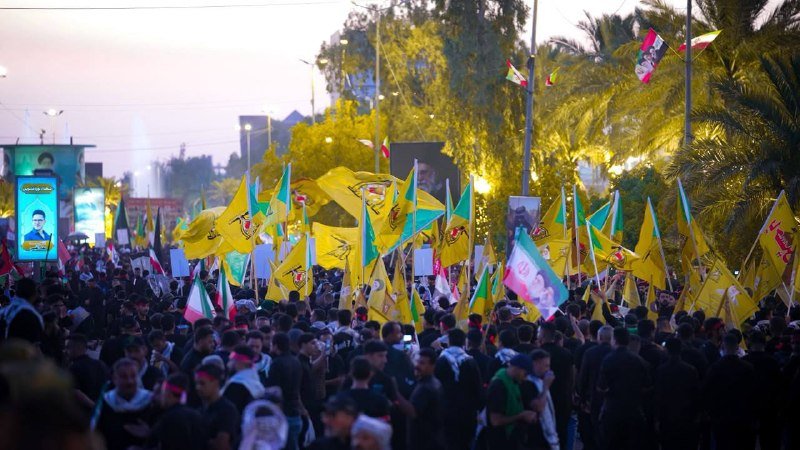
Iranian state media on 5 July 2026 broadcast the funeral prayer for Ayatollah Seyed Ali Khamenei at Tehran's Imam Khomeini Mosalla, with IRNA posting imagery of the procession under the banner of his official title — the "Martyr of Leader of the Islamic Revolution." His successor has already been named and is moving quickly to claim legitimacy through the same choreography. The pictures are unmistakably choreographed: compact rows of mourners, a tightly framed casket, the careful vocabulary of martyrdom threaded into every caption.
The regime is treating the death as a test of institutional discipline. Khamenei — Killed in an Israeli airstrike in June — was not just the supreme leader but the system around which the post-1979 order built its chain of command. A leadership of this gravity dying in a war it did not choose to be in would normally crack an establishment. So far, it is being held together by speed and stagecraft.
What the funeral is doing for the successor
The useful question is not whether Iranians are mourning — many plainly are — but who the public performance is for. The messaging falls into three lanes, each aimed at a different audience.
The first is domestic. Images of densely packed rows at the Mosalla funeral prayer, distributed through Khamenei_es and IRNA_en channels on 5 July, are meant to restore a sense of normalcy after a strike that hit the apex of the system. The second is regional: the accompanying quote — "Martyrdom is entering the intimate and reserved space of God and being welcomed as a guest at the table of the divine ba[quet]" — is meant for the wider Shia public in Iraq, Lebanon, Bahrain, and the Gulf. The third is external: the language of martyrdom is a deliberate signal to Washington and Tel Aviv that the establishment will not bend.
Succinctly: the funeral is doing political work that the regime could not afford to leave to informal mourning.
The counter-narrative the wires will not run
Outside Iran, Western outlets have largely written the event as the end of an era — a "climax" framing that positions the Islamic Republic as a system facing an irreversible crisis. There is something to that, but it is incomplete. The same state that lost its supreme leader in an airstrike has, within days, organised a nationally televised funeral, identified a successor, and continued to function at the level of coercion and diplomacy it ran on the day before the strike. That is not the behaviour of a system in free fall.
Western commentary will also flatten the diversity of Iranian society into two camps — regime and opposition — which has not described Iran accurately for a decade. The mourning is genuine, ideologically mixed, and not necessarily a referendum on the successor. Treating grief as either façade or mandate understates both what the regime can hold together and what it cannot.
The structural frame, in plain terms
A clerical order that fuses religious authority, military command, and electoral legitimation depends on a small number of apex figures whose death disrupts every layer at once. Iran is now navigating that disruption in a hot war environment, with Israel and the United States able to target senior officials and with the Strait of Hormuz periodically contested. The regime's response — speed, ceremony, an unbroken media relay — is the classical move of a state that knows its vulnerability is symbolic.
The pattern is familiar: great-power stress produces centralisation, centralisation produces stagecraft, stagecraft produces the appearance of stability long enough to push the real decisions further from public view. Tehran is currently on step three. Steps four and five — what the new leader actually does about the nuclear file, about the war in the north, about the militias forward-deployed in four Arab states — will arrive in the weeks ahead, and no amount of Mosalla imagery will substitute for them.
What remains genuinely uncertain
Three things the available reporting does not settle. First, the precise circumstances of Khamenei's death: the thread context lists him as the "Martyr of Leader of the Islamic Revolution," a vocabulary that presupposes a particular cause of death, but a full accounting — Israeli confirmation, Iranian casualty reporting, forensic detail — is not in the materials reviewed for this piece. Second, the identity and standing of the successor; the successor is referred to in regional coverage as already operational, but the formal name, institutional role, and confirmation by the Assembly of Experts have not been independently verified in the items at hand. Third, the durability of the public order at the funeral itself — IRNA's tightly framed imagery is consistent with the regime's preferred narrative but tells the reader little about the size of the crowd, the geography inside the Mosalla, or the presence of competing clerical or military factions.
These uncertainties are not a reason to wait. They are a reason to write about the funeral with the precision the evidence supports and not a syllable more.
The stakes
If the successor consolidates, Iran re-enters negotiations from a position of internal strength rather than weakness, and the regional cost-benefit calculus in Tel Aviv and Washington shifts. If consolidation slips, the system's vulnerabilities — economic strain, succession rivalries inside the clerical elite, the open wound of an unprecedented strike on the supreme leader — move from latent to acute. The funeral in Tehran is being staged to push those odds in one direction. The next month will tell us whether it worked.
Desk note: Where wire coverage has framed this as a regime in collapse, Monexus reads the available evidence as continuity under stress — fast choreography, intact media relay, succession already named — without endorsing either Tehran's martyrdom frame or the Western "climax" narrative.
Wire provenance
This editorial synthesis draws on the following public wire/social posts:
- https://t.me/Khamenei_es
- https://t.me/Irna_en
- https://t.me/Khamenei_es