Le Pen's courtroom gamble
A Paris appeals court rules on 5 July 2026 in Marine Le Pen's embezzlement case, deciding whether the Rassemblement National leader will be eligible to stand in next year's presidential election.
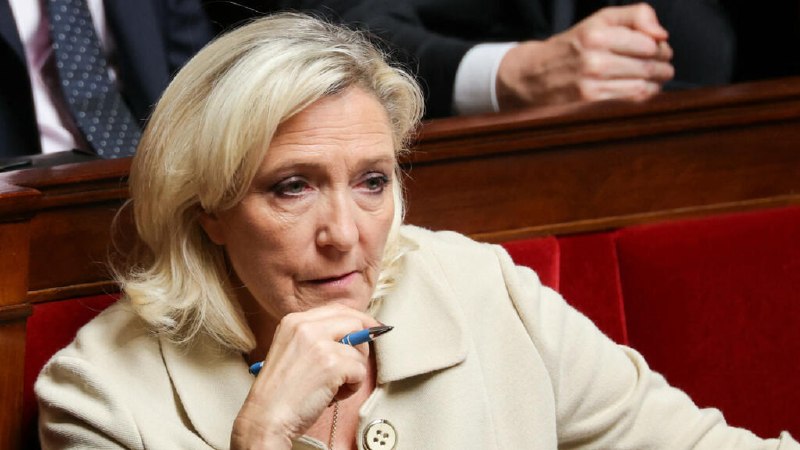
The ruling lands at 16:00 local time
On Tuesday 5 July 2026 a Paris appeals court is set to deliver its verdict in the embezzlement case against Marine Le Pen, the long-time leader of France's Rassemblement National. The court heard arguments on whether to uphold, soften or overturn a March 2025 conviction that found her guilty of misappropriating European Parliament funds through parliamentary assistants who in practice worked for the party. France 24's morning brief framed the ruling bluntly: the decision will determine whether Le Pen can run in the 2027 presidential election, a contest she has spent more than a decade positioning herself to win.
What began as a procedural payroll dispute has been compressed, by stages, into something close to a constitutional referendum. The case is no longer about money routed through the European Parliament's assistant programme. It is about who decides who can stand — judges, voters, or the politicians the judges oversee.
The bench, the charges, and how the case got here
The lower court in March 2025 convicted Le Pen and more than a dozen co-defendants, including senior party staff, on charges of systematic misuse of European Parliament assistant envelopes between roughly 2009 and 2017. The court imposed a five-year bar from public office along with a four-year prison sentence (two suspended) and a heavy fine. Those penalties triggered immediate political turbulence: Le Pen's name was scratched from the 2027 ballot almost the moment the gavel fell, and her appeal, filed within days, has been the centre of gravity of French politics ever since.
An appeals court can affirm, reduce or increase the lower court's sentence, and it can modify the so-called "supplemental" penalty — the ineligibility period that bars a candidate from running for office. That last lever is the politically decisive one. A reduced ineligibility, or a modification of its execution (immediate versus suspended), would reopen Le Pen's path to the Élysée; a sustained or expanded bar would clear the centre-right lane of the 2027 race and recast the party's succession in real time. France 24's Telegram pre-ruling coverage noted the stakes explicitly: whichever way the bench goes, the case is "the political story of the week and arguably the year."
The "democratic shield" and its critics
Le Pen's defence has hardened into a populist constitutional argument rather than a purely legal one. Her lawyers and her allies — Jordan Bardella, now the party's public face and its lead candidate in waiting — have cast the ineligibility ruling as an act of judicial overreach. Bardella, asked on French television what he would do if Le Pen were barred, replied that the party would find "a way to defeat the system," an answer that, in the post-Trump, post-Brexit vernacular of the European far right, is parsed less as a slogan than as a commitment.
The counter-narrative runs through the French judiciary and most of the established press. Trial judges and prosecutors argue the case is straightforward: an assistant is meant to assist a Member of the European Parliament, not a party headquarters in Nanterre. The supplemental ineligibility, in this reading, is not a political tool but a routine application of French criminal law to a financial crime that happened to touch elected office. Editorial pages in Le Monde, Le Figaro and Liberation have warned in near-equal measure against either dismissing the rule of law for electoral convenience or romanticising its application.
What is genuinely new is the speed with which the case has fused with the question of judicial independence. A government minister from the governing party told French radio last week that an ineligibility ruling against Le Pen would be "a grenade in the European political system," reflecting a recurring complaint on the French right: that the European Parliament's own administrative delays, and not merely the assistants themselves, were complicit in the practice that produced the convictions. France 24's reporting carries that counter-claim without endorsing it.
A party built around one name
The deeper problem for Rassemblement National is structural rather than legal. Le Pen built the party, modernised it, and selected its faces. Bardella's ascendancy, the rebranding that split the old Front National in two, and the steady migration of voters from mainstream right parties to RN — all of this runs through her. France 24's coverage flags the obvious risk: a sustained ban would hand leadership to a 30-something who polls competitively but who has never commanded the party apparatus, and who would face his first presidential campaign with both Marine Le Pen alive on a party perch and a protest vote that has so far followed her surname.
The deeper problem for the state, by contrast, is legitimacy. Elections are usually settled by voters; in this cycle the first round will be settled, at least partly, by judges. A verdict that clears Le Pen invites accusations that the courts buckled under political pressure; a verdict that confirms the ban invites accusations that the courts are acting as a political filter. Either outcome will be cited for years by whichever side loses.
What we don't know
France 24's reporting stops at the courtroom door: it tells us the verdict is expected on Tuesday afternoon, it lists the people whose careers depend on it, and it tells us that the appeals court can adjust the ineligibility period. It does not give us a confident read on which direction the bench will go, and it does not preview the draft reasoning. Reading the appellate lineup, the prior pattern of the court in financial-crime appeals, and the political calendar against one another is an exercise in informed guessing that this publication will not pretend to win in advance.
Also uncertain: how the European Parliament, which is itself a partially-damaged party in the case, handles the political fallout, and whether Brussels opens a parallel administrative process that could run on a different timeline from the French courts. France 24's reporting does not address that variable at length; it is worth watching.
Stakes
If Le Pen is barred and the bar holds, the 2027 race narrows to a contest between a depleted centre, a resurgent left in search of a standard-bearer, and a far-right party making its first run without the figure who has lost three presidential finals. If Le Pen is cleared, the same race becomes the one the polls have been tracking for two years — Bardella as heir apparent, Macron's successor searching for traction, and a re-energised Rassemblement National arguing, with some justice, that the ballot has finally been put back into voters' hands. Either way, by Tuesday evening, the French republic's oldest tension between its courts and its voters will have been relit.
This article frames the ruling as a contest between judicial independence and electoral populism — two framings the wire has generally treated as separate stories rather than the single one that is unfolding in Paris this week.
Wire provenance
This editorial synthesis draws on the following public wire/social posts:
- https://t.me/france24_en