Mali ambush shows the limits of Moscow's Africa gamble
A reported helicopter loss in Gao is the most visible signal yet that the post-Wagner Russian model in the Sahel is running into the same insurgent arithmetic that broke the French.
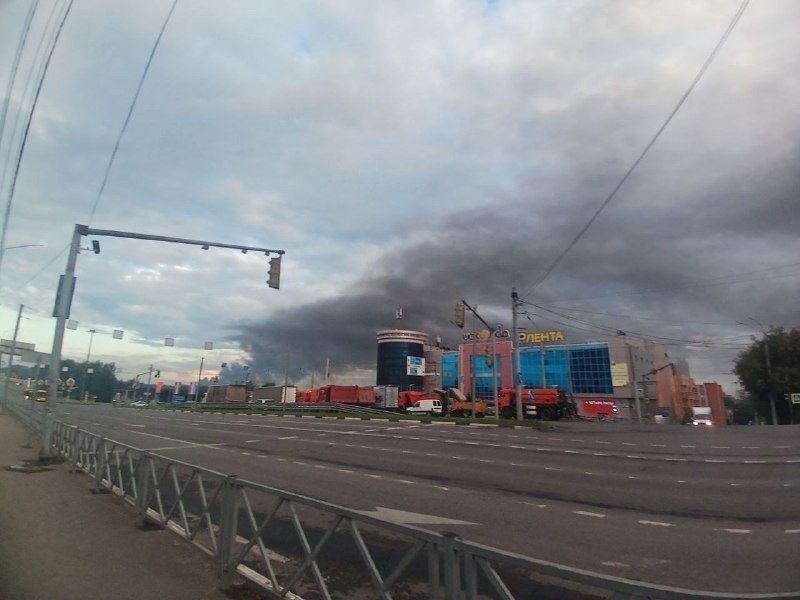
On the afternoon of 5 July 2026, Tuareg rebels in northern Mali reportedly shot down a Russian Africa Corps Mi-24 attack helicopter as it supported a convoy pulling out of the city of Gao. The Open Source Intelligence account known as OSINT Live posted the first English-language aggregation of the incident at 17:00 UTC, citing on-the-ground rebel channels and a confirmation from Russian state media that "Russian servicemen" were involved; the parallel Noel Reports feed, working from the same cluster of local and Sputnik-sourced material, ran a near-identical summary two minutes later. Both posts pointed to the same tactical picture: a convoy leaving Gao, an ambush on its escort, a rotary-wing loss, and a Russian acknowledgment heavy on phrasing and light on numbers.
Strip away the operational fog and the larger story is easy to read. Moscow bet, in the years after the 2023 mutiny march on Rostov, that it could rebuild an African footprint under a state-controlled banner without the freelance brutality and the Prigozhin-era spectacle that had given Wagner its brand. The rebrand to "Africa Corps" was meant to launder the model: ministerial cover in Moscow, embassy coordination in Bamako and Ouagadougou, and a quieter, more conventional military footprint on the ground. The Mali ambush is the most visible indication yet that the rebrand has not changed the underlying arithmetic of the Sahel, where lightly armed but highly mobile insurgents have consistently attrited any force that treats the north as a logistics problem rather than a political one.
The incident, as far as it can be reconstructed
The first wave of reporting, consolidated on Telegram by OSINT Live at 17:00 UTC, describes a rebel ambush on a Russian convoy departing Gao and the loss of a Mi-24 attack helicopter flown by Africa Corps personnel. Noel Reports' 17:02 UTC bulletin added the corroboration thread: local Malian channels circulating footage, and a Sputnik line carried into Russian-language Telegram acknowledging that "Russian servicemen" were caught up in the engagement. The Mi-24, a Soviet-designed Hind gunship that has been a workhorse of Russian expeditionary aviation since Afghanistan, is the kind of asset that, if confirmed lost in an ambush, signals either a failure of intelligence, a failure of air-ground integration, or a failure to suppress the rebel anti-aircraft chain in the first place. The sources do not specify which.
What they do specify is a pattern. Convoys leaving Gao have been attacked repeatedly over the past eighteen months. The Tuareg and allied groups operating across the Kidal, Timbuktu and Gao regions have shifted away from the kind of set-piece assaults that produced short viral victories and toward persistent harassment of supply lines, the same playbook that exhausted the French operation Barkhane between 2020 and 2022. A helicopter loss does not, on its own, prove a strategic reversal. But it does prove that Russian air assets are now operating in a permissive-enough environment for rebels to get a shot at them, and that the convoy traffic between Gao and the northern garrisons is contested ground rather than a secure artery.
The counter-narrative Moscow will push
The official line from Russian and Malian state-aligned sources is already taking shape in the early reporting. The framing is familiar: the incident is being described as a difficult moment in a broader stabilisation campaign, with Russian personnel cast as partners rather than occupiers, and the rebels as terrorists or, in the Bamako variant, as separatists armed and directed from abroad. The structural argument is that Africa Corps, unlike Wagner, is integrated with the host state's regular forces, that any casualties are the cost of doing serious counter-insurgency work, and that the same Western outlets now expressing concern about Russian losses were, only three years ago, demanding Bamako's partners do more against the insurgents.
That argument has real force. The Sahel's security vacuum is genuine. The jihadi and separatist insurgencies that washed out French and UN forces have not dissolved, and the populations of Gao, Timbuktu and Kidal are still living with the consequences. The Malian junta's decision to bring in Russian forces was, in its own internal logic, a sovereign choice made by a government fed up with a Western approach that prioritised force protection over territorial control. A serious account of the ambush has to grant all of that.
Why the rebrand has not solved the underlying problem
The harder question is whether Moscow has actually changed the model, or merely changed the signage. The Africa Corps label bought Russia three things: plausible deniability at the ministerial level, a cleaner line to sanctions-evading resource deals, and a way to absorb Wagner's African cadre without inheriting the mutiny that nearly cost Moscow the entire operation. It did not, on the evidence of the past eighteen months, deliver the thing that would actually break the insurgency: a political settlement that gives the Tuareg and other northern communities a stake in the Malian state.
Russian counter-insurgency doctrine, like the Soviet variant that preceded it, is built around the idea that you can attrit a rural insurgency into a political settlement by controlling population centres, denying the countryside to the armed groups, and waiting for the guerrillas' logistics to collapse. The problem is that this model only works if the urban-rural geography matches the doctrine, and in northern Mali it does not. The towns are islands. The countryside is huge, sparsely populated, and belongs, in a deep political sense, to communities that have never consented to the Malian state on the terms that Bamako or, now, Moscow is offering. The French learned this. The UN learned this. The early evidence from the Gao ambush is that Russia is learning it too, and the lesson is being paid for in rotor-wing airframes rather than in the political compromises that would actually end the war.
What the sources do not yet tell us
There is a great deal the early reporting does not establish. The exact number of Russian personnel killed or wounded is not in the public material; the helicopter loss is described as confirmed but the tail number, unit, and the specific rebel group that claimed the kill are not yet pinned down. The Malian government has not, as of the 17:00 UTC wave, put out a statement, and the Russian Ministry of Defence readout is the kind of language that confirms the event without committing to a body count. Independent satellite imagery of the crash site has not surfaced in the early channels, and until it does, the most that can be said is that the ambush itself, and the loss of an Africa Corps helicopter, are consistent across both rebel-aligned and Russian state-aligned reporting, which is at least a higher standard of corroboration than the Sahel has often produced.
The honest framing, then, is that 5 July 2026 looks less like a single dramatic reversal and more like a small, ugly data point inside a long downward curve. Africa Corps is, by every available signal, more capable of bureaucratic self-presentation than its predecessor; it is not, on present evidence, more capable of solving the Sahel's underlying political problem. The convoys leaving Gao were contested before the Mi-24 went down. They will be contested after. The question that the ambush sharpens is whether Moscow is willing to pay the cost of that contest long enough, and on terms harsh enough to its own personnel, to extract a settlement that a dozen years of French and UN effort could not.
This publication treats the Gao ambush as a stress test of the post-Wagner Russian model in the Sahel rather than a one-off incident, and reads the early Russian and Malian framing as counter-claim material to be weighted against the rebel-aligned channels that broke the story.
Wire provenance
This editorial synthesis draws on the following public wire/social posts:
- https://t.me/osintlive
- https://t.me/noel_reports
- https://x.com/SaladinAlDronni/status/207380