Heat, Drums, and a Prediction Market: How One World Cup Match Became a Spectacle of Side Bets
A thunderstorm delay at the Azteca turned a knockout-stage match into a content event. The fan theatrics, FIFA's call, and a freshly listed Polymarket on what announcers will say reveal something about the modern tournament economy.
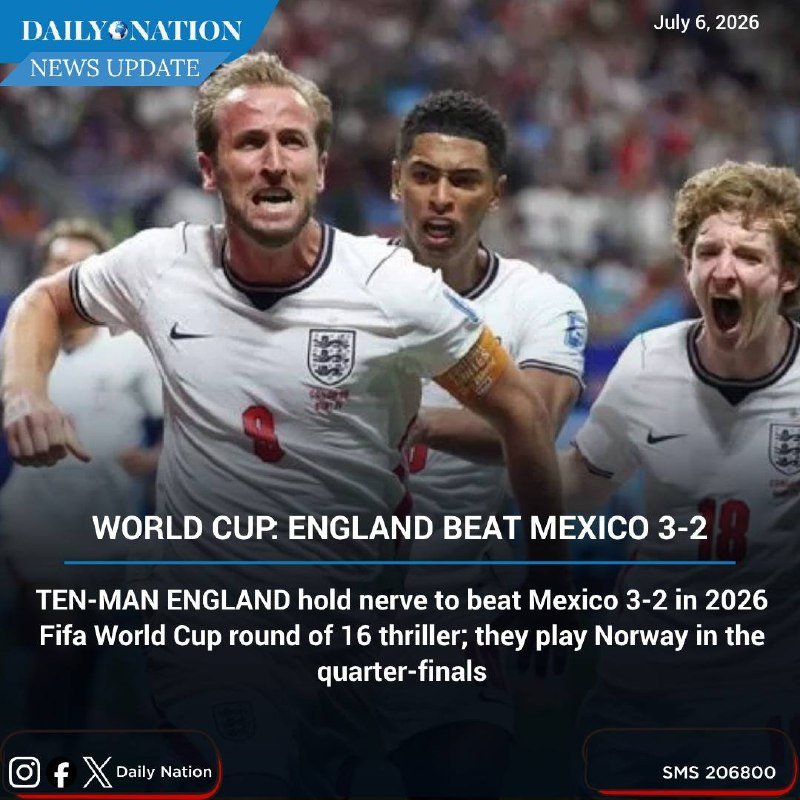
A Mexico–England knockout match that was already doubling as a content war got pushed back an hour on the evening of 5 July 2026. FIFA attributed the call to thunderstorms and heavy rain in the Mexico City area, according to a 5 July 2026, 23:52 UTC post by Al Arabiya's Arabic feed on Telegram. The stadium itself, the historic Azteca, had earlier issued a shelter-in-place instruction for ticketholders, per a 21:19 UTC post by the Polymarket account on X.
What was supposed to be a football match now reads like an object lesson in how a major tournament works in 2026: a live event, a weather event, a fan-performance event, and a financial-instrument event, all running concurrently on the same screen.
The crowd had already done its job
Hours before kickoff, Mexican supporters had assembled outside England's hotel with fireworks and drums in a campaign to keep the squad awake. The Polymarket account on X reported at 13:50 UTC on 5 July 2026 that Mexico fans "reportedly set off fireworks & banged drums outside England's team hotel to keep players awake." By 16:53 UTC, the same account relayed an England-camp rebuttal: the fireworks and drums had, in their telling, "little effect" on the squad.
The exchange is small but telling. Host-fan intimidation of visiting teams is a tradition as old as the knockout round itself; what is new is the speed at which both the action and the denial are brokered into the same algorithmic feed within three hours. The incident becomes legible to a global audience not through a wire report but through a prediction-market account that exists to monetise attention on the match.
The kickoff was not the only thing being priced
Embedded inside the broader Mexico–England coverage, two new markets opened on Polymarket in the same 24-hour window. The first, posted at 16:34 UTC on 5 July 2026, asked what television announcers would say during the Mexico–England broadcast. The second, posted the previous day at 20:41 UTC on 4 July 2026, ran the same construct for the Paraguay–France fixture. The format is identical: settle on the most common phrase, name, or framing the commentators utter.
These markets are not about who wins. They are about the commentary layer — the meta-text that increasingly travels further than the match itself. A trader who has never watched a minute of football can still have a position on whether an announcer says "pressure" or "possession." The market does not require the trader to know the sport, only to know the language used to describe it.
The structural frame, stated plainly
The World Cup has always been a financial event as much as a sporting one. Sponsorship inventory, broadcast rights, and ticketing have been the formal economics for decades. What the 5 July 2026 sequence exposes is the informal layer underneath: weather delays create arbitrage windows, fan antics become tradable sentiment, and the announcers' word choice becomes a derivative. The event and its commentary are split into separate instruments and priced independently.
This is the same logic that has governed elections and macro data for years on retail-accessible exchanges. Its arrival at a sporting event is less surprising than the speed: six months ago, prediction markets at this granularity would have been a curiosity. Tonight they are a parallel product.
What remains unclear, and what to watch
The thunderstorm forecast that triggered the delay was not specified in either the Al Arabiya or Polymarket posts beyond the category phrase "heavy rain." Whether the shelter-in-place order at the Azteca was a precaution against lightning, structural risk at the open-air venue, or crowd-management logistics is not stated in the source items Monexus reviewed. The England camp's "little effect" line is a denial of inconvenience rather than an admission of disruption; it does not tell us whether the squad's pre-match sleep was actually shortened.
The announcement-language markets will resolve sometime after full time. Until then, the more interesting instrument may be the one that has not yet been listed: how long after the final whistle before a new Polymarket opens on the manager's post-match interview. That contract would have cleared on every knockout round of this tournament.
This article was filed by the Monexus desk. The wire coverage framed the Mexico–England postponement as a weather story; Monexus frames it as a convergence story — where a stadium delay, a fan-performance dispute, and a prediction market on announcer speech are the same news cycle, viewed from three different screens.
Wire provenance
This editorial synthesis draws on the following public wire/social posts:
- https://t.me/s/alalamarabic
- https://x.com/Polymarket/status/2073807661443723264
- https://x.com/Polymarket/status/2073491304563040256
- https://x.com/Polymarket/status/2073491304563040256