A Birthday Phone Call and the Quiet Reordering of the Ukraine File
A one-hour congratulatory call between Vladimir Putin and Donald Trump on America’s 250th anniversary has reopened the diplomatic channel on Ukraine — and exposed how thin the line between mediation and concession has become.
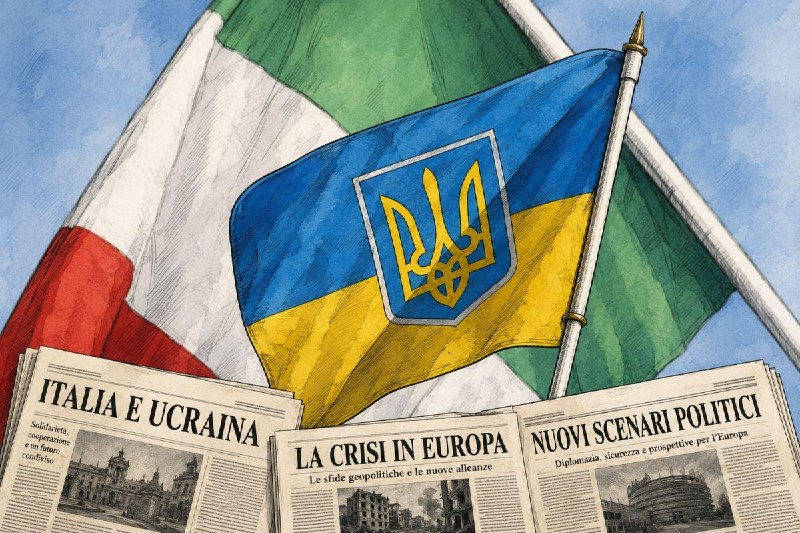
On the evening of 4 July 2026, as American cities lit fireworks for the country's 250th anniversary, the Kremlin announced that Vladimir Putin had placed a congratulatory call to Donald Trump. According to a SCMP dispatch dated 2026-07-05, the two leaders discussed Ukraine and Iran in a conversation that ran past one hour, and Trump subsequently offered publicly to help Putin reach a deal with Kyiv. The exchange, framed in Moscow and in the BRICS-press ecosystem as a constructive gesture, landed in Western capitals as something closer to a shock: a US president signalling, on a national holiday, that he intends to mediate between the country waging the war and the country that started it — without Ukraine on the line.
The call matters less for what was said than for what it revealed. After more than four years of full-scale invasion, the diplomatic file on Ukraine is being reopened not by the belligerents, not by European allies, and not by Kyiv's own negotiating team, but by a bilateral conversation between Washington and Moscow. The pattern is not new — every US administration since 2022 has cycled through its own version of the "deal" — but the framing has shifted. The American position is no longer "help Ukraine win"; it is "help Putin and Zelenskyy close the file." That is a different kind of intervention, and it carries different costs.
What was actually said — and what was not
The public record of the 4 July call is thin and runs almost entirely through Russian-state-adjacent and pro-Moscow Telegram channels. The South China Morning Post's 5 July report described the conversation as covering Ukraine and Iran, and as lasting more than an hour; the BRICS News channel, citing the same underlying Kremlin read-out, said Putin congratulated Trump on America's 250th anniversary and invited him to visit Russia. Within hours, BRICS News reported Trump offering "to help President Putin reach a deal with Ukraine," and a separate X post on 2026-07-04 quoted by Polymarket said Putin had called for "constructive" US-Russia relations.
What is conspicuously absent from this public record is any read-out from Kyiv, from the office of President Zelenskyy, from the Ukrainian General Staff, or from any European capital. The European Council, the EU's foreign policy arm, has not been cited in any of the dispatches tracked by Monexus as having been briefed on the call. Ukraine's allies in the so-called Ramstein group — Britain, France, Germany, the Nordics and the Baltic states — appear, on the available evidence, to have learned about the substantive content of the conversation through press releases rather than diplomatic channels.
That asymmetry is itself a finding. The framing in the Russian-language and BRICS-press coverage presents Trump as a willing interlocutor who has re-opened the high-level channel that the Biden administration was widely criticised for leaving dormant. The framing in Ukraine is harder to pin down because Kyiv has not, on the record, been asked.
The "no intention of killing Iranian leadership" framing
A second strand of the call received less attention but matters just as much for the diplomatic geometry. On 2026-07-04 at 21:12 UTC, BRICS News reported Trump as saying that the United States has "no intention of killing Iranian leadership." The remark — relayed through a Russian-language wire with no independent Western confirmation in the source material available to Monexus — was positioned as a reassurance to Tehran. Whether it was intended as reassurance to Moscow is the question that has gone unasked in most coverage.
The Ukraine file and the Iran file have been treated, since at least 2024, as parallel negotiations in which Moscow functions as an interlocutor and an object of US pressure. A "no intention of killing Iranian leadership" line, delivered in a call with Putin on the American national holiday, is the kind of sentence that looks like diplomacy and reads like triangulation. It tells Tehran that the Americans are not going to escalate; it tells Moscow that the Americans view Tehran as a regional variable to be managed through Russian cooperation; and it tells both that the senior partner in the conversation is Washington, not Brussels, not Kyiv, and not the UN Security Council.
This publication reads the two messages as a single diplomatic instrument: the offer to mediate on Ukraine, paired with the assurance on Iran, is a posture in which the United States is asking Russia to behave as a co-manager of the Eurasian security file in exchange for sanctions relief and a normalised bilateral relationship. That is a recognisable posture in the long history of late-Cold-War and post-Cold-War arms-control diplomacy. It is not, on the available evidence, the posture that the rest of the transatlantic alliance has signed up to.
The structural frame: who owns the negotiating table
The pattern visible in the 4 July call sits inside a longer arc in which the architecture of the post-1991 European security order has been quietly re-cut. The 1975 Helsinki process, the 1990 Paris Charter, the 1994 Budapest Memorandum, the 1997 NATO-Russia Founding Act and the 2014 and 2022 rounds of Minsk-style negotiation each worked on a common premise: that the United States and the European Union would set the table, that Russia would participate at that table, and that the parties subject to the negotiation (Ukraine, Belarus, Moldova, the South Caucasus) would have a recognised seat at it.
The 4 July call is a departure from that template. The seat at the table is being negotiated between Washington and Moscow, and the parties subject to the negotiation are learning about the conversation from public read-outs. That is not, in itself, a concession to Moscow — bilateral US-Russia diplomacy has long existed alongside multilateral channels — but it does represent the delegitimation of the multilateral channels as the primary venue. When the senior partner in a security negotiation ceases to invest in the table it built, the table empties.
The Iranian dimension sharpens the frame. If the United States is willing to manage Tehran's nuclear and proxy files through Moscow rather than through the JCPOA framework or through the E3 (Britain, France, Germany), then Moscow is being offered a regional broker role in the Middle East in addition to its claimed Eurasian broker role. That is a portfolio Moscow has not held since 1991, and accepting it would re-write the political economy of Russian foreign policy. The cost is borne by Ukraine and by the European allies, who lose the leverage that came from being the indispensable framework around any negotiation.
Counter-narrative: what the deal-makers would say
The case for the bilateral US-Russia channel is not frivolous and deserves equal airtime. Proponents argue, with some plausibility, that no settlement on Ukraine is possible without Russian buy-in, that no settlement on Iran is possible without Russian acquiescence, and that only a US president with the political capital to absorb domestic criticism of Russia can deliver a deal that European leaders cannot. They point out that the Biden administration's refusal to engage Putin at senior level produced a war that expanded rather than contracted, and that the European-led formats (the Crimea Platform, the Lugano conference, the Zelenskyy peace formula) produced declarations of principle rather than movement on the ground.
They also argue, less convincingly but persistently, that Trump's instinct for personal diplomacy is a feature rather than a bug: that the phone-call culture that produced the 2018 Helsinki summit and the 2020 Abraham Accords is the same muscle now being applied to Ukraine, and that early scepticism of those episodes proved misplaced. The counter to this argument is that Helsinki and the Abraham Accords were conducted with allied partners (the EU and Israel respectively), whereas the 4 July call was conducted over the head of Ukraine's elected government.
The honest reading of the public record is that the bilateral channel may produce useful atmospherics, but it cannot produce a settlement that Kyiv accepts without European cover, and it cannot produce an Iran arrangement that Tehran accepts without Iranian agency. The Russian read-out will, predictably, claim diplomatic momentum; the Ukrainian read-out will, predictably, demand to be present. The question is whether Washington treats those demands as procedural or as substantive.
Stakes and forward view
The 30-day horizon is the one that matters most. If the Trump administration moves within a month to convene a trilateral in a neutral venue (Riyadh, Geneva, Vienna, Istanbul — the candidate list is familiar), and if Ukraine is invited on terms set by Washington and Moscow rather than by Kyiv, the diplomatic grammar of the war will have shifted. If instead the call produces a sequence of bilateral working groups (energy, sanctions, NATO force posture) that exclude Ukraine, the practical effect is to formalise Moscow's claim to a co-determinative role in European security.
The European stakes are concrete. A settlement negotiated in this format would, in the most likely shape, leave Russia holding occupied territory, leave Ukraine with security guarantees weaker than its pre-2014 status, and leave the EU's eastern frontier managed by a US-Russia condominium that European institutions do not control. That outcome is not inevitable — Kyiv still commands a military position of real weight, the European Union has demonstrated in 2024-25 that it can sustain Ukraine fiscally without US support, and the Russian economy continues to absorb sanctions cost — but the diplomatic momentum, on the present evidence, points in the other direction.
The Iranian stakes are equally concrete but harder to read. If the "no intention of killing Iranian leadership" line is the opening bid of a deal, Tehran will want something in return: sanctions relief, an end to the 2015 nuclear agreement's snapback architecture, or a public US commitment not to support an Israeli strike on Iranian nuclear infrastructure. Each of those is a deliverable Russia cannot grant unilaterally. Which suggests that the Iranian file is being held in reserve — used as leverage to keep Moscow at the table on Ukraine, rather than as a freestanding negotiation.
The structural finding is uncomfortable for all sides. The diplomatic channel on the largest European war in thirty years is being conducted in a format that the invaded party did not design and cannot, on the public record, attend. The 4 July call is not a settlement and not a concession, but it is the first move of a negotiation whose terms are being set by the two capitals least exposed to the costs of getting those terms wrong. Kyiv, Brussels and London are now in the position of having to decide whether to enter that negotiation as participants or as object of it.
What remains uncertain
The sources available to this publication for the 4 July call are almost entirely Russian-state-adjacent: SCMP's international desk and a chain of BRICS-news Telegram and X accounts. No Western wire service confirmed the substance of the call in the material Monexus reviewed, and no read-out from Kyiv, Berlin, Paris, London or Brussels appears in the available record. The duration of the call ("over one hour"), the invitation to visit Russia, the offer to help reach a deal, and the Iran reassurance are all single-sourced through the Russian channel.
This publication cannot, on this evidence, independently verify the duration or the precise wording of the exchange. The most that can be said with confidence is that a call took place, that both sides acknowledged it publicly, and that the Russian-language read-out framed it as a turning point. Whether the Ukrainian government was briefed before, during or after the call — and on what terms — is the question that will determine whether the 4 July exchange becomes a negotiating opening or a diplomatic incident.
This is a long-read for Monexus News. The desk has weighted the public record from Russian-state-adjacent channels against the conspicuous absence of read-outs from Kyiv and the European allies; the balance of the piece reflects that asymmetry rather than compensating for it.
Wire provenance
This editorial synthesis draws on the following public wire/social posts:
- https://t.me/bricsnews
- https://t.me/bricsnews
- https://t.me/bricsnews